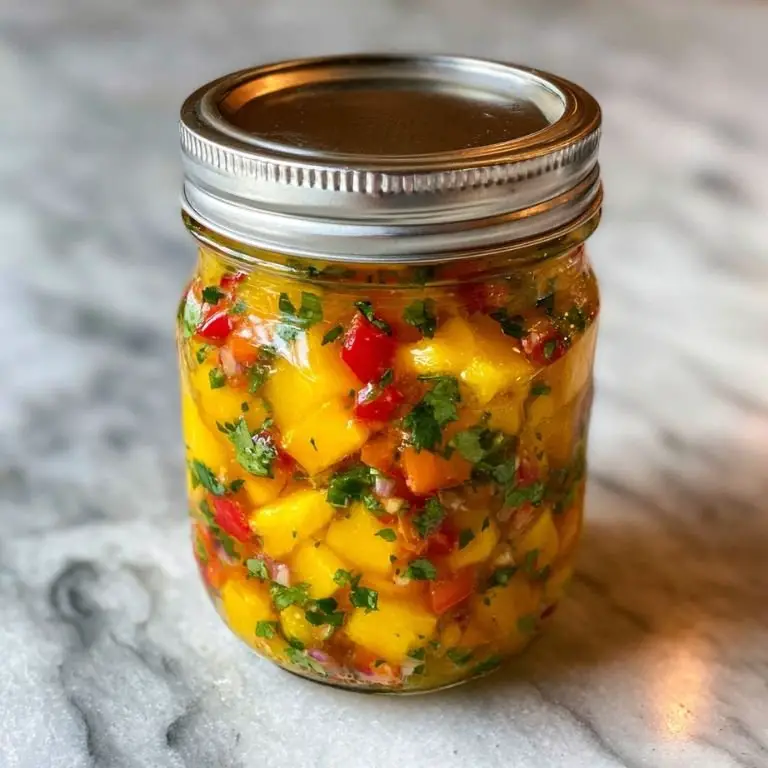
There’s something electric about the combo of sweet mangoes and fiery habaneros—it’s not your average salsa. This mango-habanero canned salsa brings a sweet heat that sneaks up on you in the best way possible. It’s perfect for chip-dipping, taco-topping, and even spooning onto grilled meats. If you’re someone who enjoys bold flavor and isn’t afraid of a little kick, this salsa is calling your name. The best part? You can make a big batch, preserve it, and enjoy this sweet and spicy treat all year round. Whether you're into Mexican salsa recipes authentic or love experimenting with fruit salsa, this one strikes a perfect balance between tradition and creativity. So, grab your canning jars—we’re diving into the bold, sweet heat of mango-habanero bliss.
Fiery-Sweet Mango-Habanero Canned Salsa
Prep Time 30 minutes mins
Cook Time 20 minutes mins
Total Time 50 minutes mins
Course Condiment
Cuisine Mexican
Servings 6 pints (approx. 12 cups of salsa)
Water bath canner or a large stockpot with a canning rack
6 sterilized pint-size mason jars with new lids and bands
Jar lifter
Funnel
Ladle
Bubble remover tool or wooden chopstick
Clean kitchen towels
Large cutting board and sharp knife
Large non-reactive pot (stainless steel or enameled cast iron)
Fresh produce
- 3 cups diced ripe mango about 3 large mangoes
- 1½ cups chopped red bell pepper 1–2 peppers
- 1 cup diced onion yellow or white
- ½ cup finely chopped habanero peppers about 6–8, depending on heat preference
- 4 cloves garlic minced
- 1 cup chopped fresh cilantro
- Juice of 3 limes about ½ cup
- Zest of 1 lime
Canning-safe ingredients (for acidity and balance)
- 1½ cups white vinegar 5% acidity
- 1 tablespoon salt canning or kosher salt
- 2 tablespoons sugar optional, to balance the heat
- 1½ teaspoons ground cumin
- 1 teaspoon smoked paprika
Optional but recommended
- 1 14.5-ounce can of diced tomatoes (for a chunkier texture and to echo a salsa with canned tomatoes style)
- 1 teaspoon ground coriander for warmth and depth
Prep your canning tools
Before you begin, wash and sterilize your jars, lids, and bands. Place the jars in a large pot of simmering water or run them through a dishwasher cycle with a high heat dry. Keep them warm until ready to use. Prepare your water bath canner by filling it with water and bringing it to a simmer.
Chop and measure your ingredients
Dice the mangoes into small chunks—aim for a size that gives texture without being too bulky. Finely chop the red bell peppers, habaneros, onions, and garlic. Be cautious when handling habaneros; gloves are highly recommended to avoid irritation. Drain the canned tomatoes, if using.
Cook the salsa
In a large non-reactive pot over medium heat, combine all chopped ingredients: mango, bell peppers, habaneros, onions, garlic, and canned tomatoes. Add lime juice, lime zest, vinegar, salt, sugar, cumin, paprika, and coriander if using. Stir well and bring to a gentle boil. Simmer uncovered for 10–15 minutes, stirring occasionally, until slightly thickened.
Adjust for flavor
Taste your salsa carefully (a tiny spoonful goes a long way). Add more lime juice or sugar depending on your heat tolerance and acidity preferences. The vinegar and lime provide essential acidity for safe canning, so don’t reduce those.
Fill the jars
Using a funnel, ladle the hot salsa into warm sterilized jars, leaving ½ inch of headspace at the top. Remove air bubbles with a bubble remover or chopstick, then wipe the rims with a clean damp cloth. Place the lids on and screw on the bands until fingertip-tight.
Process the jars
Place jars in the prepared boiling water bath canner. Ensure they’re fully submerged with at least 1 inch of water above the lids. Cover and process for 20 minutes (adjust for altitude if needed). After processing, remove jars and place on a towel to cool undisturbed for 12–24 hours.
Check seals and store
After cooling, press the center of each lid. If it doesn’t pop back, it’s sealed. Label with the date and store in a cool, dark place for up to a year. Any unsealed jars should be refrigerated and used within a week.
Pairings
This mango-habanero canned salsa shines as both a dip and a topper. Here are some perfect ways to enjoy it:
- Dips and appetizers: Serve it with tortilla chips, over cream cheese with crackers, or alongside guacamole for a dynamic flavor contrast.
- Tacos and burritos: Drizzle it over grilled shrimp tacos or shredded pork burritos for a sweet heat upgrade.
- Grilled meats: Pair with grilled chicken, fish (especially mahi-mahi or salmon), or even ribs for a tropical glaze vibe.
- Breakfast: Spoon over scrambled eggs or breakfast tacos to kickstart your morning with a zing.
- Rice bowls and salads: Add it to grain bowls with black beans, avocado, and cilantro-lime rice for a burst of bold flavor.
FAQs
1. Can I use canned mango or frozen mango instead of fresh?
Fresh mangoes are best for both texture and flavor. If using frozen, thaw completely and drain excess liquid. Avoid canned mangoes packed in syrup—they're too sweet and soft for salsa.
2. Is it okay to reduce the number of habaneros?
Absolutely. This salsa is fiery by design, but you can cut back to 2–3 habaneros or substitute with jalapeños or serranos for milder heat.
3. Can I use bottled lime juice instead of fresh?
Yes, bottled lime juice with known acidity (like 5%) is actually recommended for homemade salsa for canning to ensure safety. If you're not canning the salsa and just refrigerating it, fresh juice is fine.
4. What’s the best type of tomato to use?
If you want a chunkier salsa with more body, use salsa with canned tomatoes like fire-roasted diced tomatoes. They add richness and balance the mango’s sweetness. Fresh tomatoes can also be used, but need to be peeled, seeded, and cooked longer to reduce water content.
5. Can this recipe be adapted for a smooth, restaurant style salsa for canning?
Yes. After cooking, blend the salsa to your desired smoothness using an immersion blender or regular blender (in batches). Return to a boil before canning. This gives it that easy homemade salsa texture often seen in restaurant style salsa for canning.