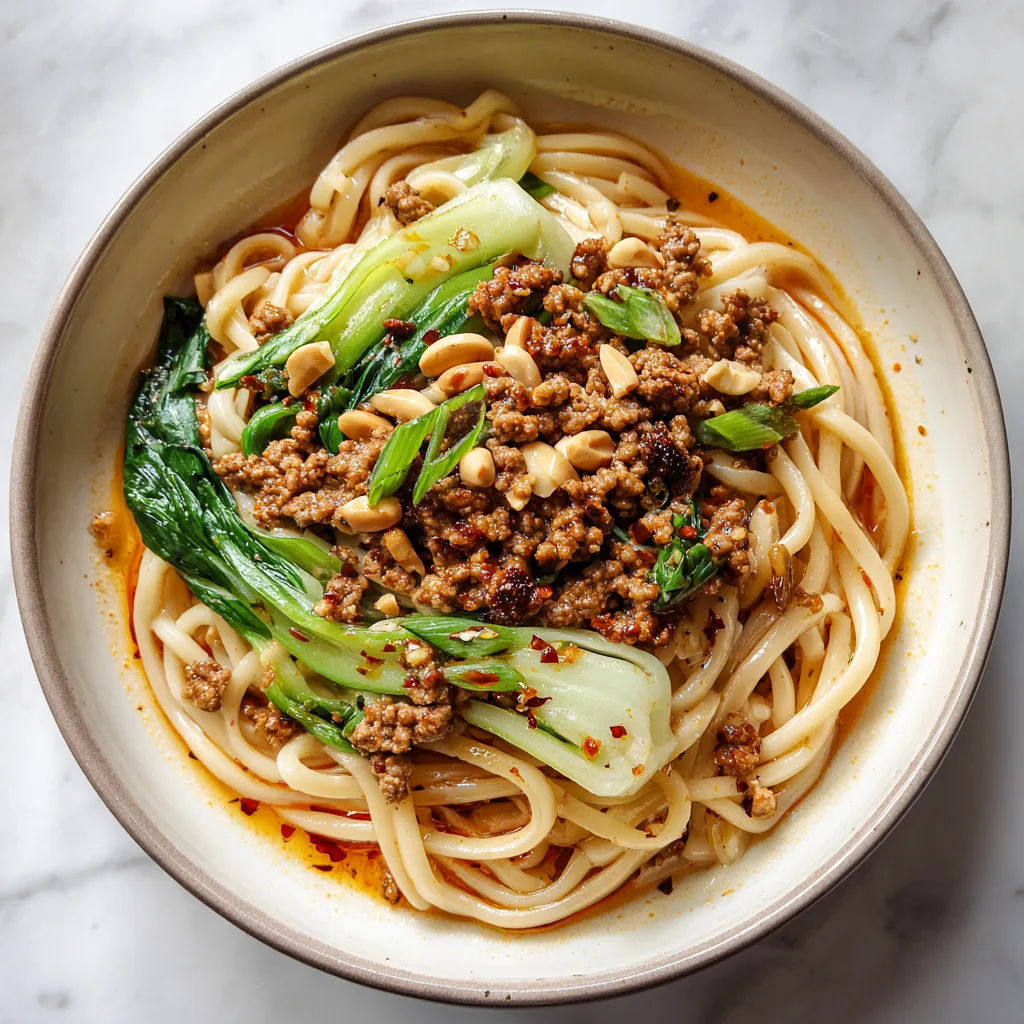
This is my weeknight-friendly take on a classic dan dan noodles recipe: springy wheat noodles tossed in a creamy-salty-slightly sweet sesame sauce, topped with sizzling ground pork, and finished with enough chili oil to make you feel like you ordered from your favorite spot. It hits the whole spectrum (numb, spicy, savory, nutty) without requiring a pantry full of hard-to-find stuff. The big secret here is building layers: seasoning the pork aggressively, blooming aromatics in oil, and using a little noodle water to turn the sauce silky instead of stodgy.
Easy Homemade Dan Dan Noodles with Ground Pork and Chili Oil (Weeknight-Sized, Restaurant-Bold)
Spicy-sesame dandan noodles with garlicky ground pork and chili oil, tossed with bouncy noodles and crisp toppings.
Prep Time 20 minutes mins
Cook Time 20 minutes mins
Total Time 40 minutes mins
Course Main Dish
Cuisine Chinese
Large pot at least 6 quart for boiling noodles; a stockpot is ideal, but any tall pot works
Large skillet 12 inch skillet or a wok; nonstick is fine, but stainless or carbon steel gives better browning on the pork
Mixing bowl medium bowl for whisking the sauce; a large measuring cup also works and pours neatly
Fine mesh strainer for draining noodles; tongs can substitute if you like to transfer noodles directly to the skillet
Microplane or fine grater for ginger and garlic; a knife works, just mince very finely so it melts into the sauce
Tongs for tossing noodles quickly; two forks or chopsticks work in a pinch
For the noodle sauce
- ⅓ cup chinese sesame paste or use tahini (lighter, slightly less toasty) and add 1 teaspoon toasted sesame oil
- 3 tablespoon light soy sauce or use tamari; if using a very salty soy sauce, start with 2 tablespoon and adjust
- 1 tablespoon black vinegar chinkiang vinegar is classic; rice vinegar works but tastes brighter and less malty
- 1 tablespoon granulated sugar balances the heat and sesame; swap with brown sugar for a deeper note
- 2 teaspoon toasted sesame oil a finishing oil, not a cooking oil
- 2 tablespoon chili oil use your favorite; choose one with chili flakes for texture
- 1 teaspoon ground sichuan peppercorn optional but highly recommended for the classic tingly bite; use freshly ground if possible
- 2 tablespoon hot water helps loosen sesame paste so it whisks smoothly; you will add more noodle water later as needed
For the ground pork topping
- 1 tablespoon neutral oil avocado, grapeseed, or canola
- 1 pound ground pork aim for 20% fat for the best flavor; ground turkey also works but tastes milder
- 4 clove garlic minced; for a softer garlic edge, grate it
- 1 tablespoon fresh ginger finely grated or minced
- 2 tablespoon light soy sauce salts the meat and builds umami
- 1 tablespoon shaoxing wine or use dry sherry; if skipping, add 1 tablespoon water
- 1 tablespoon hoisin sauce adds sweetness and body; substitute with 2 teaspoon sugar plus 1 teaspoon extra soy sauce
- 1 teaspoon doubanjiang fermented chili bean paste; optional but excellent for depth (use less if very salty)
- 1 teaspoon cornstarch optional, helps the sauce cling to the pork
- 2 tablespoon water for a quick slurry with cornstarch, or just to loosen the pan sauce if skipping cornstarch
For the noodles and assembly
- 12 ounce wheat noodles fresh or dried; you can use ramen-style noodles, udon-style wheat noodles, or a shanghai noodles recipe-style noodle (thick, chewy, wheat-based)
- 3 cup baby bok choy halved; or use spinach, yu choy, or napa cabbage
- 4 each scallion thinly sliced
- ¼ cup roasted peanuts roughly chopped; swap with cashew or sesame seed
- 1 cup cucumber julienned for crunch; optional but highly recommended
- 1 teaspoon chili flakes optional, for extra heat on top
Prep (set yourself up for fast cooking)
Bring a large pot of water to a boil. While it heats, mince the garlic, grate the ginger, slice the scallions, chop the peanuts, and prep the cucumber and bok choy. This dish moves quickly once the skillet is hot, so having everything ready prevents overcooked noodles or scorched aromatics.
In a medium bowl, whisk together the sesame paste, soy sauce, black vinegar, sugar, toasted sesame oil, chili oil, ground sichuan peppercorn (if using), and hot water. Whisk until the sauce looks glossy and pourable. If it looks thick like frosting, add 1 teaspoon hot water at a time until it loosens. Set aside.
Cook the pork (savory, a little sticky, not dry)
Heat the neutral oil in a large skillet over medium-high heat for 2 minutes. Add the ground pork and press it into a thin layer so it makes good contact with the pan. Let it cook undisturbed for 3 minutes to brown, then break it up and continue cooking for 3 minutes until you see crisp edges.
Add the garlic and ginger and cook for 1 minute, stirring constantly. You want the aromatics fragrant, not bitter. Stir in the soy sauce, shaoxing wine, hoisin sauce, and doubanjiang (if using). Let it bubble for 2 minutes so the pork absorbs the seasoning.
If using cornstarch, stir it into the water, then pour into the skillet and simmer for 1 minute. The sauce should lightly glaze the pork instead of pooling. Turn off the heat and taste. If you want more heat, add 1 teaspoon chili oil; if you want more salt, add 1 teaspoon soy sauce.
Boil noodles and greens (and save the magic water)
Salt the boiling water lightly. Cook the wheat noodles according to the package directions for 8 minutes, stirring a few times so they do not stick. In the last 2 minutes of cooking, add the bok choy to the same pot to blanch.
Before draining, scoop out 1 cup noodle water. Drain the noodles and bok choy well. Do not rinse unless your noodles are extremely starchy and you prefer a cleaner bite (rinsing can make the sauce cling less).
Assemble (this is where it turns into real dandan noodles)
Add the whisked sesame-chili sauce to a large serving bowl (or divide between 4 bowls). Stir in ⅓ cup reserved noodle water to start. The goal is a sauce that coats noodles in a silky layer, not a thick paste.
Add the hot noodles and toss aggressively with tongs for 30 seconds. Add more noodle water, 1 tablespoon at a time, until the noodles look evenly coated and glossy. This step is the difference between clumpy sauce and restaurant-style sheen, and it is why this dan dan noodles recipe is so reliable.
Top with the glazed ground pork, bok choy, scallions, peanuts, and cucumber. Finish with an extra drizzle of chili oil if you like it spicy. Serve immediately while the noodles are hot and the sauce is at peak creaminess.
Pairings
Pairings that make these noodles feel like a full spread (without a ton of extra work):
1) Something crunchy and acidic
A quick smashed cucumber salad is basically made for dandan noodles. Toss cucumber with a pinch of salt, a splash of rice vinegar, and a tiny drizzle of sesame oil. The cold crunch cuts through the rich sesame sauce and chili oil.
2) A light protein side
If you want more protein without more heaviness, go for soft tofu with soy sauce, a little chili crisp, and scallion. It keeps the vibe consistent and feels very "noodle shop." (If you are searching other soy noodles style meals, this kind of simple tofu side fits that same pantry.)
3) Greens that do not fight the sauce
Garlic sautéed gai lan, baby spinach, or simple stir-fried napa cabbage work well. Keep the seasoning minimal so the noodles stay the star.
4) Drinks
I love a lightly bitter lager, a crisp riesling, or iced jasmine tea. Anything super tannic can amplify the chili heat, so keep it bright and refreshing.
5) Dessert idea
Fresh orange slices or a simple sesame dessert (like sesame cookies) lands nicely after the spice. The point is a clean finish, not more richness.
FAQs
Is this a traditional dan dan noodles recipe?
It is inspired by classic Sichuan dandan noodles, but built for a home kitchen. Traditional versions often use ya cai (preserved mustard greens) and may lean heavier on doubanjiang, chili oil, and Sichuan peppercorn. This version keeps the same overall profile (sesame, chili, savory pork) with ingredients that are easier to find.
What type of meat is best, and can I use chicken breast or chicken thigh instead of pork?
Ground pork with some fat (around 80/20) is the easiest path to juicy, flavorful topping. If you swap poultry, choose ground chicken thigh for better flavor and moisture. Chicken breast can work, but it dries out faster, so add 1 teaspoon extra oil to the skillet and do not overcook. You can also use ground turkey thigh.
Can I make it less spicy without losing the flavor?
Yes. Use only 1 teaspoon chili oil in the sauce and skip the chili flakes on top. Keep the black vinegar, sesame paste, and soy sauce amounts the same so you still get the signature tangy-nutty punch. If you skip Sichuan peppercorn, you lose the tingle but not the core flavor.
What noodles should I use if I cannot find Chinese wheat noodles?
Ramen-style wheat noodles are the easiest substitute and give that springy chew. You can also use thicker wheat noodles similar to what you might see in a shanghai noodles recipe. I would avoid very thin rice vermicelli here because it does not hold the sauce the same way.
Can I make dandan noodles recipes ahead for meal prep?
You can prep components ahead, but assemble right before eating for the best texture. Make the sesame-chili sauce and cook the pork up to 3 days ahead, then reheat the pork with a splash of water. Boil noodles fresh (or at least reheat them quickly in hot water) and toss with sauce plus reserved noodle water right before serving so it stays glossy instead of gluey.