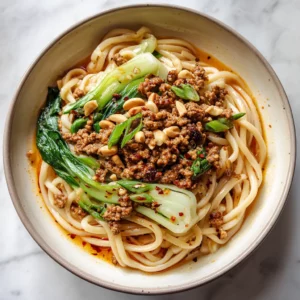
Easy Homemade Dan Dan Noodles with Ground Pork and Chili Oil (Weeknight-Sized, Restaurant-Bold)
Spicy-sesame dandan noodles with garlicky ground pork and chili oil, tossed with bouncy noodles and crisp toppings.
Equipment
- Large pot at least 6 quart for boiling noodles; a stockpot is ideal, but any tall pot works
- Large skillet 12 inch skillet or a wok; nonstick is fine, but stainless or carbon steel gives better browning on the pork
- Mixing bowl medium bowl for whisking the sauce; a large measuring cup also works and pours neatly
- Fine mesh strainer for draining noodles; tongs can substitute if you like to transfer noodles directly to the skillet
- Microplane or fine grater for ginger and garlic; a knife works, just mince very finely so it melts into the sauce
- Tongs for tossing noodles quickly; two forks or chopsticks work in a pinch
Ingredients
For the noodle sauce
- ⅓ cup chinese sesame paste or use tahini (lighter, slightly less toasty) and add 1 teaspoon toasted sesame oil
- 3 tablespoon light soy sauce or use tamari; if using a very salty soy sauce, start with 2 tablespoon and adjust
- 1 tablespoon black vinegar chinkiang vinegar is classic; rice vinegar works but tastes brighter and less malty
- 1 tablespoon granulated sugar balances the heat and sesame; swap with brown sugar for a deeper note
- 2 teaspoon toasted sesame oil a finishing oil, not a cooking oil
- 2 tablespoon chili oil use your favorite; choose one with chili flakes for texture
- 1 teaspoon ground sichuan peppercorn optional but highly recommended for the classic tingly bite; use freshly ground if possible
- 2 tablespoon hot water helps loosen sesame paste so it whisks smoothly; you will add more noodle water later as needed
For the ground pork topping
- 1 tablespoon neutral oil avocado, grapeseed, or canola
- 1 pound ground pork aim for 20% fat for the best flavor; ground turkey also works but tastes milder
- 4 clove garlic minced; for a softer garlic edge, grate it
- 1 tablespoon fresh ginger finely grated or minced
- 2 tablespoon light soy sauce salts the meat and builds umami
- 1 tablespoon shaoxing wine or use dry sherry; if skipping, add 1 tablespoon water
- 1 tablespoon hoisin sauce adds sweetness and body; substitute with 2 teaspoon sugar plus 1 teaspoon extra soy sauce
- 1 teaspoon doubanjiang fermented chili bean paste; optional but excellent for depth (use less if very salty)
- 1 teaspoon cornstarch optional, helps the sauce cling to the pork
- 2 tablespoon water for a quick slurry with cornstarch, or just to loosen the pan sauce if skipping cornstarch
For the noodles and assembly
- 12 ounce wheat noodles fresh or dried; you can use ramen-style noodles, udon-style wheat noodles, or a shanghai noodles recipe-style noodle (thick, chewy, wheat-based)
- 3 cup baby bok choy halved; or use spinach, yu choy, or napa cabbage
- 4 each scallion thinly sliced
- ¼ cup roasted peanuts roughly chopped; swap with cashew or sesame seed
- 1 cup cucumber julienned for crunch; optional but highly recommended
- 1 teaspoon chili flakes optional, for extra heat on top
Instructions
Prep (set yourself up for fast cooking)
- Bring a large pot of water to a boil. While it heats, mince the garlic, grate the ginger, slice the scallions, chop the peanuts, and prep the cucumber and bok choy. This dish moves quickly once the skillet is hot, so having everything ready prevents overcooked noodles or scorched aromatics.
- In a medium bowl, whisk together the sesame paste, soy sauce, black vinegar, sugar, toasted sesame oil, chili oil, ground sichuan peppercorn (if using), and hot water. Whisk until the sauce looks glossy and pourable. If it looks thick like frosting, add 1 teaspoon hot water at a time until it loosens. Set aside.
Cook the pork (savory, a little sticky, not dry)
- Heat the neutral oil in a large skillet over medium-high heat for 2 minutes. Add the ground pork and press it into a thin layer so it makes good contact with the pan. Let it cook undisturbed for 3 minutes to brown, then break it up and continue cooking for 3 minutes until you see crisp edges.
- Add the garlic and ginger and cook for 1 minute, stirring constantly. You want the aromatics fragrant, not bitter. Stir in the soy sauce, shaoxing wine, hoisin sauce, and doubanjiang (if using). Let it bubble for 2 minutes so the pork absorbs the seasoning.
- If using cornstarch, stir it into the water, then pour into the skillet and simmer for 1 minute. The sauce should lightly glaze the pork instead of pooling. Turn off the heat and taste. If you want more heat, add 1 teaspoon chili oil; if you want more salt, add 1 teaspoon soy sauce.
Boil noodles and greens (and save the magic water)
- Salt the boiling water lightly. Cook the wheat noodles according to the package directions for 8 minutes, stirring a few times so they do not stick. In the last 2 minutes of cooking, add the bok choy to the same pot to blanch.
- Before draining, scoop out 1 cup noodle water. Drain the noodles and bok choy well. Do not rinse unless your noodles are extremely starchy and you prefer a cleaner bite (rinsing can make the sauce cling less).
Assemble (this is where it turns into real dandan noodles)
- Add the whisked sesame-chili sauce to a large serving bowl (or divide between 4 bowls). Stir in ⅓ cup reserved noodle water to start. The goal is a sauce that coats noodles in a silky layer, not a thick paste.
- Add the hot noodles and toss aggressively with tongs for 30 seconds. Add more noodle water, 1 tablespoon at a time, until the noodles look evenly coated and glossy. This step is the difference between clumpy sauce and restaurant-style sheen, and it is why this dan dan noodles recipe is so reliable.
- Top with the glazed ground pork, bok choy, scallions, peanuts, and cucumber. Finish with an extra drizzle of chili oil if you like it spicy. Serve immediately while the noodles are hot and the sauce is at peak creaminess.