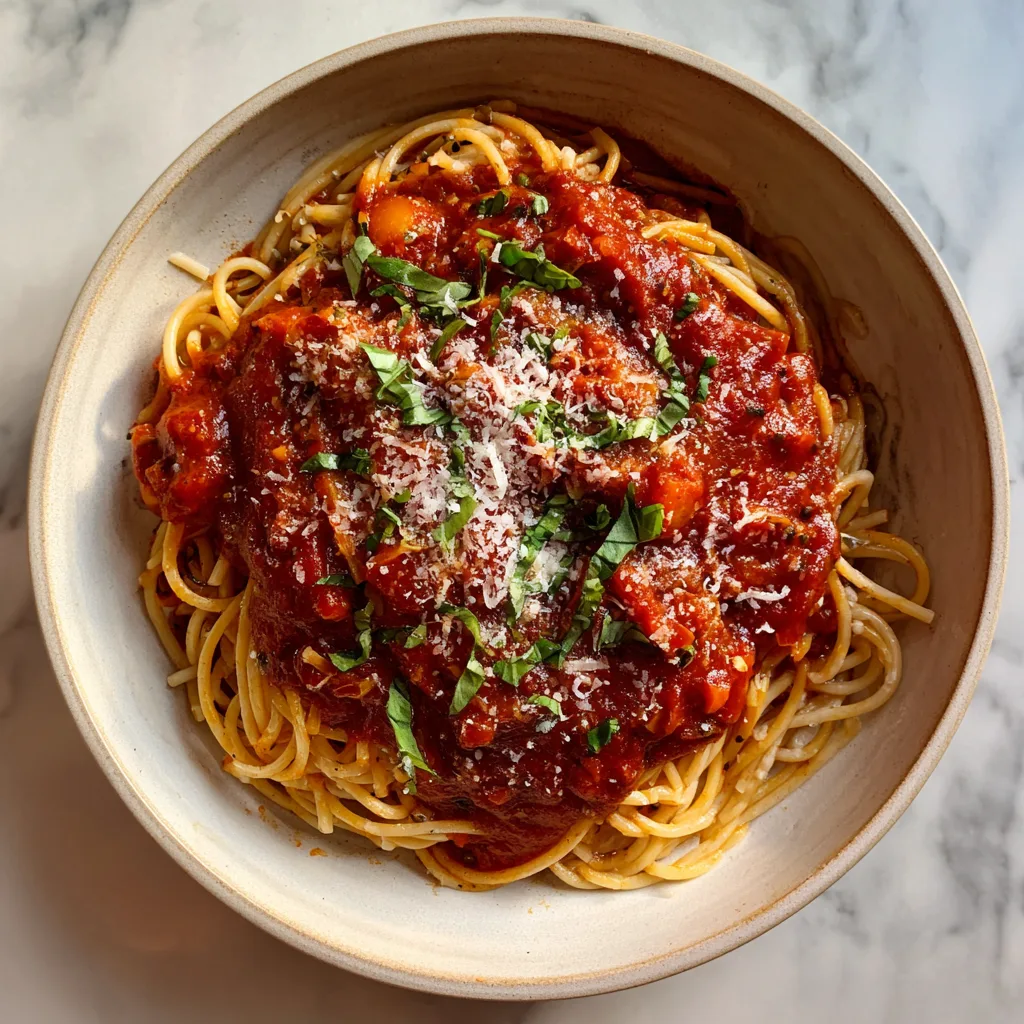
If you love the idea of a lazy, all-afternoon pot of sauce perfuming the whole house but you don't want to babysit meatballs, this is your move. This vegetarian Sunday gravy leans on a sheet pan of hard-roasted vegetables, tomato paste browned until brick-red, and a very deliberate herb situation (basil, oregano, and a sneaky rosemary sprig) to build that deep, cozy, "we've been simmering since church" flavor. It's a Sunday gravy recipe Italian in spirit: patient, bold, and meant to be ladled generously over pasta with a shower of cheese.
Vegetarian Sunday Gravy With Roasted Vegetables and Herbs (Big-Pot "Sunday Sauce" Vibes, No Meat Needed)
A rich vegetarian Sunday gravy made from roasted vegetables, tomatoes, and herbs, simmered into a thick, glossy sauce for pasta night.
Prep Time 25 minutes mins
Cook Time 1 hour hr 35 minutes mins
Total Time 2 hours hrs
Course Main Dish
Cuisine Italian
Rimmed baking sheet use a standard half sheet pan for good browning; if you only have a smaller pan, roast in two batches so the vegetables roast instead of steam
large heavy-bottom pot or dutch oven 5 to 7 quart is ideal for a comfortable simmer; a stockpot works, but a dutch oven gives you steadier heat and better reduction control
Wooden spoon great for scraping up the browned tomato paste and any fond; a silicone spatula works too
Box grater or microplane for grating garlic if you want it to melt into the sauce; you can also mince with a knife
Immersion blender (optional) for a slightly smoother, restaurant-y texture without fully pureeing; a countertop blender works, but blend in batches and vent the lid
Fine mesh strainer (optional) only if you want a super-silky finish; I usually skip this because the roasted vegetables are the point
for the roasted vegetables
- 1 tablespoon olive oil extra virgin; add another drizzle if your pan looks dry
- 1 yellow onion cut into 1-inch wedges so it caramelizes instead of disappearing
- 2 carrot peeled and cut into 1/2-inch chunks for sweetness and body
- 2 celery rib cut into 1/2-inch chunks; this is your old-school soffritto backbone
- 1 red bell pepper cut into 1-inch pieces; adds roasted sweetness and color
- 8 ounce cremini mushroom halved or quartered; for extra savory depth (swap with portobello or omit if you hate mushrooms)
- 3/4 teaspoon kosher salt seasoning for the roast; you'll adjust the pot later
- 1/2 teaspoon black pepper freshly ground if possible
for the gravy (sauce)
- 2 tablespoon olive oil this helps bloom the herbs and brown the paste
- 6 clove garlic minced or grated; use less if your garlic is extra spicy
- 3 ounce tomato paste from a tube is easiest; browning it is non-negotiable for depth
- 1/2 teaspoon red pepper flake optional, but it makes the tomatoes taste more tomato-y
- 1 teaspoon dried oregano if you have dried marjoram, you can use half and half
- 1 teaspoon fennel seed optional, but gives a subtle "sausage" aroma without any meat
- 1 cup dry red wine optional; substitute with vegetable broth plus 1 tablespoon balsamic vinegar
- 2 28-ounce can whole peeled tomato crush by hand for rustic texture; substitute with crushed tomato if you want it smoother
- 2 cup vegetable broth use low-sodium so you can control salt; water works in a pinch
- 1 parmesan rind optional but amazing; omit for vegan
- 1 bay leaf adds background savoriness
- 1 fresh rosemary sprig optional; remove early if it starts to dominate
- 1/3 cup fresh basil torn; add at the end so it stays fragrant
- 2 tablespoon unsalted butter optional, for gloss and a rounded finish; use vegan butter or more olive oil if needed
- 1 1/2 teaspoon kosher salt start here, then adjust after reduction
- 1 teaspoon granulated sugar optional; only if your tomatoes are aggressively acidic
to serve
- 1 pound rigatoni or spaghetti, bucatini, ziti, or whatever makes you happy
- 1 cup grated parmesan cheese or pecorino romano; use a vegetarian hard cheese if needed
- 2 tablespoon chopped parsley optional, for a fresh top note
roast the vegetables (this is where the "all-day" flavor starts)
Heat the oven to 425°F. Add the onion, carrot, celery, bell pepper, and mushroom to a rimmed baking sheet. Drizzle with 1 tablespoon olive oil, then season with 3/4 teaspoon kosher salt and 1/2 teaspoon black pepper. Toss well and spread into an even layer with some breathing room so the vegetables roast instead of steam.
Roast for 30 minutes, stirring once halfway through, until the edges are deeply browned and the onions are caramelized. You're not aiming for "tender" so much as "roasty and a little aggressive" because those browned bits are your vegetarian version of meat drippings.
build the pot (tomato paste, herbs, and a proper simmer)
While the vegetables roast, set a large heavy-bottom pot or dutch oven over medium heat. Add 2 tablespoons olive oil. When it shimmers, add the garlic and cook for 30 seconds, just until fragrant (if it starts browning, lower the heat).
Add the tomato paste and stir constantly for 3 minutes. You want it to darken from bright red to a deeper brick color and start sticking a little to the bottom. This is the difference between "tomato sauce" and a homemade italian gravy that tastes like it has history.
Stir in the red pepper flake, dried oregano, and fennel seed (if using) for 30 seconds to bloom the spices in the oil.
Pour in the red wine (if using) and scrape the bottom of the pot with a wooden spoon to dissolve the tomato paste and any browned bits. Simmer for 2 minutes to cook off the raw wine edge.
Add the whole peeled tomatoes, crushing them with your hands as they go in (careful: they splatter). Add 2 cups vegetable broth, the parmesan rind (if using), bay leaf, rosemary sprig (if using), 1 1/2 teaspoon kosher salt, and the sugar (only if you know your tomatoes run sharp). Stir well.
add the roasted vegetables and simmer into "sunday gravy" territory
Scrape the roasted vegetables (and every last browned bit from the sheet pan) into the pot. Stir to combine. Bring the sauce to a gentle bubble over medium heat.
Reduce heat to low and simmer, partially covered, for 60 minutes. Stir every 10 minutes, scraping the bottom and sides. Keep it at a slow, steady blip-blip, not a rolling boil, so it reduces without scorching.
After 30 minutes of simmering, taste and decide your texture plan. If you like it chunky and rustic, leave it alone. If you want it more like an italian gravy sauce that clings to pasta, use an immersion blender for 10 seconds, just enough to thicken the body while keeping some texture. (You can always blend more later; you can't un-blend.)
At the end of the simmer, remove and discard the bay leaf, rosemary sprig, and parmesan rind. Stir in the basil. If using butter, stir it in now for a glossy, rounded finish. Taste and adjust salt and heat. If the sauce tastes flat, it usually needs a pinch more salt; if it tastes harsh, it usually needs 5 more minutes of simmering.
cook pasta and serve like it's Sunday
Bring a large pot of salted water to a boil. Cook the rigatoni until al dente, then reserve 1 cup pasta water and drain.
Toss pasta with a few ladles of sauce in a warm pot or bowl, loosening with splashes of reserved pasta water until it looks silky and coated. Serve with more sauce on top, plenty of grated parmesan, and parsley if you want a fresh finish.
Pairings
What to serve with this vegetarian Sunday gravy
- Pasta shapes: Rigatoni and ziti are ideal because the ridges grab the sauce. Bucatini is a close second if you like slurpy noodles and big flavor.
- Cheesy situation: Grated parmesan or pecorino romano on top is classic. For a vegetarian-friendly option, look for a rennet-free hard cheese. For vegan, skip the cheese and finish with a drizzle of good olive oil and a shower of toasted breadcrumbs.
- Bread: A torn hunk of crusty bread is mandatory for "scarpetta" (wiping the plate). Garlic bread is obvious, but a simple toasted ciabatta rubbed with a cut clove of garlic is even better because it doesn't compete.
- Vegetables on the side: Since the sauce is already vegetable-forward, keep sides simple. A lemony arugula salad cuts the richness, or do roasted broccoli with chili flake and a squeeze of lemon.
- Wine: If you used red wine in the pot, pour the rest at the table. Sangiovese, barbera, or a juicy nero d'avola all match the tomato and herbs.
- Protein add-ons (if you want but still vegetarian): Pan-seared halloumi, crispy roasted chickpeas, or a plant-based Italian sausage sliced and browned separately, then stirred in at the end.
If you're chasing that "italian sunday gravy authentic" feeling but keeping it meatless, the biggest pairing tip is this: serve it family-style in a big bowl, extra sauce on the side, and let everyone build their own plate. The vibe is half the flavor.
FAQs
Is this a sunday gravy recipe italian cooks would recognize, even without meat?
Traditional Sunday gravy often simmers with meat (like pork ribs, sausage, or meatballs) to enrich the sauce. This version keeps the slow-simmer spirit but builds depth with roasted vegetables, browned tomato paste, and herbs. It scratches the same itch: thick, rich, and made for a big pasta dinner.
Can I make it taste more like a "best sunday gravy recipe" with that meaty savoriness (but still vegetarian)?
Yes. Keep the mushrooms (they add umami), use the optional fennel seed, and don't skip browning the tomato paste until it's dark. A parmesan rind also adds a subtle savory backbone (not vegan). For even more depth, stir in 1 teaspoon soy sauce or white miso at the end; it won't taste "Asian," it just tastes fuller.
What kind of tomatoes should I use for homemade italian gravy?
Whole peeled tomatoes are my favorite because you can crush them by hand and control the texture. If you prefer a smoother sauce, use crushed tomatoes. If your canned tomatoes taste super acidic, a small amount of sugar helps, but simmering and proper seasoning usually solve it.
If I wanted to add meat later, what cuts work best (breast, thigh, boneless, etc.)?
Sunday gravy is usually built with pork and beef, not chicken breast or thighs. If you do add chicken, boneless skinless thighs hold up better than breast during a long simmer and stay tender. If you add meatballs, brown them first and simmer gently so they don't fall apart.
Can I make this ahead, and does it freeze well?
It's even better the next day. Cool it, refrigerate up to 4 days, and reheat slowly with a splash of water or broth. Freeze in containers for up to 3 months. Thaw overnight in the fridge, then rewarm on low and adjust salt after it's hot.