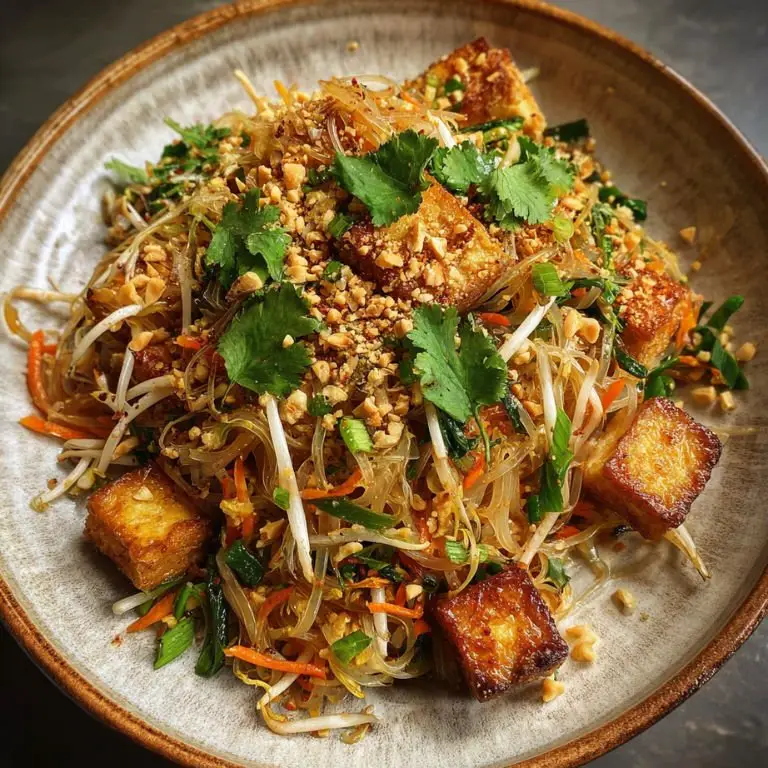
If you’ve ever wandered the night markets of Bangkok or perused a bustling street vendor’s cart, chances are you’ve encountered the unmistakable sizzle and sweet-savory aroma of Pad Thai. This vegetarian Pad Thai with tofu and rice noodles brings that same magic into your own kitchen—without needing a passport. It's everything you love about the classic Thai dish: chewy noodles, crisp tofu, crunchy peanuts, and a tangy tamarind-based sauce that dances between sweet, sour, and spicy. Whether you're vegetarian or just craving a lighter take on an authentic pad thai recipe, this version checks all the boxes. And don’t worry, we’ll cover exactly how to make pad thai at home, including insider tricks that keep it true to its Thai street food roots.
Vegetarian Pad Thai with Tofu and Rice Noodles
Prep Time 25 minutes mins
Cook Time 15 minutes mins
Total Time 40 minutes mins
Course Main Course
Cuisine Thai
Servings 4 generous portions
Large nonstick skillet or wok A wok is ideal for high-heat cooking and that characteristic smoky flavor, but a large skillet works well too.
Tofu press or heavy pan To press excess water out of the tofu for better crisping.
Medium saucepan To soak or boil the rice noodles, depending on package directions.
Spatula or wok turner A sturdy spatula will help you toss ingredients quickly and evenly.
Knife and Cutting Board For slicing vegetables and tofu cleanly.
For the Sauce
- 3 tablespoons tamarind paste authentic Pad Thai flavor starts here
- 3 tablespoons palm sugar or light brown sugar
- 2 tablespoons soy sauce or tamari for gluten-free
- 1 tablespoon rice vinegar
- 1 tablespoon vegetarian oyster sauce optional but highly recommended
- 1 –2 teaspoons chili garlic sauce adjust based on spice preference
For the Stir-Fry
- 8 oz extra-firm tofu pressed and cut into cubes
- 8 oz flat rice noodles about ¼ inch wide
- 3 tablespoons vegetable oil divided
- 3 cloves garlic minced
- 2 shallots thinly sliced
- 2 eggs optional, omit for vegan version
- 1 cup bean sprouts
- 1 medium carrot julienned
- 4 scallions sliced (white and green parts separated)
- ¼ cup roasted peanuts crushed
- 1 lime cut into wedges
- Fresh cilantro for garnish
Prepare the Noodles
Soak the rice noodles in warm water for about 25 minutes until they are pliable but not mushy. If the package says to boil them, do so but remove them just before fully soft. Drain and set aside.
Make the Sauce
In a small bowl, whisk together tamarind paste, sugar, soy sauce, rice vinegar, vegetarian oyster sauce, and chili garlic sauce. Taste and adjust as needed—this is your flavor backbone.
Crisp the Tofu
Heat 1 tablespoon of oil in your wok over medium-high heat. Add the tofu cubes and cook until all sides are golden brown and crispy. Remove from the wok and set aside.
Sauté the Aromatics
Add another tablespoon of oil. Toss in garlic and shallots and stir-fry until fragrant, about 1–2 minutes. If using eggs, push the garlic mixture to one side, crack the eggs in, scramble quickly, then mix everything together.
Add Noodles and Sauce
Toss in the drained noodles and pour the sauce over them. Use tongs or a spatula to mix thoroughly, ensuring each strand is coated. Stir-fry for 2–3 minutes, allowing the noodles to absorb the sauce.
Add Veggies and Tofu
Add bean sprouts, carrots, the white parts of scallions, and the cooked tofu. Stir-fry briefly—just until vegetables begin to soften but still retain crunch.
Finish and Serve
Remove from heat. Plate the Pad Thai and top with green scallions, crushed peanuts, and fresh cilantro. Serve with lime wedges on the side for that final zing.
Pairings
This vegetarian Pad Thai is a star on its own, but here are a few ideal pairings for a full Thai dinner recipe experience:
- Thai green curry: Mild and creamy with coconut milk and eggplant, it complements the tangy Pad Thai without overwhelming it.
- Som Tum (green papaya salad): Refreshing and spicy, a perfect starter.
- Thai iced tea: Rich and sweet, this cooling drink helps balance the heat from the chili sauce.
- Mango sticky rice: End your meal on a tropical high note with this popular dessert.
If you're making a dinner spread inspired by traditional Thai food recipes, adding a soup like Tom Yum or a dish like drunken noodles Thai style can bring that variety of flavors Thai cuisine is famous for.
FAQs
1. Can I use a different protein instead of tofu?
Yes, while this is a vegetarian recipe, you can substitute tofu with tempeh, seitan, or even vegetables like mushrooms for added texture. For non-vegetarian versions, check out a good chicken pad thai recipe authentic to Thai cuisine.
2. What kind of rice noodles should I use?
Use flat rice noodles, about ¼ inch wide. These are sometimes labeled as “Pad Thai noodles” or just “rice stick noodles.” Avoid super-thin vermicelli or extra-wide ones, as they alter the texture significantly.
3. Do I need tamarind paste for authentic flavor?
Yes, tamarind paste is essential for that sweet-tart depth found in any authentic pad thai recipe. It’s widely available in Asian markets and online. If you can’t find it, mix lime juice with a bit of brown sugar, but it won’t be quite the same.
4. Is Pad Thai supposed to be spicy?
Pad Thai can be customized for spice. The base dish is usually mild, and diners add chili flakes or chili oil to taste. If you love a kick, increase the chili garlic sauce or serve with Thai chili powder on the side for a pad thai recipe spicy version.
5. Can I make this dish in advance?
You can prep the components ahead (tofu, sauce, sliced veggies), but for best texture, stir-fry everything fresh. Reheated Pad Thai tends to lose its chew and becomes sticky.