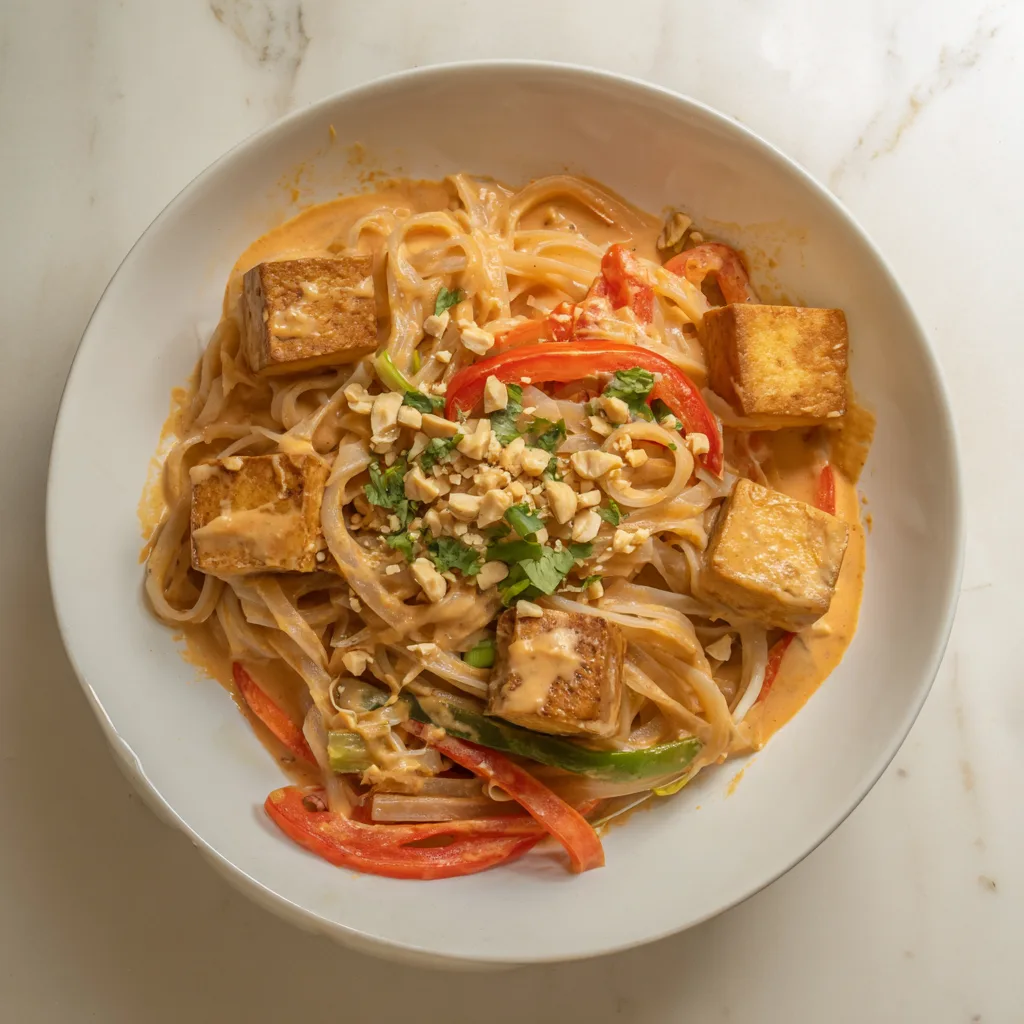
This vegetarian pad thai curry with tofu and bell peppers is what happens when pad thai gets a little cozy with a Thai curry night. You still get the chewy rice noodles, tangy-sweet-salty vibe, and big crunchy toppings, but there's also a silky coconut-curry sauce that clings to every strand. It's weeknight-friendly, pantry-flexible, and genuinely satisfying without needing meat. The tofu soaks up the sauce like a champ, the peppers stay sweet and crisp-tender, and the whole thing finishes with a bright hit of lime and roasted peanuts that makes you want to eat it straight out of the wok.
Vegetarian Pad Thai Curry with Tofu and Bell Peppers (The Cozy Weeknight Mashup)
A saucy pad thai curry recipe with tofu, bell peppers, rice noodles, and a coconut-tamarind curry sauce finished with lime, peanuts, and fresh herbs.
Prep Time 20 minutes mins
Cook Time 20 minutes mins
Total Time 40 minutes mins
Course Main Dish
Cuisine Thai
large wok or 12-inch skillet a carbon-steel wok is great for speed and evaporation, but a wide nonstick or stainless 12-inch skillet also works; the key is surface area so the noodles can spread out instead of steaming
medium saucepan or kettle for boiling water to soak or loosen rice noodles; a kettle plus a heatproof bowl is a simple alternative
Fine mesh strainer or colander to drain noodles and rinse briefly if they get sticky; if you only have a colander with large holes, shake it well so noodles don't pool and turn gummy
Cutting board and sharp knife a chef's knife makes quick work of bell peppers and aromatics; a mandoline is optional if you want ultra-thin, quick-cooking slices
Small bowl and whisk for mixing the curry-pad thai sauce so it hits the pan ready to go; a jar with a lid is a good alternative for shaking
tongs and a flexible spatula tongs help lift and turn noodles without breaking them; a spatula is perfect for scraping sauce and moving tofu without tearing it apart
paper towel or clean kitchen towel to press tofu quickly; if you have a tofu press, use it, but towels and a heavy pan work just fine
For the noodles
- 8 ounce flat rice noodles pad thai-style; if using very thick noodles, soak a little longer and keep extra hot water nearby to loosen them in the pan
- 1 teaspoon neutral oil optional, for tossing drained noodles to prevent sticking; use avocado oil, grapeseed oil, or sunflower oil
For the tofu and vegetables
- 14 ounce extra-firm tofu pressed and cut into 3/4-inch cubes; super-firm also works and needs less pressing
- 2 tablespoon neutral oil divided; for searing tofu and stir-frying vegetables
- 1 red bell pepper thinly sliced; orange or yellow bell pepper is equally great
- 1 green bell pepper thinly sliced; adds a slightly grassy bite to balance the rich sauce
- 3 scallion white and green parts separated, thinly sliced
- 3 clove garlic minced; adjust up if you're a garlic person
- 1 tablespoon fresh ginger grated or minced; galangal is a fun upgrade if you have it
- 1 ½ cup bean sprout divided; keep some raw for crunch at the end
- 1 cup shredded carrot optional but lovely for sweetness and color; use pre-shredded for speed
For the curry-pad thai sauce
- 2 tablespoon red curry paste start here for a medium heat; different brands vary wildly, so taste and adjust
- ¾ cup coconut milk full-fat for the best texture; lite coconut milk works but the sauce will be thinner
- 3 tablespoon tamarind concentrate this is the tang that makes it feel like pad thai; if using tamarind pulp, dissolve and strain first
- 2 tablespoon soy sauce or tamari for gluten-free
- 1 tablespoon vegetarian fish sauce optional but adds savory depth; substitute with 1 tablespoon extra soy sauce plus a pinch of seaweed flakes if you have them
- 1 ½ tablespoon brown sugar or palm sugar; adjust sweetness to taste because tamarind brands vary
- 1 tablespoon lime juice plus more to finish; fresh is best here
- 1 teaspoon rice vinegar optional, if your tamarind isn't very tangy
- 1 teaspoon toasted sesame oil optional, for a nutty background note; go easy so it doesn't dominate
- ⅓ cup water for loosening the sauce in the pan; add more as needed to keep noodles silky, not clumpy
To finish and serve
- ⅓ cup roasted peanut roughly chopped; cashew also works and feels extra rich
- ¼ cup fresh cilantro roughly chopped; if you're not a cilantro fan, use Thai basil or extra scallion greens
- 1 lime cut into wedges
- 1 teaspoon crushed red pepper optional, for extra heat
- ½ teaspoon kosher salt use only if needed after tasting; soy sauce and curry paste can be salty
Prep (set yourself up for a quick homemade pad thai)
Press the tofu: wrap tofu in a clean towel or paper towel, set it on a plate, and place a heavy skillet or a couple of cans on top. Let it press while you prep everything else. Even 10 minutes helps it brown instead of steaming.
Mix the sauce: in a small bowl, whisk red curry paste, coconut milk, tamarind concentrate, soy sauce, vegetarian fish sauce (if using), brown sugar, lime juice, rice vinegar (if using), toasted sesame oil (if using), and water. Taste it now. You're looking for bold: tangy first, then savory, then a little sweetness. This is your pad thai sauce recipe easy enough to do in one bowl, but with curry depth.
Slice the vegetables: thinly slice the bell peppers, separate and slice the scallions, mince the garlic, and grate the ginger. Keep the green scallion tops and a handful of bean sprouts for the end so they stay fresh and crunchy.
Soak the noodles: bring water to a boil, then pour it over the rice noodles in a large bowl. Soak until pliable but not fully soft, then drain well. If the package gives a specific soak time, follow that and err on the slightly underdone side; the noodles finish cooking in the sauce. Toss drained noodles with 1 teaspoon neutral oil if they seem sticky.
Cook the tofu and vegetables
Sear the tofu: heat 1 tablespoon neutral oil in a wok or large skillet over medium-high heat. Add the pressed tofu cubes in a single layer and let them sit for a minute before you start stirring. Cook until golden on several sides, about 6 minutes total. Transfer tofu to a plate. (If it sticks a bit in stainless, it usually releases once it browns.)
Stir-fry the aromatics and peppers: add the remaining 1 tablespoon oil to the pan. Add scallion whites, garlic, and ginger, and stir for 30 seconds until fragrant. Add the bell peppers (and shredded carrot if using) with a pinch of salt. Stir-fry until the peppers are crisp-tender, about 3 minutes. You want color and a little blistering, not a limp sauté.
Bring it all together (the pad thai curry recipe moment)
Add noodles and sauce: reduce heat to medium. Add the drained noodles to the pan, then pour in the sauce. Use tongs to lift and turn the noodles so the sauce gets between strands. If it looks tight or dry, add a splash of hot water, 1 tablespoon at a time, until everything turns glossy and loose instead of clumpy.
Return tofu and add sprouts: add the seared tofu back to the pan, plus about 1 cup of the bean sprouts. Toss gently so you keep tofu cubes intact. Cook until the noodles are tender and the sauce thickens enough to coat, about 4 minutes. The sauce should cling, not puddle.
Taste and balance: turn off the heat. Taste a noodle. If it needs more tang, squeeze in more lime. If it needs more salt, add a small splash of soy sauce. If it feels too sharp, add a pinch more brown sugar. This is the secret to easy pad thai at home: adjust at the end like you mean it.
Serve
Plate it up: divide noodles into bowls. Top with remaining raw bean sprouts, scallion greens, chopped peanuts, and cilantro. Serve with lime wedges and crushed red pepper on the side so everyone can steer their own heat level.
Make it restaurant-nice: if you want extra aroma, warm a dry skillet, toast a spoonful of chopped peanuts for 1 minute, and sprinkle them on top right before serving. It's a tiny step that makes the whole dish smell like a takeout dream.
It's intentionally a mashup. Classic pad thai is a sweet-sour-savory noodle stir-fry (often with egg and fish sauce), while this one leans into a coconut-red-curry vibe. You still get tamarind, peanuts, lime, and rice noodles, but the curry paste and coconut milk make it a "pad thai curry recipe" rather than a traditional street-style version.
Extra-firm or super-firm tofu works best. Pressing is highly recommended because it helps the tofu brown and keeps it from watering down the sauce. If you only have firm tofu, press longer and handle gently in the pan.
Yes. Push the veggies to the side after stir-frying, add 1 teaspoon oil, then crack in 2 egg and scramble. Once just set, toss everything together before adding noodles and sauce. If you're keeping it vegan, skip the egg and add more tofu or edamame.
Use tamari instead of soy sauce and confirm your curry paste is gluten-free (some contain wheat-based additives). Rice noodles are typically gluten-free, but check the package if you're sensitive.
Boneless, skinless chicken thigh stays juicier and handles the curry sauce like a pro. Boneless, skinless chicken breast works too, but slice it thin and cook it quickly so it doesn't dry out. Sear the chicken first (like the tofu step), remove it, then proceed and add it back in when you return the tofu.