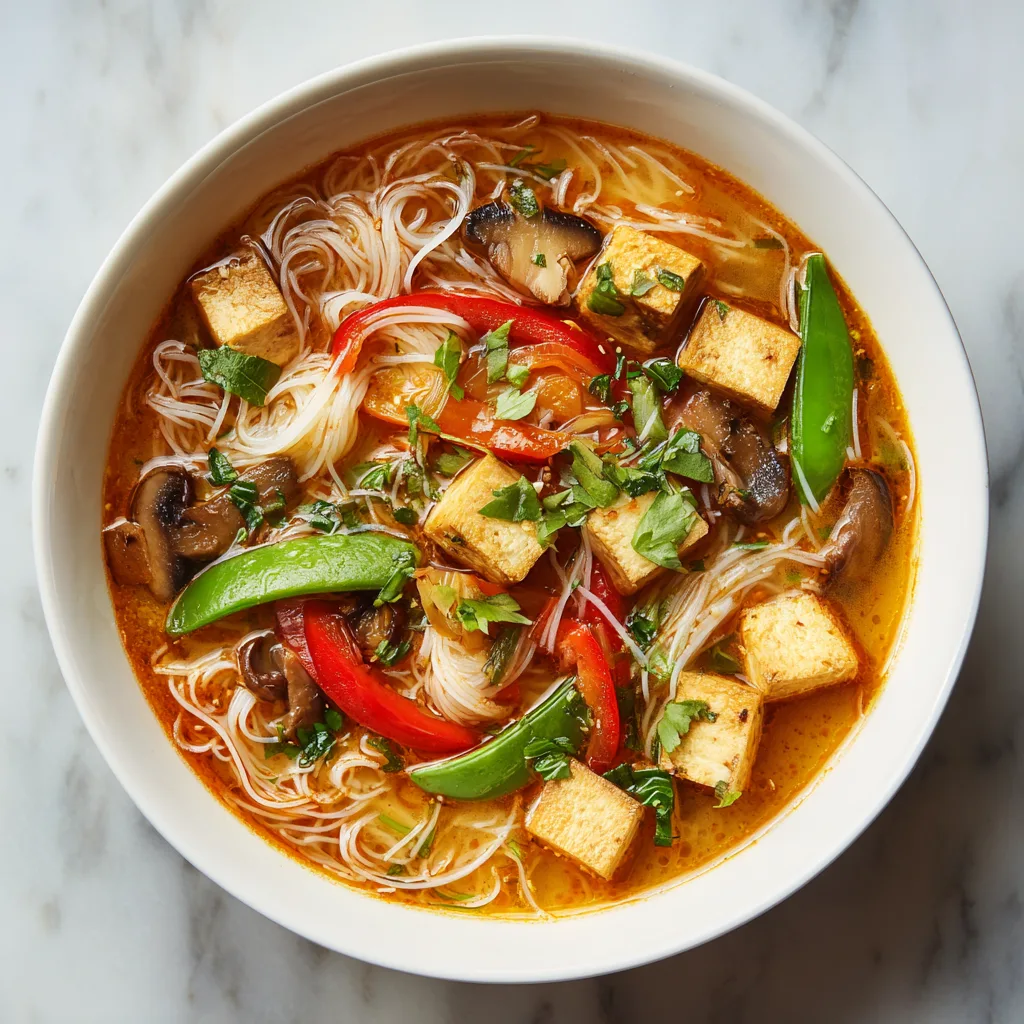
This vegan take on tom yum is the weeknight soup I make when I want big Thai restaurant vibes without doing the whole "special trip" thing. You still get that signature hot-and-sour punch (lime + chile), the aromatic lift from lemongrass and kaffir lime leaves, and a savory depth that tastes like it simmered all afternoon. The trick is building a fast, fragrant broth with mushrooms, a little miso, and soy sauce, then finishing with fresh lime juice and a swirl of coconut milk if you like it slightly creamy. I add rice noodles and a pile of crisp-tender vegetables so it eats like a full meal, not a sad cup of broth. If you're looking for a thai tom yum soup recipe that's genuinely doable at home and doesn't taste watered down, this is the one I'd bet on.
Vegan Tom Yum Soup With Rice Noodles and Vegetables (Hot, Sour, and Totally Slurpable)
A bright, spicy vegan tom yum soup with rice noodles, mushrooms, and crisp vegetables in a fragrant lemongrass-lime broth.
Prep Time 20 minutes mins
Cook Time 25 minutes mins
Total Time 45 minutes mins
Large Pot or Dutch Oven 5 quart or larger is ideal for comfortable stirring; a stockpot works too, and a wide dutch oven helps the aromatics bloom quickly.
Fine mesh strainer optional but helpful if you want to strain out lemongrass and galangal slices before serving; you can also fish them out with tongs.
Chef’s knife and cutting board a sharp knife matters for thin mushroom slices and quick prep; a serrated knife works surprisingly well on lemongrass stalks.
microplane or small grater for grating garlic and ginger when galangal is unavailable; you can mince with a knife instead.
tongs and a ladle tongs make it easy to remove lemongrass and lime leaves, and a ladle keeps noodle portions tidy when serving.
For the tom yum broth
- 1 tablespoon neutral oil avocado oil, grapeseed oil, or any mild cooking oil
- 2 lemongrass stalk trimmed and smashed; use the pale bottom portion for best flavor
- 6 kaffir lime leaf torn to release aroma; substitute 1 teaspoon lime zest if needed (different vibe, still good)
- 8 slice galangal or use ginger; galangal is more peppery and piney, ginger is warmer and sweeter
- 4 garlic clove lightly smashed
- 1 thai chile sliced; use 1 serrano chile for medium heat, or skip and add chile paste later
- 6 cup vegetable broth low-sodium if possible so you can season precisely
- 2 tablespoon soy sauce or tamari for gluten-free
- 1 tablespoon white miso stirred in off heat so it stays mellow; this adds a "seafood-ish" savory backbone without being funky
- 1 tablespoon brown sugar or coconut sugar; just enough to round the sour and heat
- 2 tablespoon lime juice plus more to finish; fresh lime is non-negotiable for that snap
Noodles, vegetables, and protein
- 6 ounce rice noodle thin or medium; vermicelli cooks fastest, pad thai style noodles give more chew
- 8 ounce cremini mushroom sliced; oyster mushrooms are amazing here too
- 1 red bell pepper thinly sliced; use carrot ribbons for extra crunch if you prefer
- 2 cup snow pea trimmed; sugar snap peas also work
- 2 cup baby bok choy halved; substitute napa cabbage or spinach (add spinach at the very end)
- 10 ounce extra-firm tofu pressed and cubed; baked tofu is even faster and holds its shape well
To finish (make it taste like your favorite thai soup spot)
- 2 tablespoon chile paste tom yum paste or roasted chile paste; start small and add to taste
- ½ cup coconut milk optional; this turns it into a creamy, tom kha-adjacent situation without losing the tom yum edge
- ½ cup cilantro roughly chopped; add stems too, they're packed with flavor
- 3 scallion thinly sliced
- 1 lime cut into wedges for serving
Prep (so the cooking goes fast)
Soak or prep the rice noodles according to the package directions. If they require soaking, use cool water now so they're ready when the broth is done. If they require boiling, you'll cook them later in a separate pot or directly in the soup at the end (separate pot keeps the broth clearer and prevents soggy leftovers).
Smash the lemongrass: trim off the dry top, peel away one tough outer layer, then whack the pale stalk with the back of a knife until it cracks and smells like lemon candy. Tear the kaffir lime leaves once or twice. Slice galangal (or ginger) into thin coins. Smash the garlic. Slice the chile.
Slice the mushrooms and bell pepper, trim the snow peas, and halve the baby bok choy. Press the tofu for a few minutes with paper towels (or a clean towel) and cube it into bite-size pieces so it eats like a real protein, not an afterthought.
Build the tom yum broth
Set a large pot over medium heat and add the oil. When it shimmers, add lemongrass, kaffir lime leaves, galangal, garlic, and chile. Stir for 1 minute, just until the kitchen smells like you walked into a Thai restaurant.
Add the mushrooms and a pinch of salt. Cook for 4 minutes, stirring occasionally, until the mushrooms start to soften and give up some liquid. This step is sneaky important: it pulls mushroom flavor into the base so the broth tastes more "stocky" even though it's vegan.
Pour in the vegetable broth, then add soy sauce, brown sugar, and the initial 2 tablespoons lime juice. Bring to a simmer and cook for 10 minutes. Keep it at a lively simmer, not a rolling boil, so the aromatics stay bright instead of harsh.
Turn the heat to low. Scoop a ladle of hot broth into a small bowl and whisk in the miso until smooth, then stir that back into the pot. Keeping miso out of a hard boil helps it stay sweet and savory instead of turning blunt and salty.
Cook the vegetables, tofu, and noodles
Add the bell pepper, snow peas, bok choy, and tofu to the simmering soup. Cook for 5 minutes, until the bok choy stems are crisp-tender and the pepper still has a little bite. Tom yum should feel fresh, not stewed.
If your noodles were soaking: drain them and add them directly to the pot for 2 minutes, just to warm through and finish softening. If your noodles require boiling: cook them in a separate pot of water, drain well, and divide into bowls before ladling soup over the top (this is the best method for leftovers).
Finish and adjust (this is where tom yum becomes tom yum)
Turn off the heat. Stir in the chile paste, starting with 1 tablespoon and adding more if you want it punchier. Taste the broth, then adjust with more lime juice for brightness, soy sauce for salt, or a pinch more sugar to round it out. This tasting step is basically how to make tom yum soup taste balanced at home: it should be sour first, then salty, then hot, with a little sweetness in the background.
If using coconut milk, swirl it in now. Keep it subtle so the soup stays tom yum-y rather than turning fully creamy. (If you want it richer, add more coconut milk and call it your personal house version.)
Remove the lemongrass and galangal slices with tongs, or strain the soup if you prefer. Some people leave the lime leaves in for drama, but they're not meant to be eaten, so I pull them out unless I'm serving it to friends who already know the deal.
Ladle into bowls and top with cilantro and scallion. Serve with extra lime wedges so everyone can make their bowl a little louder.
It's a home-style vegan riff that keeps the core tom yum DNA (lemongrass, kaffir lime leaf, chile heat, and lots of lime). Traditional tom yum often includes fish sauce and frequently shrimp; my version builds depth with mushrooms, miso, and soy sauce so it still tastes bold and savory without animal products.
Yes. If you want a tom yum soup recipe chicken, use boneless, skinless chicken thigh for the juiciest result, or boneless, skinless chicken breast if you prefer leaner meat. Slice it thin and simmer it in the broth after the aromatics and broth go in (before the vegetables) until cooked through, then continue with the recipe. If you add chicken, you can skip tofu or keep it for extra heft.
Start with fewer fresh chiles and lean on chile paste at the end. Fresh chiles can vary wildly, but adding paste gradually lets you dial in the spice level without overshooting. Also, keep the lime strong: tom yum should be bright and sharp, which can make moderate heat feel exciting without being painful.
Make the broth and vegetables ahead, but store noodles separately. Rice noodles keep absorbing liquid, so they'll go soft and bloaty in the fridge. For meal prep, keep a container of broth/veg/tofu and a container of cooked noodles; reheat the broth, then add noodles to the bowl.
You can still get close. For lemongrass, use 2 strip of lemon peel (no white pith) plus 1 tablespoon minced ginger, then remove the peel before serving. For kaffir lime leaves, add 1 teaspoon lime zest and an extra squeeze of lime at the end. It won't be identical, but it will still taste like a very good tom yum recipe with the right hot-sour balance.