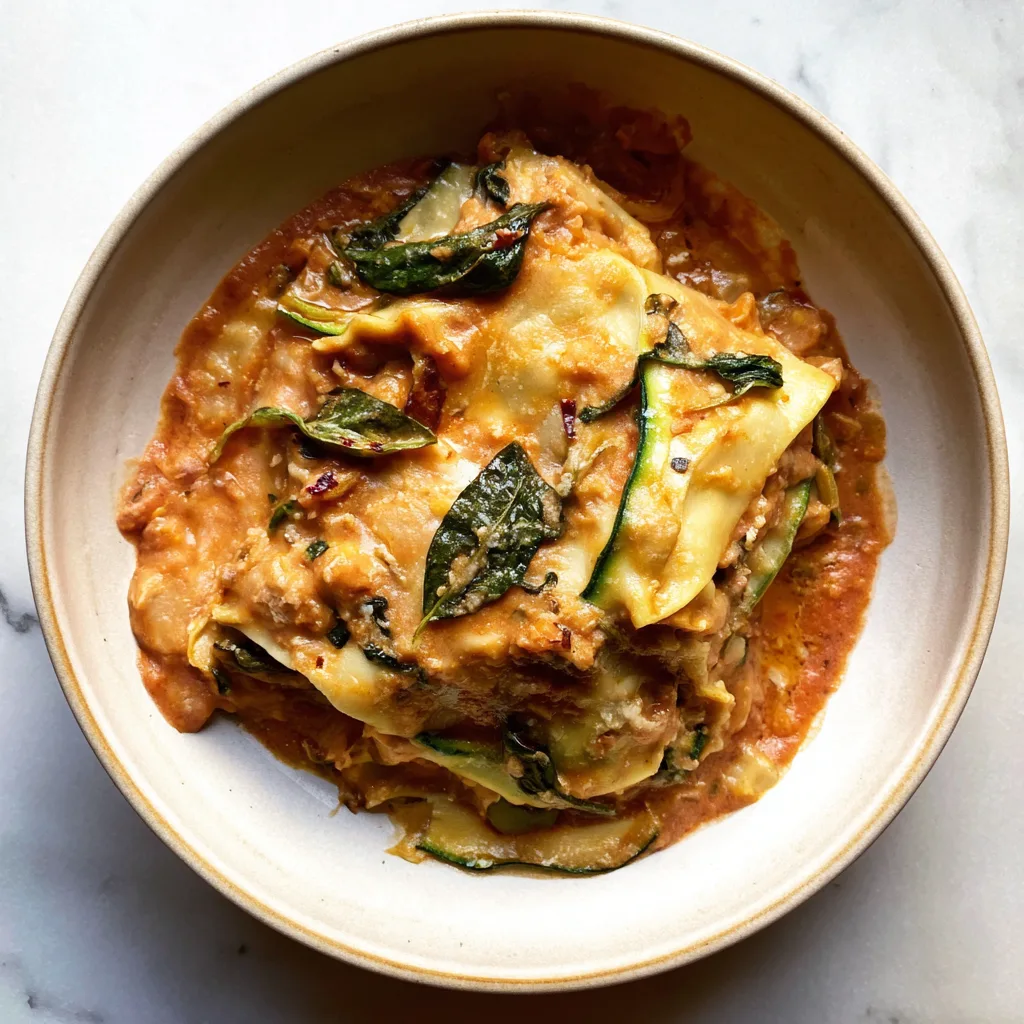
If you've been searching for a vegan spinach lasagna recipe that doesn't require an engineering degree to assemble, you've found it. This one-pot wonder skips the traditional layering chaos and replaces half the pasta with tender zucchini ribbons, creating a lighter dish that still delivers all that comforting, saucy goodness. The creamy cashew-tofu ricotta gets folded right into the pot with spinach, marinara, and lasagna noodles broken into rustic pieces. It's the kind of dinner that makes you feel like you're indulging while secretly loading up on vegetables. Plus, cleanup is a breeze since everything cooks together in one glorious pot. Whether you're fully plant-based or just trying to sneak more greens into your week, this vegan lasagna with spinach and cheese alternative will become your new weeknight hero.
One-Pot Vegan Spinach Lasagna with Zucchini Noodles
A simplified one-pot vegan spinach lasagna featuring zucchini ribbons, broken lasagna noodles, and creamy cashew-tofu ricotta.
Prep Time 20 minutes mins
Cook Time 35 minutes mins
Total Time 55 minutes mins
Course Main Dish
Cuisine Italian
Large Dutch Oven or Deep Skillet at least 5 quart capacity with a lid, preferably cast iron or heavy-bottomed stainless steel for even heat distribution. A deep 12-inch skillet with high sides also works well. If you only have a regular skillet, you may need to cook in batches.
High-speed blender or food processor for creating the smooth cashew ricotta. A Vitamix or Blendtec works beautifully, but any decent blender will do if you soak the cashews long enough. Food processors work but may leave a slightly grainier texture.
Vegetable peeler or mandoline for creating zucchini ribbons. A Y-shaped peeler gives you more control, while a mandoline with a julienne blade creates uniform strips. If using a mandoline, use the hand guard for safety.
Wooden spoon or silicone spatula for stirring without scratching your pot. The flexibility of silicone helps scrape the bottom to prevent sticking.
Measuring cups and spoons standard dry and liquid measuring tools. A kitchen scale is helpful but not required.
For the cashew-tofu ricotta
- 1 cup raw cashews soaked in hot water for 30 minutes, or in room temperature water for 4 hours. This softens them for blending into a creamy texture
- 8 ounce firm tofu drained and pressed for 10 minutes to remove excess moisture. Extra-firm works too but may be slightly less creamy
- 3 tablespoon nutritional yeast adds that essential cheesy, umami flavor. Look for the flaky kind, not the powdered version
- 2 tablespoon fresh lemon juice brightens the ricotta and adds tanginess. Bottled lemon juice works in a pinch
- 2 clove garlic roughly chopped, adds depth and that classic Italian flavor
- ¾ teaspoon sea salt or to taste, enhances all the flavors
- ¼ teaspoon black pepper freshly ground if possible
- ¼ cup water to help blend everything smoothly, add more if needed
For the lasagna
- 2 tablespoon olive oil extra virgin for best flavor, or use avocado oil
- 1 medium yellow onion diced small, about 1 1/2 cups
- 4 clove garlic minced, because more garlic is always better in Italian cooking
- 1 teaspoon dried oregano or 1 tablespoon fresh oregano, chopped
- 1 teaspoon dried basil or 2 tablespoons fresh basil, torn
- ½ teaspoon red pepper flakes optional, for a subtle kick of heat
- 1 28-ounce can crushed tomatoes San Marzano tomatoes are ideal for their sweetness and low acidity
- 1 cup vegetable broth low-sodium preferred so you can control the salt level
- 2 tablespoon tomato paste deepens the tomato flavor and adds richness
- 1 teaspoon coconut sugar or regular sugar, balances the acidity of the tomatoes
- 8 ounce lasagna noodles regular or gluten-free, broken into 2-3 inch pieces. No need to pre-cook
- 2 medium zucchini about 1 pound total, cut into ribbons using a peeler
- 5 ounce fresh spinach roughly chopped if the leaves are large. Baby spinach works perfectly as-is
- 1 teaspoon sea salt plus more to taste
- ½ teaspoon black pepper freshly ground
For serving
- ¼ cup fresh basil leaves torn or chiffonade, for garnish
- 2 tablespoon vegan parmesan optional, store-bought or homemade from cashews and nutritional yeast
- red pepper flakes for those who want extra heat
Make the cashew-tofu ricotta
Drain the soaked cashews thoroughly and add them to your high-speed blender along with the pressed tofu, nutritional yeast, lemon juice, garlic cloves, salt, pepper, and water. Blend on high speed for 60 to 90 seconds, stopping to scrape down the sides as needed, until the mixture is completely smooth and creamy with no visible cashew pieces. The texture should resemble traditional ricotta cheese with a slight graininess but overall creaminess. If the mixture is too thick to blend properly, add water one tablespoon at a time until it moves freely in the blender. Taste and adjust salt or lemon juice if needed. Set aside while you prepare the rest of the dish.
Build the base
Heat the olive oil in your large Dutch oven or deep skillet over medium heat. Once the oil shimmers and easily coats the bottom when you tilt the pan, add the diced onion. Cook for 5 to 6 minutes, stirring occasionally, until the onion becomes translucent and starts to soften at the edges. You want them sweet and tender, not browned.
Add the minced garlic, oregano, basil, and red pepper flakes if using. Stir constantly for about 60 seconds until the garlic becomes fragrant and you can smell the herbs blooming. Be careful not to let the garlic brown or it will become bitter.
Stir in the tomato paste and cook for 2 minutes, stirring frequently. This step caramelizes the tomato paste slightly, which removes any raw or tinny flavor and concentrates the tomato essence. The paste will darken slightly and start to stick to the bottom of the pot, which is exactly what you want.
Cook the lasagna
Pour in the crushed tomatoes, vegetable broth, and coconut sugar. Stir well to combine, scraping up any browned bits from the bottom of the pot with your wooden spoon. Those bits are pure flavor. Season with 1 teaspoon salt and 1/2 teaspoon black pepper. Bring the mixture to a gentle boil over medium-high heat.
Once boiling, add the broken lasagna noodles to the pot, pushing them down into the sauce so they're mostly submerged. Reduce the heat to medium-low and cover the pot with the lid slightly ajar to allow steam to escape. Simmer for 12 to 15 minutes, stirring every 3 to 4 minutes to prevent the noodles from sticking to the bottom. The noodles should be almost tender but still have a slight bite to them.
Add the zucchini ribbons to the pot, gently folding them into the sauce and noodles. They'll seem like a lot at first but will cook down significantly. Cover again and cook for 3 to 4 minutes until the zucchini softens and becomes tender but not mushy. You want them to still have some structure.
Add the fresh spinach in batches if needed, stirring it in as it wilts. This takes about 2 minutes total. The spinach will reduce dramatically in volume, turning dark green and silky.
Finish and serve
Remove the pot from heat. Add the cashew-tofu ricotta in large dollops across the surface of the lasagna, then gently fold it into the mixture. Don't overmix; you want creamy pockets of ricotta throughout rather than a completely uniform sauce. Some swirls of white ricotta against the red sauce look beautiful and create varied texture in each bite.
Taste and adjust the seasoning with more salt and pepper if needed. The dish should be well-seasoned with a balance of savory, slightly sweet tomato flavor and creamy richness from the ricotta. Let the lasagna rest for 5 minutes before serving. This allows the sauce to thicken slightly and the flavors to meld together.
Serve hot in shallow bowls, garnished with torn fresh basil leaves, a sprinkle of vegan parmesan if using, and red pepper flakes for those who want extra heat. The lasagna will continue to thicken as it sits, so if you have leftovers, you may need to add a splash of vegetable broth when reheating.
Absolutely. You can prepare the entire dish up to 2 days in advance. Store it in an airtight container in the refrigerator and reheat gently on the stovetop over medium-low heat, adding 1/4 to 1/2 cup of vegetable broth to loosen the sauce as it will thicken considerably when cold. You can also make just the cashew ricotta up to 4 days ahead and store it separately, then assemble and cook the lasagna when ready to serve. The flavors actually deepen and meld beautifully after a day in the fridge.
Yes, frozen spinach works well in this recipe. Use about 10 ounces of frozen spinach, thawed completely and squeezed dry to remove as much moisture as possible. Add it at the same point you would add fresh spinach, but since it's already cooked, you only need to heat it through for about 1 minute. Frozen spinach is often more economical and reduces prep time since it's already chopped.
If you only have a regular blender or food processor, soak your cashews for at least 4 hours or overnight in room temperature water to ensure they're as soft as possible. You may need to blend longer and scrape down the sides more frequently. The texture might be slightly grainier than with a high-speed blender, but it will still taste delicious. Alternatively, you can use store-bought vegan ricotta to save time, though homemade is more economical and customizable.
Store leftover lasagna in an airtight container in the refrigerator for up to 4 days. The dish will thicken considerably as it sits, so when reheating, add a splash of vegetable broth or water to restore the saucy consistency. Reheat gently on the stovetop over medium-low heat, stirring occasionally, or microwave in 1-minute intervals, stirring between each interval. You can also freeze portions for up to 2 months in freezer-safe containers. Thaw overnight in the refrigerator before reheating.
Definitely. Yellow squash works exactly like zucchini and can be used interchangeably. Thinly sliced eggplant is another excellent option, though it will add a meatier texture. You could also use ribbons of carrot for sweetness and color, or even add sliced mushrooms for an earthy, umami boost. Bell peppers cut into strips would add sweetness and crunch. Just keep the total vegetable volume similar to maintain the sauce-to-solid ratio.