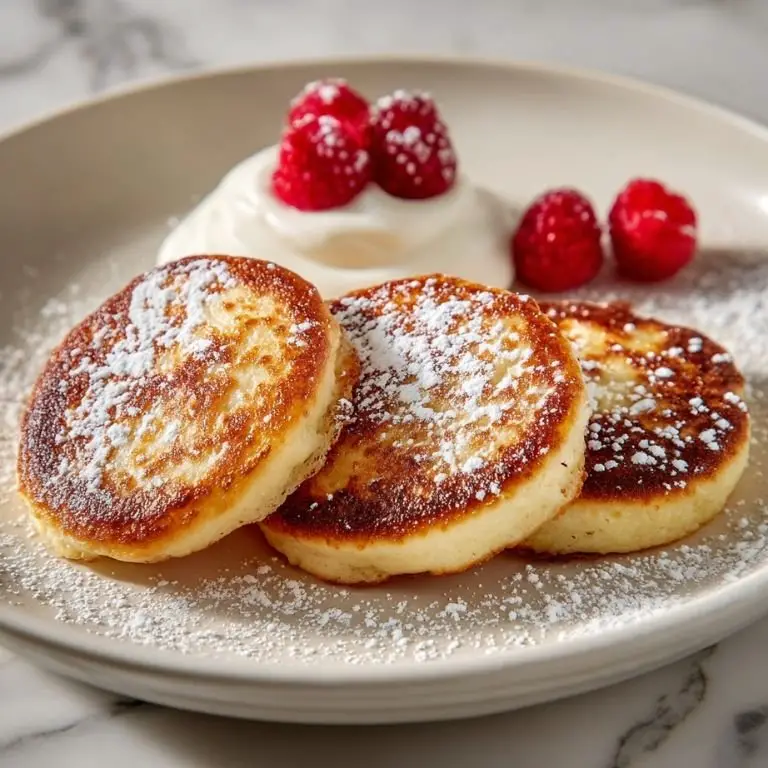
If you’ve never tried Tvorog Cheesecake Pancakes with Vanilla Sugar, you’re in for a treat that walks the line between indulgence and nostalgia. These soft, golden rounds are known in Russia as syrniki, and they’ve been warming up breakfast tables across Eastern Europe for generations. With their slightly crispy crust, creamy centers, and delicate touch of vanilla sugar, these pancakes are more than just a meal—they’re a memory. Whether you're familiar with a traditional Russian breakfast with pancakes or you're just learning how to make Russian cheesecake, this dish is the perfect starting point. Syrniki are incredibly versatile: serve them with sour cream, a spoonful of jam, or even a drizzle of honey. However you plate them, these sweet cheese pancakes will win your heart.
Tvorog Cheesecake Pancakes with Vanilla Sugar
Prep Time 15 minutes mins
Cook Time 20 minutes mins
Total Time 35 minutes mins
Course Breakfast, Brunch
Cuisine European, Russian
Mixing bowls One large for combining ingredients.
Fork or potato masher For mashing and blending the tvorog into a smoother consistency.
Sieve or Cheesecloth To drain any excess moisture from the tvorog, especially if it's store-bought.
Non-stick skillet or cast-iron pan Essential for getting that beautiful golden crust without sticking.
Spatula A flexible one helps flip pancakes without tearing them.
Measuring cups and spoons Precision helps maintain the delicate balance of flavors and texture.
- 1 lb 450g Tvorog (also known as Russian farmer's cheese or dry curd cottage cheese)
- 2 large eggs
- 1/4 cup granulated sugar adjust to taste
- 1 teaspoon vanilla extract
- 1 teaspoon vanilla sugar adds a subtle depth; optional but recommended
- 1/4 teaspoon salt
- 1/2 cup all-purpose flour plus more for dusting
- 1/2 teaspoon baking powder optional for a fluffier texture
- Butter or neutral oil for frying
- Powdered sugar jam, sour cream, or honey for serving
Prepare the Tvorog
Begin by pressing your tvorog through a fine sieve or mixing it with a fork until smooth. You’re aiming for a consistency that’s soft and slightly grainy but not lumpy. This step is crucial in achieving the smooth texture cheesecake pancakes are known for.
Mix the Batter
In a large bowl, combine the mashed tvorog, eggs, granulated sugar, vanilla extract, vanilla sugar, and salt. Stir well until all ingredients are fully incorporated. Add flour and baking powder (if using), and gently fold until a soft dough forms. It should be moist but not sticky. If it feels too wet, sprinkle in a bit more flour.
Shape the Pancakes
Dust a clean surface with flour. Scoop a heaping tablespoon of batter and roll it into a small ball with floured hands. Gently flatten into a disc about 3/4 inch thick. Lightly flour each side to prevent sticking. Repeat with remaining batter.
Fry to Perfection
Heat a skillet over medium-low heat and add a generous knob of butter or a drizzle of oil. Once hot, add pancakes and cook for about 3-4 minutes on each side until golden brown and slightly crispy. Resist the urge to flip early—they need time to set and develop that signature crust.
Serve Warm
Transfer the pancakes to a plate lined with paper towels to drain excess oil. Serve warm, dusted with powdered sugar and a dollop of sour cream or fruit preserves. This is the heart of a traditional Russian pancakes with sour cream experience.
Tvorog cheesecake pancakes are delicious on their own, but they shine even brighter when paired thoughtfully:
These pairings make syrniki adaptable for any time of day—from breakfast to dessert.
Yes! Substitute all-purpose flour with almond flour, rice flour, or a gluten-free baking blend. Just make sure the batter holds together well when forming into discs.
Absolutely. Adding mashed banana gives a naturally sweet twist, mimicking a banana pancake recipe in Russian spirit. You can also mix in dried fruit like raisins or chopped apricots for added texture.
Store cooked syrniki in an airtight container in the fridge for up to 3 days. Reheat them in a skillet over low heat or briefly in the microwave. They also freeze well—just thaw before reheating.
You can, though they won’t get the same golden crust. Place them on a parchment-lined baking sheet, lightly brush with oil, and bake at 375°F (190°C) for 20-25 minutes, flipping halfway through.