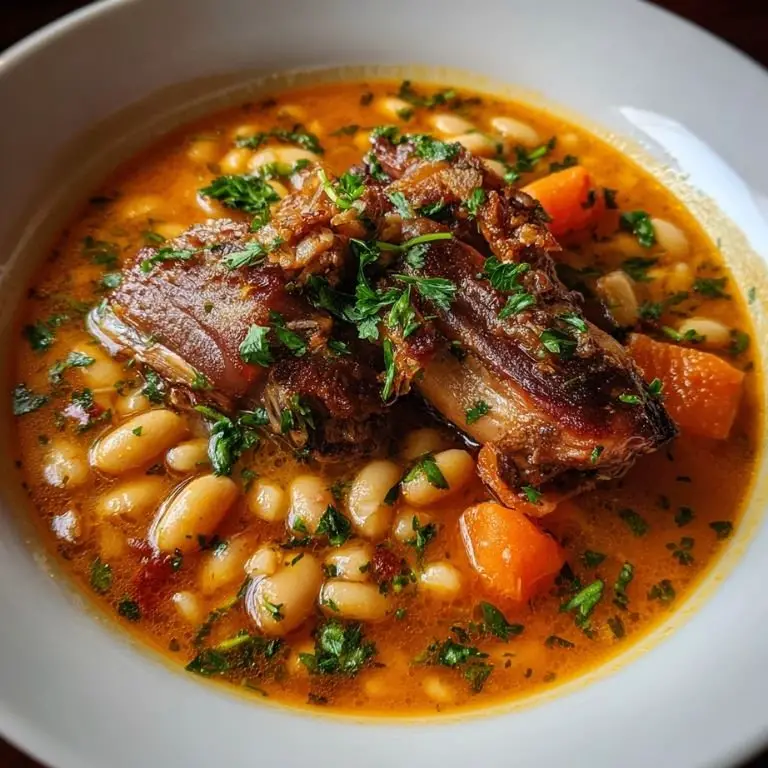
If you’ve ever dabbled in Balkan comfort food, you’ve likely come across Pasulj – Serbia’s most iconic white bean soup. And when it's simmered low and slow with smoky, fall-off-the-bone pork ribs, it transforms into something transcendent. This traditional Serbian Pasulj with smoked ribs is more than just a meal; it’s a dish tied to family gatherings, rural kitchens, and decades of culinary tradition passed down through generations. Thick, rustic, and deeply savory, this version of pasulj is ideal for winter days, lazy weekends, or big batch cooking to freeze for later. Whether you're nostalgic for balkan breakfast staples or simply want to expand your bean soup recipes, this is one worth mastering.
Traditional Serbian Pasulj with Smoked Ribs
Prep Time 20 minutes mins
Cook Time 2 hours hrs 30 minutes mins
Total Time 2 hours hrs 50 minutes mins
Course Main Course
Cuisine Serbian
Large soup pot or Dutch oven You'll need something heavy-bottomed to allow for long simmering without burning.
Wooden spoon Essential for stirring the roux and avoiding lumps.
Strainer or colander For rinsing and soaking the white beans.
Cutting board & sharp knife. For prepping your vegetables and ribs.
Ladle Helpful for serving the thick soup easily.
For the Soup Base
- 2 cups dried white beans preferably cannellini or great northern beans
- 1.5 lbs smoked pork ribs cut into individual ribs or sections
- 1 large yellow onion finely chopped
- 2 medium carrots diced
- 3 garlic cloves minced
- 1 bay leaf
- 1 tablespoon paprika sweet Hungarian or Serbian paprika works best
- 1 teaspoon smoked paprika optional but adds depth
- Salt and freshly ground black pepper to taste
- 1 teaspoon dried thyme or 1 sprig fresh thyme
- 1 tablespoon tomato paste
- 2 tablespoons sunflower oil or lard traditional
- 6 cups water or enough to cover the ingredients by a couple of inches
Optional: 1 small parsnip, chopped, for added sweetness
For the Roux (Zaprška – traditional thickener)
- 2 tablespoons flour
- 2 tablespoons oil or lard
- 1 teaspoon paprika
Prep the Beans
Start by rinsing the white beans thoroughly. Soak them in a large bowl of cold water overnight or for at least 8 hours. This reduces cooking time and makes them easier to digest. If you're in a hurry, use the quick soak method: boil the beans for 2 minutes, cover, and let them sit for an hour.
Sauté the Base
In your large pot or Dutch oven, heat the oil or lard over medium heat. Add the chopped onion and carrots, cooking until they’re softened and translucent—about 5–7 minutes. Add the minced garlic and cook for another minute until fragrant.
Add Paprika and Tomato Paste
Sprinkle in both the sweet and smoked paprika, followed by the tomato paste. Stir continuously for about 30 seconds to a minute—this releases the aroma and deepens the flavor. Be careful not to burn the paprika.
Build the Soup
Drain the soaked beans and add them to the pot. Nestle in the smoked ribs, pour in enough water to cover the ingredients, and toss in the bay leaf and thyme. Bring everything to a boil, then reduce to a simmer.
Simmer and Skim
Let the soup simmer gently for about 1.5 to 2 hours. During the first half hour, skim off any foam or fat that rises to the top. The beans should be soft but not mushy, and the ribs should be starting to fall off the bone.
Prepare the Zaprška (Roux)
In a small saucepan, heat oil or lard. Stir in the flour and cook over medium heat, stirring constantly, until it turns golden brown. Add paprika and stir for another 10 seconds. Immediately ladle a small amount of hot soup into the roux, whisking to avoid lumps, then pour the mixture back into the soup pot and stir to thicken.
Final Seasoning
Once the beans are tender and the broth thickened, season with salt and pepper to taste. Remove the bay leaf and thyme sprig. Let the soup rest off the heat for 10–15 minutes before serving—this helps it thicken even more and allows the flavors to deepen.
Pairings
Pasulj is a meal on its own, but it pairs beautifully with sides and drinks common in Serbian and Croatian recipes. A thick slice of crusty sourdough bread or cornbread is almost mandatory to soak up the broth. If you're feeling authentic, serve with pickled peppers or onions on the side to cut through the richness.
For a complete Balkan experience, follow it up with a small glass of rakija, the strong fruit brandy found across Serbian, Bosnian, and Croatian cuisine. As for dessert, something simple like palacinke (Balkan-style crepes) or krempita (custard slice) rounds things out.
Pasulj is also perfect for batch cooking—it tastes even better the next day, making it ideal for busy weeknight dinners or packed lunches.
FAQs
1. What type of beans should I use for Serbian Pasulj?
The classic version uses white beans—most commonly cannellini or great northern beans. These varieties hold their shape well and absorb flavor beautifully. Avoid navy beans if you prefer a chunkier soup.
2. Can I substitute the smoked ribs?
Yes! Smoked pork neck bones, ham hocks, or even a chunk of smoked sausage like Kulen or Kranjska will work well. Just ensure there’s some bone in the meat—it adds richness and body to the broth.
3. Can I make this vegetarian?
You can, though it won’t be traditional. Replace the smoked meat with smoked paprika, mushrooms, and maybe a splash of soy sauce or miso for umami. It’ll still be a warming bowl of easy soup, just not quite Pasulj as your Serbian grandmother would recognize it.
4. Is Pasulj the same as Bosnian or Croatian bean soup?
They’re very similar! In fact, you’ll find versions of bosnian bean soup, croatian recipes, and even romanian food traditional that closely resemble Pasulj. Each region adds its own twist—some include hot peppers, others thicken with more vegetables. But the backbone—beans, smoked meat, and paprika—remains the same across serbian recipes and the broader Balkan region.
5. Can I freeze Pasulj?
Absolutely. Pasulj freezes very well and actually tastes better after a day or two. Cool it completely, portion into airtight containers, and freeze for up to 3 months. Perfect for batch cooking and always having a comforting bean soup on hand.