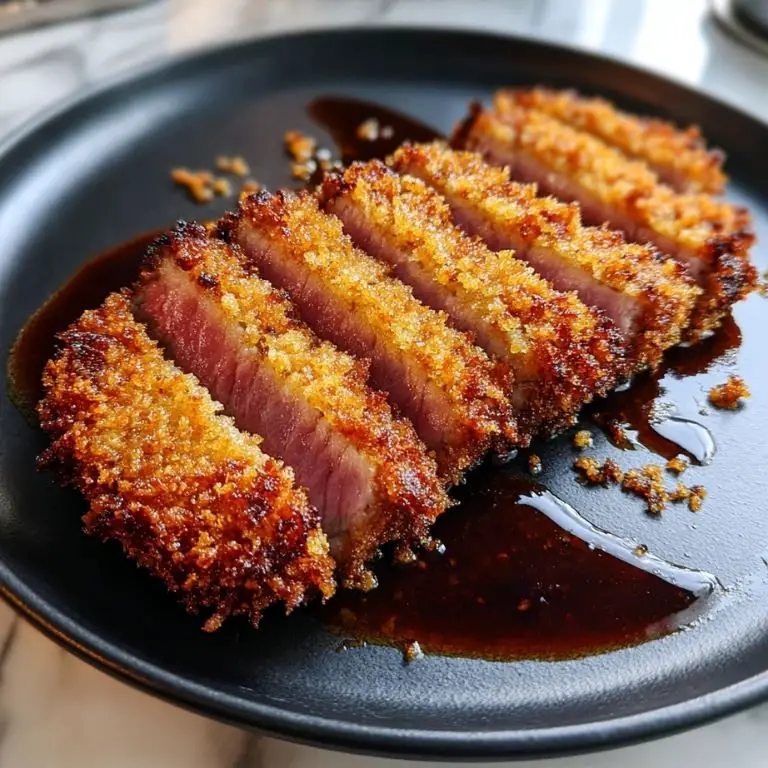
There’s something wildly satisfying about biting into a thick-cut beef katsu—crispy on the outside, juicy and tender on the inside, and perfectly coated in a sticky-sweet tonkatsu glaze. This isn't your average weeknight dinner. It's bold, indulgent, and deeply rooted in comfort, inspired by classic Japanese beef recipes. While pork katsu might be more common, beef katsu holds its own with a hearty, umami-rich profile that pairs beautifully with fragrant rice, pickled vegetables, or even transformed into a dreamy katsu sando. This particular recipe focuses on creating a crunchy crust around a tender, medium-rare center—bringing together the elegance of Japanese food and the soul-satisfying texture of fried beef.
Thick-Cut Beef Katsu with Tonkatsu Glaze
Prep Time 25 minutes mins
Cook Time 15 minutes mins
Total Time 40 minutes mins
Course Main Course
Cuisine Japanese
Heavy skillet or deep fryer A cast iron skillet is perfect for heat retention. If you have a deep fryer, even better.
Tongs or Chopsticks To flip and retrieve the cutlets safely from hot oil.
Wire rack with tray underneath Helps keep the crust crispy after frying.
Meat thermometer (optional) Great for checking internal temperature if you want your beef perfectly medium-rare.
Plastic wrap and meat mallet (optional) If your beef isn’t even, pound it gently to ensure uniform cooking.
Mixing bowls For dredging stations and making the tonkatsu glaze.
Small saucepan To simmer and thicken the glaze.
For the Beef Katsu
- 1.5 lbs thick-cut beef sirloin or ribeye steaks about 1.5 inches thick
- 1 tsp kosher salt
- 1/2 tsp black pepper
- 1 cup all-purpose flour
- 2 large eggs
- 1 tbsp water
- 2 cups panko breadcrumbs Japanese style breadcrumbs
- Neutral oil for deep frying like canola or vegetable
For the Tonkatsu Glaze
- 1/2 cup ketchup
- 1/4 cup Worcestershire sauce
- 2 tbsp soy sauce
- 1 tbsp mirin
- 1 tbsp sugar
- 1 tsp Dijon mustard
Optional: 1 tsp oyster sauce for added depth
For Serving
- Steamed white rice or shredded cabbage
- Pickled daikon or red ginger
- Lemon wedges
Prepare the Beef
Start with high-quality thick-cut steaks. Trim excess fat but leave a little for flavor. Pat dry with paper towels. Season each side generously with salt and pepper.
Let the beef sit at room temperature for 10–15 minutes—this ensures even cooking and helps the seasoning penetrate the meat.
Set Up the Dredging Station
Arrange three shallow bowls or trays:
One with flour.
One with beaten eggs mixed with a tablespoon of water.
One with panko breadcrumbs.
Dust each steak lightly in flour, dip into the egg wash, then coat in panko breadcrumbs. Press the crumbs firmly so they adhere well.
Pro Tip: Double-coating is optional for extra crunch. Just repeat the egg and panko steps.
Make the Tonkatsu Glaze
While the beef rests, combine all glaze ingredients in a small saucepan over medium heat. Simmer for about 5–7 minutes, stirring frequently until thickened to a syrupy consistency. Set aside to cool slightly.
This sauce is similar to classic katsu sauce but homemade and customizable. You can make it sweeter, tangier, or even add a chili kick.
Fry the Beef Katsu
Heat about 2 inches of oil in a heavy-bottomed skillet or deep fryer to 340–350°F (170–175°C). Carefully lower the breaded steaks into the oil. Don’t overcrowd the pan—work in batches if needed.
Fry for about 3–4 minutes per side. For medium-rare, pull the steak out once it reaches 130–135°F internally. The exterior should be deep golden brown and crisp.
Let the beef rest on a wire rack for 5 minutes before slicing.
Slice and Glaze
Slice the katsu against the grain into 3/4-inch thick strips. Drizzle the tonkatsu glaze generously over the top or serve it on the side for dipping.
This thick-cut beef katsu is incredibly versatile and pairs well with a variety of accompaniments.
This dish can also be turned into a creative take on a chicken katsu bento—swap the protein but keep the structure. Similarly, pair it with items like tamagoyaki or sesame spinach salad to make a well-rounded Japanese meal.
Thick-cut ribeye or sirloin steaks are ideal because they balance tenderness and flavor. Avoid very lean cuts like eye of round unless you're using a tenderizing method.
While this recipe focuses on whole cuts, a ground beef katsu (similar to menchi katsu) is also popular in Japanese food. You’ll need to form patties and follow a similar dredging and frying method.
Beef katsu uses beef cutlets while pork katsu (tonkatsu) typically uses pork loin or tenderloin. Beef katsu is richer and often served rarer, whereas pork katsu is cooked through.
Absolutely. Katsu don is a rice bowl topped with katsu, egg, and savory-sweet sauce. Slice your beef katsu, simmer with dashi, soy sauce, and onions, then crack an egg over it and pour onto rice.
They share the same crunchy coating and umami profile, but the flavor of the protein makes a difference. Chicken katsu curry leans lighter and works beautifully with the thick, sweet curry sauce. A chicken katsu sandwich is more delicate. The beef katsu offers more richness and steakhouse-style depth.