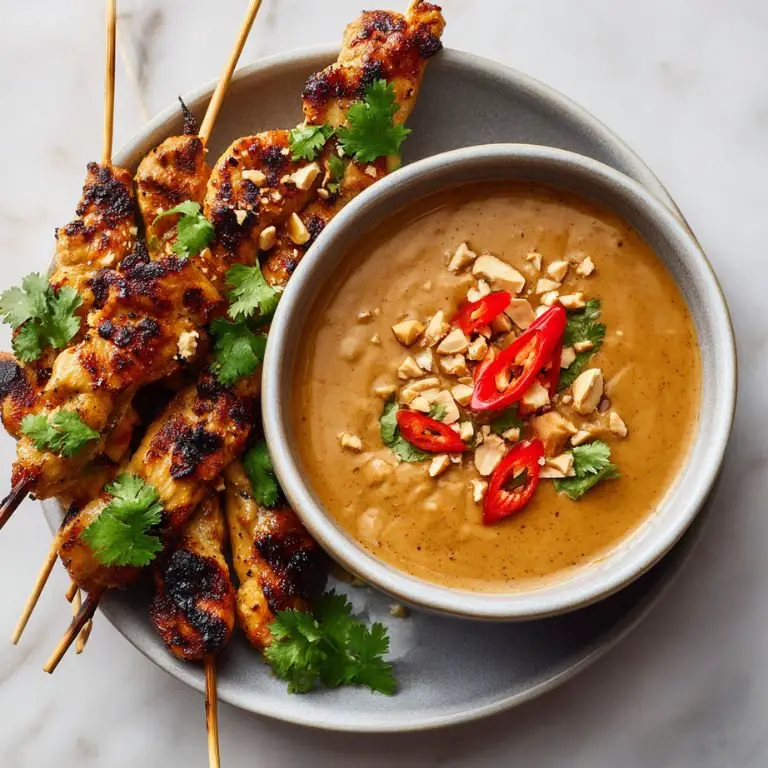
When it comes to elevating chicken skewers, few things hit the spot quite like a rich and creamy Thai satay dipping sauce. Whether you’re grilling classic chicken satay skewers, tossing together a satay chicken stir fry, or exploring vegetarian favorites like tofu satay, this sauce brings the sweet, salty, nutty, and tangy flavor profile that Thai food recipes are loved for.
I originally made this sauce for a backyard BBQ featuring beef satay and chicken satay, and it quickly became the star of the table—even outshining the mains for some folks. This is not just any peanut sauce recipe—it’s a Thai-inspired take that’s deeply savory and incredibly easy to whip up. Even better, it’s versatile enough to use in satay noodles, drizzle over a thai coconut curry soup, or even pair with a light Thai dessert to balance the richness.
Thai Satay Dipping Sauce for Chicken Skewers
Prep Time 5 minutes mins
Cook Time 5 minutes mins
Total Time 10 minutes mins
Course Appetizer, Main Course
Cuisine Thai
Servings 6 (as a dipping sauce)
Medium saucepan A small pot works well since you’ll heat the sauce gently to meld the flavors.
Whisk or silicone spatula A whisk helps combine the peanut butter with the coconut milk smoothly.
Measuring cups and spoons Accuracy is key for balancing salty, sweet, sour, and spicy flavors.
Mini blender or immersion blender (optional) For an ultra-smooth finish if your peanut butter is on the chunky side.
For the Sauce
- ¾ cup creamy peanut butter unsweetened and unsalted is best
- ½ cup full-fat coconut milk shake the can before using
- 2 tablespoons Thai red curry paste
- 1 tablespoon brown sugar or palm sugar if you want to stay traditional
- 1 tablespoon fresh lime juice
- 1 tablespoon soy sauce
- 1 tablespoon fish sauce optional but adds authentic depth
- 1 teaspoon grated fresh ginger
- 1 teaspoon minced garlic
- ½ teaspoon chili flakes or sriracha adjust to your heat preference
- 2 –4 tablespoons warm water to thin the sauce to your desired consistency
Step 1: Combine Core Ingredients
In a medium saucepan over low heat, add the peanut butter and coconut milk. Stir continuously to help the peanut butter melt and combine with the milk.
Step 2: Build the Flavor Base
Add the Thai red curry paste, brown sugar, lime juice, soy sauce, and fish sauce. Keep stirring to prevent sticking or burning. The sauce should start to look smooth and glossy.
Step 3: Add Aromatics
Mix in the grated ginger, minced garlic, and chili flakes or sriracha. Cook for another 2–3 minutes, stirring frequently to keep everything from sticking.
Step 4: Adjust Consistency
Add warm water, a tablespoon at a time, until the sauce reaches your preferred dipping or drizzling consistency. For skewers, a thicker dip is ideal. If using in a satay chicken stir fry or as a salad dressing, you’ll want it a bit thinner.
Step 5: Taste and Tweak
Now’s the time to adjust: need more acid? Add a squeeze more lime. Too salty? A touch more brown sugar. Too thick? More warm water. Customizing is part of what makes this such a great peanut Thai sauce.
Step 6: Serve or Store
Pour the sauce into a small bowl and let it cool slightly before serving. It will thicken a bit more as it cools. If storing, let cool completely and refrigerate in an airtight container for up to one week.
Perfect Pairings
You’ll find no shortage of delicious ways to use this Thai dipping sauce:
- Chicken Satay Skewers: The obvious first choice. This sauce complements any good chicken satay marinade with its savory, nutty punch.
- Beef Satay: Rich, grilled beef satay is elevated with the creamy, slightly spicy notes of this sauce.
- Satay Noodles: Toss cooked rice noodles with a few spoonfuls of this sauce and top with veggies or grilled tofu for a quick weeknight meal.
- Thai Coconut Curry Soup: Stir a dollop into your next bowl of soup for a depth of flavor and silky texture.
- Tofu Satay: A great plant-based match, especially when the tofu is grilled and slightly charred.
- Grilled Veggies or Rice Bowls: Drizzle over steamed rice, cucumbers, grilled eggplant, or shredded carrots.
- Cold Noodle Salads: Use this as a salad dressing by thinning it slightly and adding a splash of rice vinegar.
This is one of those sauces that ends up becoming a staple—you'll find yourself reaching for it far beyond just chicken satay skewers.
FAQs
1. Can I use chunky peanut butter instead of creamy?
Yes, but expect a thicker, slightly textured sauce. If you want a smooth dipping experience, stick with creamy or give it a quick blend with a mini processor.
2. What type of chicken works best for chicken satay skewers?
Boneless, skinless chicken thighs are preferred for juiciness and flavor. Breast meat works too but can dry out if overcooked. Always marinate well with a good chicken satay marinade for the best results.
3. Is this sauce vegan?
It can be! Simply skip the fish sauce or replace it with a vegan alternative like soy sauce mixed with a drop of miso paste. Make sure your Thai red curry paste is also vegan-friendly.
4. Can I freeze this sauce?
Yes, peanut satay sauce freezes well. Store in a freezer-safe container for up to two months. Thaw overnight in the fridge and stir before using.
5. How spicy is this sauce?
It has a mild to moderate heat depending on how much curry paste and chili you add. If you're sensitive to spice, start small and build up to taste.