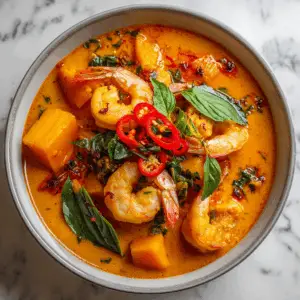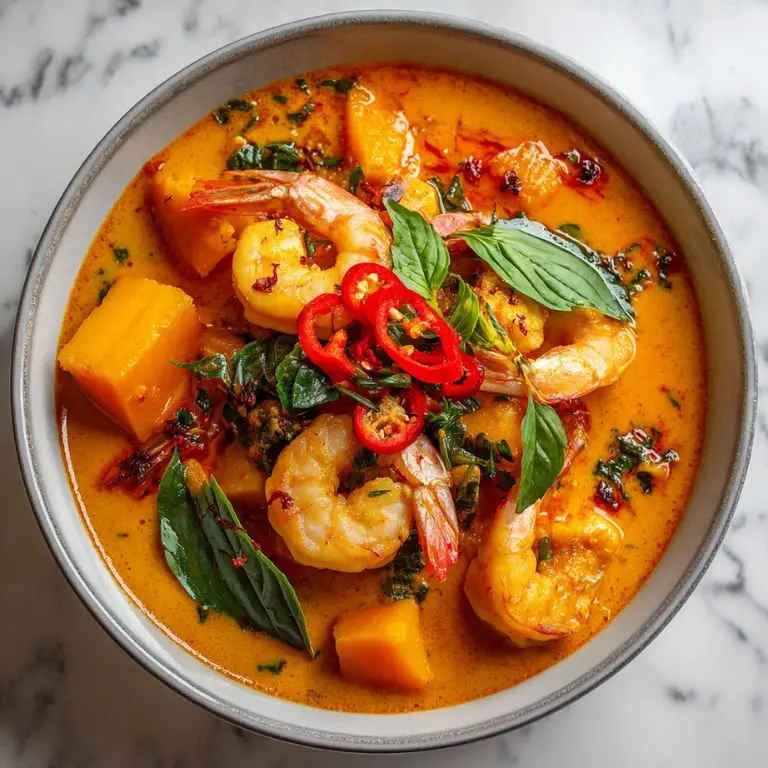
When the leaves start to turn and there’s a little chill in the air, I start craving deep, bold flavors with a comforting texture—and that’s exactly what this Thai Pumpkin Curry with Shrimp and Kaffir Lime Leaves delivers. This dish is a vibrant, creamy, and fragrant curry that hits all the right notes: it’s sweet, spicy, savory, and citrusy all at once. It’s one of those fall curry dishes that wraps you up like a cozy blanket. The shrimp adds a juicy pop of flavor that complements the silky pumpkin-based broth, and the kaffir lime leaves elevate the whole dish with a floral citrus aroma. Whether you're a fan of pumpkin curry soup or just exploring Thai curry recipes, this one is a seasonal winner.
Thai Pumpkin Curry with Shrimp and Kaffir Lime Leaves
Prep Time 15 minutes mins
Cook Time 30 minutes mins
Total Time 45 minutes mins
Course Main Course
Cuisine Thai
Large Pot or Dutch Oven Essential for building layers of flavor. A Dutch oven retains heat well and is perfect for slow simmering.
Sharp knife and cutting board To handle your squash, onions, and herbs efficiently.
Vegetable peeler Especially useful if you’re using fresh pumpkin or butternut squash.
Wooden Spoon or Spatula Ideal for stirring and scraping up all that caramelized curry paste goodness.
Blender (optional) If you prefer a smoother soup-like texture, you can blend part of the curry.
Rice Cooker or Saucepan For cooking the rice to pair alongside.
For the curry base
- 2 tablespoons vegetable oil
- 3 tablespoons red curry paste adjust to your spice level
- 1 small yellow onion finely chopped
- 3 garlic cloves minced
- 1 tablespoon freshly grated ginger
- 3 cups cubed kabocha squash or pumpkin you can substitute with butternut squash if needed
- 1 can 14 oz full-fat coconut milk
- 1 cup chicken stock or vegetable stock for a lighter flavor
- 6 kaffir lime leaves torn into pieces (remove the tough center rib)
- 2 tablespoons fish sauce or soy sauce for a pescatarian version
- 1 tablespoon brown sugar
- Juice of 1 lime
For the protein
- 1 lb raw shrimp peeled and deveined (tail-on or off depending on your preference)
Optional toppings
- Chopped Thai basil or cilantro
- Thinly sliced red chili
- Lime wedges
- Cooked jasmine rice for serving
Sauté the Aromatics
Heat oil in a large pot over medium heat. Add the red curry paste and stir constantly for about 1 minute until fragrant. This step is crucial—it helps bloom the spices in the paste, unlocking their full flavor.
Add chopped onions and sauté for another 3–4 minutes until softened. Toss in the garlic and ginger, cooking for another minute to deepen the aromatic base.
Build the Curry Base
Add the cubed kabocha squash or pumpkin and stir to coat the pieces with the curry mixture. Let it sauté for a couple of minutes, then pour in the coconut milk and chicken stock. Stir everything together and bring it to a gentle simmer.
Add the torn kaffir lime leaves, fish sauce, and brown sugar. Simmer uncovered for about 15 minutes, or until the squash is tender when pierced with a fork.
Add the Shrimp
Once the squash is soft, add the shrimp directly to the curry. Simmer for 3–5 minutes until the shrimp are pink and opaque. Be careful not to overcook them.
Squeeze in the lime juice and give it one final stir. At this stage, you can taste and adjust the seasoning—maybe a splash more fish sauce or an extra dash of lime.
Finish and Serve
Ladle the curry over steamed jasmine rice or serve it as a stand-alone dish for a lighter option. Garnish with chopped Thai basil or cilantro, fresh chili slices, and an extra lime wedge for brightness.
Pairings
Rice
Classic jasmine rice is the top choice here. Its subtle floral aroma pairs perfectly with the richness of the curry. You can also use coconut rice for added creaminess or brown rice for a healthier option.
Sides
A crisp cucumber salad with rice vinegar dressing offers a refreshing contrast. Thai spring rolls or even a papaya salad can be fun appetizers to turn this into a full Thai meal experience.
Drinks
A cold Thai iced tea or a ginger-lime sparkling water will cool your palate between spicy bites. For an adult twist, a citrusy Riesling or a Belgian-style wheat beer with hints of coriander pairs nicely.
Dessert
Stick to the seasonal theme with mango sticky rice or a scoop of coconut ice cream topped with roasted peanuts.
Frequently Asked Questions
1. Can I use a different type of squash or pumpkin?
Yes, definitely. While kabocha squash gives a beautifully dense, sweet texture, you can substitute with butternut squash or sugar pumpkin. These are commonly used in butternut squash curry recipes and still provide that creamy base. If you’re looking for even more sweetness, roasted sweet potatoes make a great addition—similar to sweet potato curry recipes.
2. Can I make this vegetarian or vegan?
Absolutely. Just skip the shrimp and use tofu or chickpeas as your protein. Replace the fish sauce with soy sauce or tamari to keep it vegan. This turns the dish into a delicious vegan pumpkin soup with Thai flavors. You’ll still get all the depth from the curry paste, coconut milk, and lime leaves.
3. What type of curry paste works best?
Red curry paste is traditional in pumpkin thai curry, and it brings the perfect balance of spice and flavor to this dish. However, if you prefer something milder, yellow curry paste is a gentler option. Green curry paste can be used too, but it will dramatically change the flavor profile.
4. Is this similar to a pumpkin curry soup?
Yes, in some ways. If you want a thinner, soupier consistency, you can add more broth and blend a portion of the curry to make it smooth. This method leans into thai coconut curry soup or curry butternut squash soup territory. It's rich, comforting, and perfect as a starter or light main dish.
5. Can I make this in advance?
Yes, this curry actually gets better the next day. Store it in the fridge for up to 3 days, and reheat gently on the stove. The flavors will deepen over time, making it a great make-ahead meal. Just hold off on adding the shrimp until you reheat, so they don’t get rubbery.