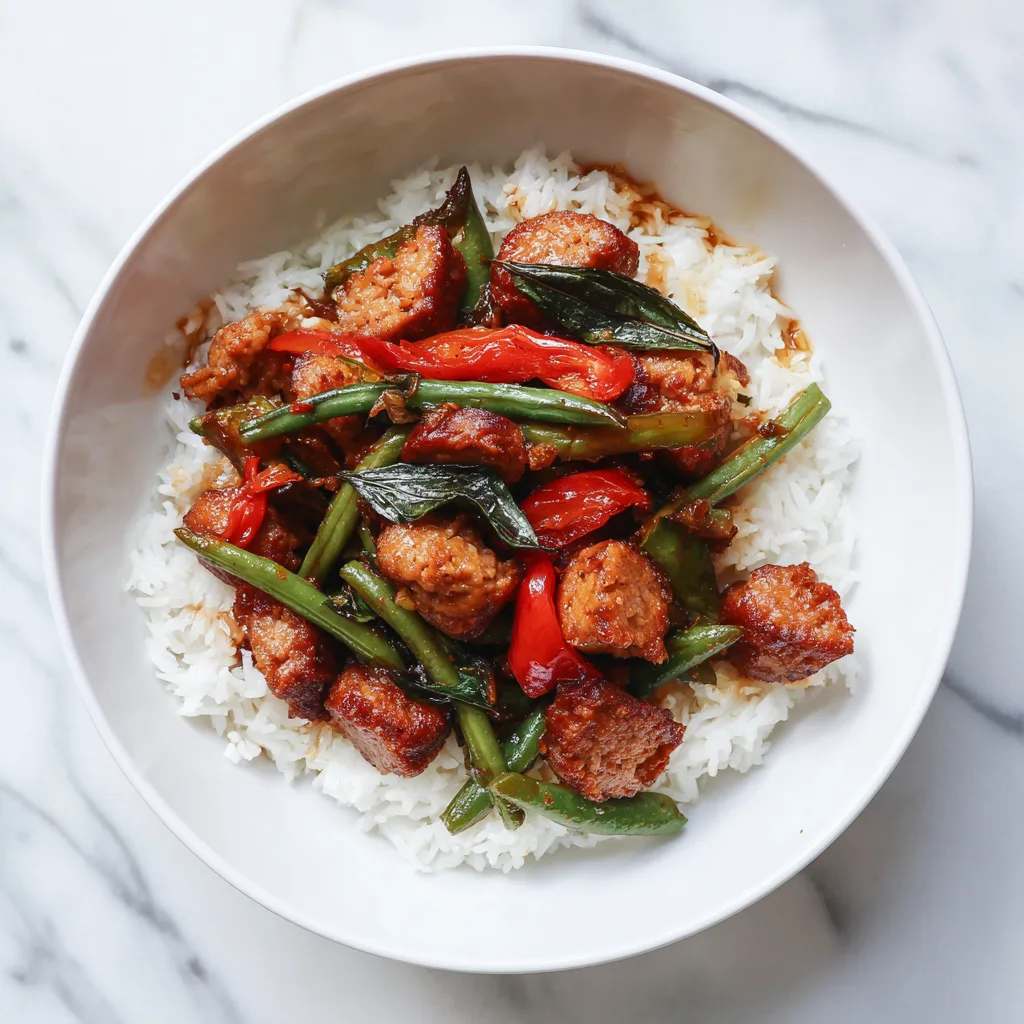
This crispy Thai chicken sausage stir-fry is what I make when I want big Thai street-food energy without committing to an all-day project. We mix up a super-fragrant, Thai-style chicken sausage (think garlicky, lemongrassy, lime-leafy vibes), sear it hard until it gets those irresistible browned bits, then toss it with a quick savory-sweet sauce, snappy vegetables, and a ridiculous amount of basil. It scratches the itch for a thai sausage recipe, but it's built for real life: one skillet, bold flavor, and plenty of crispy edges.
Crispy Thai Chicken Sausage Stir-Fry with Basil (Weeknight Thai Sausage Recipe)
Homemade Thai-style chicken sausage gets seared until crispy, then stir-fried with vegetables, basil, and a punchy savory-sweet sauce.
Prep Time 25 minutes mins
Cook Time 20 minutes mins
Total Time 45 minutes mins
Course Main Dish
Cuisine Thai
Large Mixing Bowl for mixing the chicken sausage; a stand mixer with the paddle works great if you want a bouncier, more "sausage-like" texture
Small Food Processor or Mortar and Pestle to make a quick herb-aromatic paste; you can also mince everything by hand, but the paste helps the sausage taste more cohesive
large skillet or wok (12-inch) cast iron gives the crispiest sear; a carbon-steel wok is great for speed; nonstick works in a pinch but won't brown as aggressively
fish spatula or sturdy wooden spoon for pressing and flipping the sausage pieces to maximize browning without tearing them
Microplane or fine grater for zesting lime and grating ginger; a knife works, but the texture is nicer when finely grated
Instant-read thermometer optional but helpful; aim for 165°F in the sausage since we're using ground chicken
For the Thai-style chicken sausage
- 1 pound ground chicken preferably dark meat (thigh) for juicier sausage; ground breast works but can dry out
- 2 tablespoon red curry paste adds heat and aromatics; use more if yours is mild
- 1 tablespoon fish sauce for savory depth; substitute with soy sauce plus a pinch of salt if needed
- 1 tablespoon soy sauce use regular or light; if using dark soy, reduce to 2 teaspoon
- 1 tablespoon packed light brown sugar balances the chile and fish sauce; substitute with palm sugar or honey
- 1 tablespoon lime zest from about 1 lime; don't skip, it makes the sausage taste bright
- 2 tablespoon lemongrass very finely minced tender inner stalk, or use lemongrass paste
- 3 clove garlic finely grated or pounded
- 1 tablespoon ginger finely grated; galangal is even more classic if you have it
- 2 tablespoon cilantro finely chopped, stems included for extra flavor
- 1 teaspoon kosher salt adjust depending on the saltiness of your curry paste and fish sauce
- ½ teaspoon white pepper substitute with black pepper if that's what you have
- 1 tablespoon neutral oil for pan-searing; use avocado, canola, or grapeseed
For the stir-fry sauce
- 2 tablespoon oyster sauce adds gloss and savory sweetness; substitute with vegetarian oyster sauce or hoisin (slightly sweeter)
- 1 tablespoon fish sauce for salty funk; start here and adjust at the end
- 1 tablespoon soy sauce adds salt and color
- 1 tablespoon lime juice fresh squeezed
- 2 teaspoon granulated sugar keeps the sauce balanced; substitute with brown sugar
- ¼ cup water loosens the sauce so it coats everything instead of turning gluey
- 1 teaspoon cornstarch optional but helps the sauce cling; substitute with tapioca starch
For the vegetables and basil finish
- 8 ounce green bean trimmed and cut into 2-inch pieces; substitute with broccolini or snow pea
- 1 red bell pepper thinly sliced; any color works
- 1 shallot thinly sliced; substitute with 1/2 small red onion
- 2 clove garlic thinly sliced for those little golden chips in the stir-fry
- 1 thai chile thinly sliced; optional but very good; substitute with serrano
- 2 cup thai basil loosely packed leaves; substitute with Italian basil plus a few torn mint leaves
- 1 teaspoon neutral oil as needed for stir-frying if the pan looks dry
To serve (optional but strongly encouraged)
- 3 cup jasmine rice cooked; sticky rice is also fantastic if you want a more northern Thai vibe
- 1 lime cut into wedges
- ¼ cup cucumber thinly sliced for crunch and cooling
Prep the Thai-style chicken sausage mixture
Make an aromatic paste: in a small food processor (or mortar and pestle), combine the lemongrass, garlic, ginger, cilantro, lime zest, white pepper, and kosher salt. Pulse or pound until it looks like a rough paste. This step makes the final dish taste more like a cohesive thai sausage rather than "ground chicken with stuff in it."
Mix the sausage: add the ground chicken to a large mixing bowl. Add the aromatic paste, red curry paste, fish sauce, soy sauce, and brown sugar. Mix vigorously for 1 minute until the mixture looks slightly sticky and holds together when you press it. (That quick mixing builds a bouncy, sausage-like texture.)
Quick test for seasoning: heat a small dab of oil in the skillet over medium heat, cook 1 teaspoon of the mixture until done, and taste. If it needs more salt or fish sauce, add a pinch now. This is the easiest way to nail the balance before you commit.
Sear the sausage until crispy
Heat the skillet or wok over medium-high heat for 2 minutes. Add 1 tablespoon neutral oil and swirl to coat.
Drop in the sausage mixture in heaping tablespoon portions (about 16 pieces). Use a spatula to gently flatten each mound so it has good contact with the pan. Don't crowd; if your skillet is small, do this in 2 batches for better browning.
Let the pieces sear undisturbed for 3 minutes, until deeply browned on the bottom. Flip and sear the second side for 3 minutes. If the pan starts to scorch, lower the heat slightly; you want dark golden, not bitter black.
Continue cooking, turning occasionally, for 4 minutes until the pieces are cooked through (165°F) and crisp at the edges. Transfer the sausage to a plate, leaving the flavorful drippings in the pan.
Build the stir-fry and glaze everything
Make the sauce: in a small bowl, whisk oyster sauce, fish sauce, soy sauce, lime juice, sugar, water, and cornstarch (if using). Keep it near the stove; stir-fry moves fast.
Stir-fry the aromatics: with the skillet still over medium-high heat, add the shallot and sliced garlic. Stir-fry for 1 minute until the shallot softens and the garlic smells toasty (watch closely so it doesn't burn). Add the sliced thai chile if using.
Add the vegetables: toss in the green beans and bell pepper. Stir-fry for 3 minutes. The goal is crisp-tender vegetables with some blistered spots, not limp sadness. If the pan is dry, add 1 teaspoon oil.
Glaze: give the sauce a final whisk, then pour it into the pan. Stir constantly for 1 minute as it bubbles and turns glossy. It should lightly coat the vegetables; if it's too thick, add 1 tablespoon water.
Bring back the sausage: add the crispy sausage pieces (and any juices on the plate) back into the skillet. Toss for 1 minute so the sauce clings to every craggy edge.
Basil finish: turn off the heat. Add the thai basil and toss just until it wilts, about 15 seconds. Taste and adjust: more lime for brightness, a tiny pinch of sugar for balance, or a small splash of fish sauce for extra savory punch.
Serve hot over jasmine rice with cucumber and lime wedges. The extra lime isn't decorative; it wakes up the whole dish.
Notes for best results (read once, cook forever)
Don't baby the sausage: the crispy edges are the point. Let the pieces sit long enough to brown before flipping. If you stir too early, you'll steam the meat and miss the texture that makes this stir-fry feel special.
Think of this as a thai sausage recipe easy, not a museum reproduction: a traditional thai sausage recipe like northern Thai sai ua is often stuffed into casings and grilled. Here we're going for the same aromatic profile in a faster, weeknight-friendly format.
Heat control: if the pan is smoking aggressively, reduce heat slightly. If the vegetables are giving off a lot of moisture, increase heat so it stays a stir-fry and doesn't turn into a simmer.
It's inspired by northern Thai flavors (lemongrass, lime leaf vibes, curry paste heat), but it's not a casing-stuffed, grilled sai ua. This is a fast, skillet-based thai sausage recipe designed for weeknights: you make a Thai-style sausage mixture, sear it into crispy pieces, then stir-fry it with vegetables and basil.
Ground chicken thigh (dark meat) is best because it stays juicy and browns beautifully. Ground chicken breast works, but it can dry out faster, especially if you over-sear. If you only have breast, add 1 tablespoon neutral oil to the sausage mix to help.
Yes. Use 1 pound raw chicken sausage or mild pork sausage, remove casings if needed, and cook it as crumbled chunks or small patties. Then follow the stir-fry steps. You'll lose some of the signature lemongrass-lime flavor, so add 1 tablespoon minced lemongrass (or paste) and extra lime zest to the stir-fry to get closer to a homemade thai sausage.
Absolutely. Substitute ground pork 1:1 for the ground chicken. Pork is a classic base for Thai-style sausages and will brown even more readily. Keep the same safe cooking target (cook until no longer pink and well-browned; 160°F if you're using a thermometer).
Refrigerate in an airtight container for up to 4 days. Reheat in a skillet over medium-high heat with a small splash of water to loosen the sauce, then let it sizzle uncovered for 1 to 2 minutes so the sausage edges crisp back up. The microwave works, but you'll lose some texture.