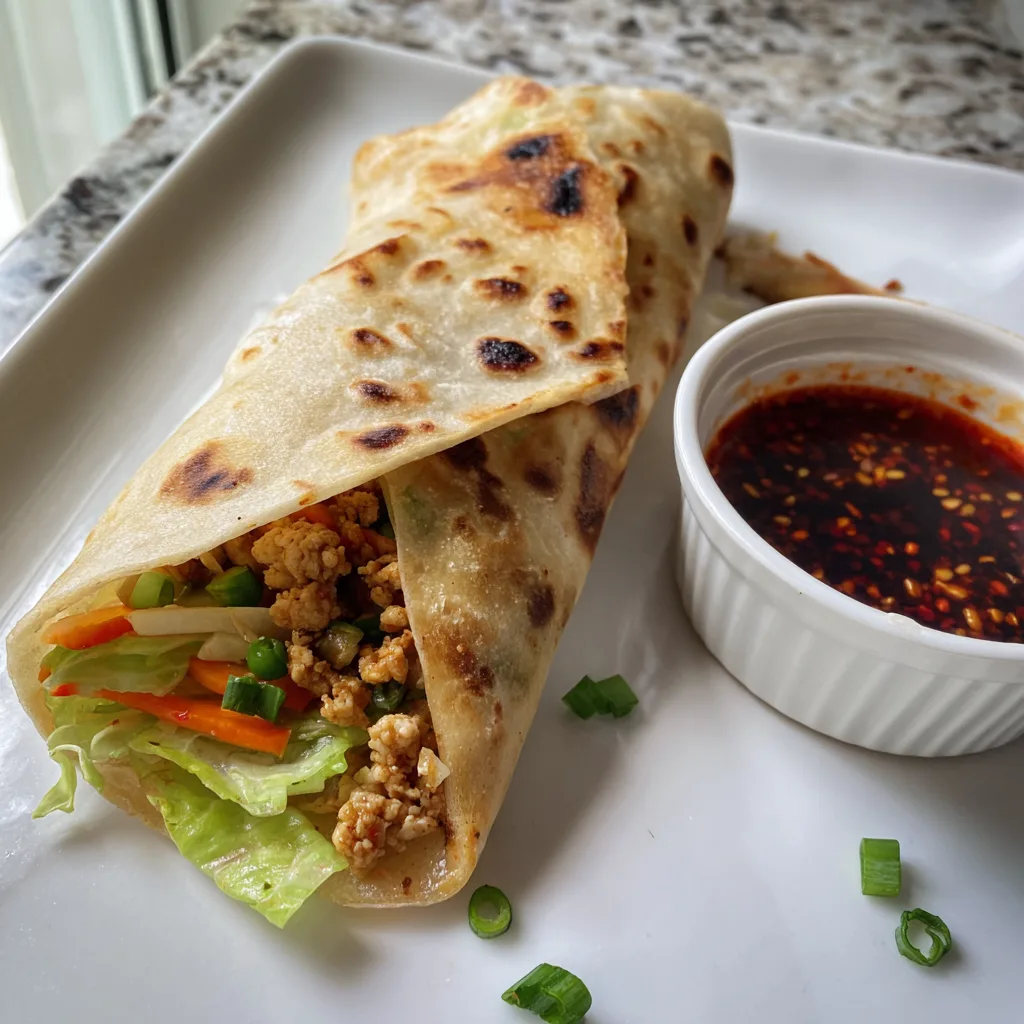
If you've ever wandered through the vibrant night markets of Bangkok or Chiang Mai, you've probably encountered the intoxicating aroma of fresh roti sizzling on a hot griddle. This savory Thai roti recipe brings that street food magic right into your kitchen, featuring golden, flaky flatbread wrapped around aromatic spiced minced chicken and crisp vegetables. Unlike the sweet roti you might find drizzled with condensed milk and banana, this version is a complete meal that balances the buttery richness of the bread with savory, slightly spicy filling. It's comfort food that travels well for lunch, makes an impressive weeknight dinner, and honestly tastes even better than takeout because you control the spice level and freshness of every ingredient.
Savory Thai Roti with Spiced Minced Chicken and Vegetables
Flaky Thai-style flatbread filled with aromatic spiced minced chicken and fresh vegetables for an authentic street food experience at home.
Prep Time 25 minutes mins
Cook Time 20 minutes mins
Total Time 45 minutes mins
Course Main Dish
Cuisine Thai
Large Mixing Bowl at least 3-quart capacity for making the dough, stainless steel or glass works best as it won't retain odors
Cast iron skillet or non-stick pan 10 to 12-inch diameter for cooking the roti, cast iron gives the best char and heat retention, but a good quality non-stick pan works perfectly if that's what you have
Rolling Pin standard wooden or marble rolling pin, or use a wine bottle in a pinch for flattening the dough
Large skillet or wok for cooking the chicken filling, a wok distributes heat more evenly but any large skillet works
Kitchen towel clean, damp towel for covering the dough while it rests to prevent drying
Pastry Brush for brushing oil or melted butter onto the roti, a silicone brush is easiest to clean
For the roti bread
- 2 cup all-purpose flour plus extra for dusting, bread flour also works for a chewier texture
- ½ teaspoon salt fine sea salt or table salt
- 1 tablespoon granulated sugar helps with browning and adds subtle sweetness
- 1 tablespoon vegetable oil for the dough, plus more for cooking
- ¾ cup warm water about 110°F, not too hot or it will kill the dough's elasticity
- 3 tablespoon melted butter for brushing, unsalted preferred, or use ghee for authentic flavor
For the spiced chicken filling
- 1 pound ground chicken preferably ground chicken thigh for more flavor and moisture, but breast works too
- 2 tablespoon vegetable oil for cooking the filling
- 3 clove garlic minced finely
- 1 tablespoon fresh ginger minced or grated
- 2 Thai bird's eye chilies minced, or substitute with 1 serrano pepper for less heat
- 1 tablespoon curry powder Thai-style yellow curry powder preferred, but any good quality curry powder works
- 1 teaspoon ground turmeric adds color and earthy flavor
- 2 tablespoon soy sauce regular or light soy sauce
- 1 tablespoon fish sauce essential for authentic Thai flavor, no good substitute
- 1 teaspoon brown sugar balances the savory flavors
- ½ cup diced carrot small dice for even cooking
- ½ cup frozen peas no need to thaw
- 2 green onions sliced, white and green parts separated
- ¼ cup fresh cilantro chopped, plus more for garnish
For serving
- 1 cup shredded lettuce iceberg or romaine for crunch
- 1 cucumber thinly sliced
- ¼ cup sweet chili sauce for drizzling
- 2 tablespoon lime juice freshly squeezed
Make the roti dough
In your large mixing bowl, whisk together the all-purpose flour, salt, and sugar until evenly combined. This dry mixing ensures the salt distributes evenly throughout the dough rather than creating salty pockets.
Make a well in the center of the flour mixture and pour in the vegetable oil and warm water. Using a wooden spoon or your hand, stir the mixture together until it forms a shaggy, rough dough. Don't worry if it looks messy at this stage.
Turn the dough out onto a lightly floured work surface and knead for about 8 to 10 minutes until it becomes smooth, elastic, and slightly tacky but not sticky. If the dough feels too dry and won't come together, add water one teaspoon at a time. If it's too sticky, dust with a little more flour. You'll know it's ready when you can poke it and the indent slowly springs back.
Shape the dough into a ball, place it back in the bowl, and cover with a damp kitchen towel. Let it rest at room temperature for 20 minutes. This resting period allows the gluten to relax, making the dough much easier to roll out thin without springing back.
Prepare the spiced chicken filling
While the dough rests, heat 2 tablespoons of vegetable oil in your wok or large skillet over medium-high heat until it shimmers. Add the minced garlic, ginger, and Thai chilies, stirring constantly for about 30 seconds until fragrant but not browned. The kitchen should smell amazing right about now.
Add the ground chicken to the pan, breaking it up with a wooden spoon or spatula. Cook for 4 to 5 minutes, stirring occasionally, until the chicken is mostly cooked through and no longer pink. Don't worry about browning it perfectly at this stage.
Sprinkle the curry powder and turmeric over the chicken, stirring to coat everything evenly. Let the spices toast for about 1 minute until they become fragrant and deepen in color. This step is crucial for developing complex flavors rather than raw spice taste.
Stir in the soy sauce, fish sauce, and brown sugar, mixing well to combine. Add the diced carrots and the white parts of the green onions. Cook for 3 to 4 minutes until the carrots begin to soften but still have some bite.
Add the frozen peas and cook for another 2 minutes until heated through. Remove from heat and stir in the chopped cilantro and green parts of the green onions. Taste and adjust seasoning if needed. The filling should be savory, slightly sweet, with a pleasant heat. Set aside to cool slightly while you prepare the roti.
Shape and cook the roti
Divide the rested dough into 4 equal portions and roll each into a smooth ball. Keep the balls covered with the damp towel while you work to prevent them from drying out.
On a lightly floured surface, take one dough ball and flatten it with your palm. Using your rolling pin, roll it out into a thin circle about 8 to 9 inches in diameter and roughly 1/8 inch thick. The thinner you can get it without tearing, the flakier your roti will be. Don't stress about perfect circles-rustic shapes are part of the charm.
Heat your cast iron skillet or non-stick pan over medium heat. Brush the surface lightly with vegetable oil. Once the pan is hot, carefully lay one roti in the pan. Cook for about 1 to 2 minutes until you see bubbles forming on the surface and the bottom develops golden-brown spots.
Flip the roti and brush the cooked side generously with melted butter. Cook the second side for another 1 to 2 minutes until golden and slightly crispy around the edges. The roti should have beautiful leopard spots and feel slightly crispy yet still pliable.
Transfer the cooked roti to a plate and cover with a clean kitchen towel to keep warm. Repeat with the remaining dough balls, brushing the pan with oil between each one. Stack the finished roti under the towel so they stay soft and warm.
Assemble and serve
Place one warm roti on a clean work surface or plate. Arrange a handful of shredded lettuce down the center, leaving about an inch on each side. This creates a barrier between the bread and filling so it doesn't get soggy.
Spoon about one-quarter of the spiced chicken filling over the lettuce. Top with several cucumber slices for freshness and crunch.
Drizzle with sweet chili sauce and a squeeze of fresh lime juice. The lime brightens all the flavors and cuts through the richness beautifully.
Fold the bottom edge of the roti up over the filling, then fold in the sides and roll it up like a burrito, tucking as you go to keep everything contained. Cut in half diagonally if desired for easier eating. Serve immediately while the roti is still warm and the filling is hot. Garnish with extra cilantro and serve with additional sweet chili sauce on the side.
Absolutely! The dough actually benefits from longer resting. After kneading, wrap it tightly in plastic wrap and refrigerate for up to 24 hours. Bring it back to room temperature for about 30 minutes before rolling out, as cold dough is difficult to work with and will spring back. You can also freeze divided dough balls for up to 3 months-just thaw overnight in the refrigerator and bring to room temperature before using.
Ground chicken thigh is ideal because it has more fat and flavor than ground breast, keeping the filling moist and preventing it from drying out during cooking. The dark meat also stands up better to the bold curry spices. If you can only find ground chicken breast, add an extra tablespoon of oil to the filling and don't overcook it, as breast meat dries out quickly. You can also substitute ground turkey thigh for similar results.
Tough roti usually results from over-kneading the dough or rolling it out when it hasn't rested enough. The gluten needs time to relax, so don't skip the 20-minute rest period. Also, make sure you're rolling the dough thin enough-thick roti becomes chewy rather than flaky. Finally, cooking over too high heat can make the bread tough, so stick to medium heat and watch for those golden-brown spots rather than dark, hard patches.
Yes! Replace the ground chicken with crumbled firm tofu or finely chopped mushrooms (shiitake or oyster mushrooms work beautifully). Substitute the fish sauce with additional soy sauce or a vegetarian fish sauce alternative. You might want to add a bit more curry powder and perhaps some cumin to boost the flavor since you're losing the richness of the chicken. The cooking method remains exactly the same.
Store the cooked roti and filling separately to prevent sogginess. The roti can be wrapped in aluminum foil and refrigerated for up to 3 days-reheat in a dry skillet over medium heat for about 30 seconds per side until warm and pliable again. The chicken filling keeps refrigerated in an airtight container for up to 4 days. Reheat the filling in a skillet or microwave until steaming hot before assembling fresh roti wraps. Don't assemble the wraps until you're ready to eat them, as the moisture from the filling will make the bread soggy if left sitting.