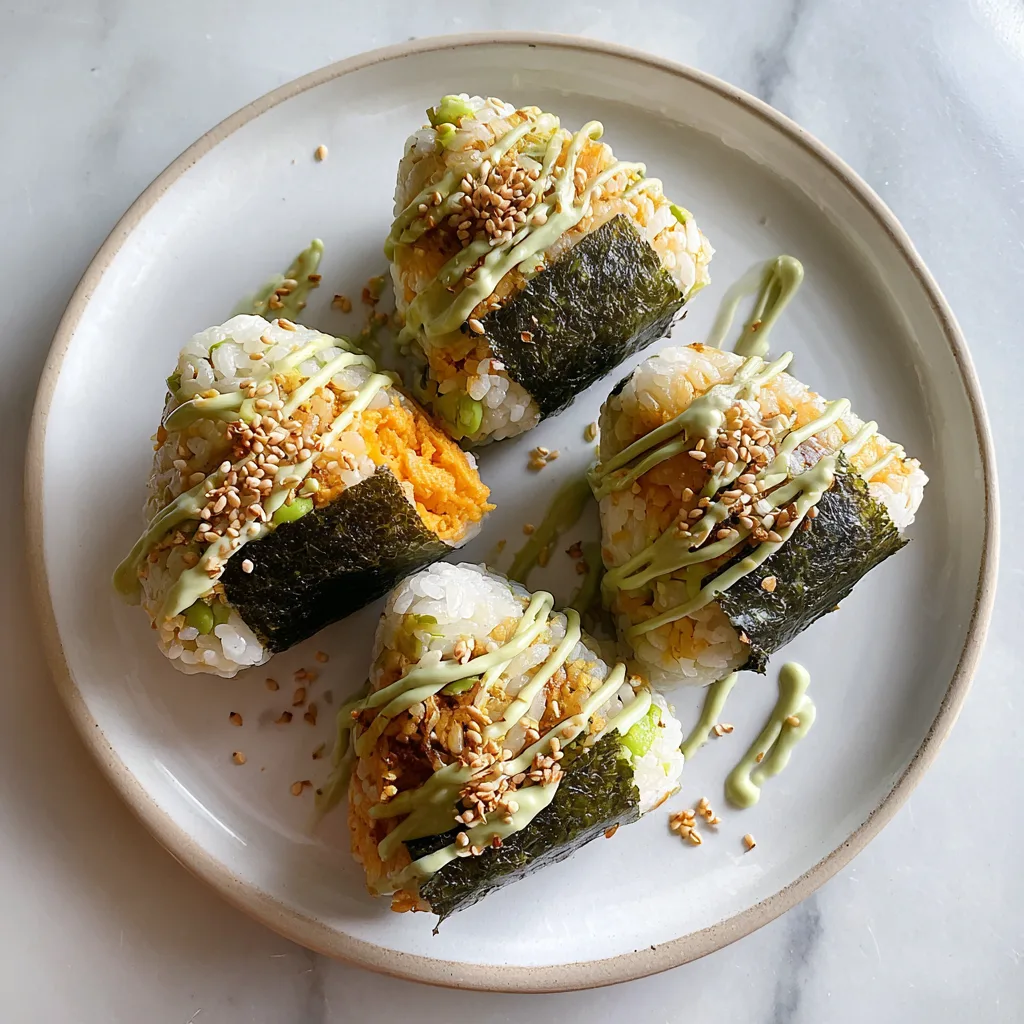
These sweet potato and edamame onigiri are the kind of cozy, handheld comfort food I want whenever I'm hungry-but-not-looking-for-a-whole-project. The filling is creamy, a little sweet, a little savory, with pops of edamame and just enough miso to make it taste like something you waited in line for. Then there's the wasabi drizzle: cool, tangy, and quietly spicy, which is exactly what sweet potato wants. If you've been googling an onigiri recipe vegan enough to satisfy a sushi-bar craving without the fish, this is the one I keep coming back to.
Sweet Potato and Edamame Onigiri with a Creamy Wasabi Drizzle (Vegan and Seriously Snackable)
Vegan onigiri stuffed with miso-mashed sweet potato and edamame, finished with a creamy wasabi drizzle and optional nori wrap.
Prep Time 25 minutes mins
Cook Time 35 minutes mins
Total Time 1 hour hr
Course Snack
Cuisine Japanese
Medium Saucepan with Lid for cooking sushi rice on the stovetop; a rice cooker works too and makes the timing more hands-off
Fine mesh strainer for rinsing rice until the water runs mostly clear; in a pinch, use a bowl and pour off the cloudy water carefully
Rimmed baking sheet for roasting sweet potato; line with parchment paper for easy cleanup, or use a toaster oven tray
Mixing bowl for mashing the filling; a wide bowl helps the sweet potato cool faster so it doesn't steam the rice later
Fork or potato masher a fork gives you a slightly chunkier texture; a masher makes it smoother and easier to stuff
Small bowl and whisk for the wasabi drizzle; a spoon works, but whisking prevents little wasabi lumps
onigiri mold (optional) totally optional but convenient; you can also shape by hand using plastic wrap or damp hands
for the rice
- 2 cup sushi rice short-grain japanese rice; if you only have medium-grain, it still works, but avoid long-grain because it won't hold the shape as well
- 2 ½ cup water for cooking the rice (plus extra for rinsing)
- 1 teaspoon fine sea salt mixed into the warm rice; if using table salt, start with a slightly smaller pinch and adjust
- 1 tablespoon rice vinegar optional but nice for a sushi-rice vibe; use seasoned rice vinegar only if you like it a little sweeter
for the sweet potato and edamame filling
- 1 pound sweet potato orange-fleshed is my favorite here; japanese sweet potato also works, but it's drier so add a splash of water when mashing
- 1 teaspoon neutral oil avocado oil, grapeseed oil, or light olive oil
- ½ cup shelled edamame thawed if frozen; you want it fully cooked and bright green
- 1 tablespoon white miso adds savory depth; substitute with chickpea miso for a soy-free option
- 1 teaspoon toasted sesame oil a little goes a long way; skip if you want a cleaner sweet potato flavor
- 1 tablespoon soy sauce or tamari for gluten-free; if using coconut aminos, add a pinch more salt to taste
- 1 teaspoon fresh ginger finely grated; use jarred ginger in a pinch, but squeeze out extra liquid so the filling stays thick
- 1 teaspoon toasted sesame seed for texture; black sesame seed looks especially cute onigiri-style
- 2 tablespoon scallion thinly sliced; optional but makes the filling taste fresher
for the creamy wasabi drizzle
- ⅓ cup vegan mayonnaise choose one you like straight from the jar; it carries the whole sauce
- 1 tablespoon rice vinegar for tang; lemon juice also works
- 1 teaspoon prepared wasabi start here and add more if you're brave; wasabi powder mixed with water also works
- 1 teaspoon maple syrup optional, but it smooths the heat and makes the sauce snack-friendly
- 1 tablespoon water to thin to a drizzle; add more a teaspoon at a time if needed
to finish (optional but recommended)
- 4 nori sheet cut into strips to wrap the onigiri; helps grip and adds that sea-salty bite
- 1 teaspoon furikake use a vegan furikake (many contain fish); or sprinkle extra sesame seed and a pinch of salt
cook the rice
Rinse the sushi rice in a fine-mesh strainer under cool water, swishing it with your fingers, until the water runs mostly clear. This is the difference between rice that feels clean and springy versus rice that tastes starchy and a little gluey.
Add rinsed rice and 2 1/2 cups water to a medium saucepan. Bring to a boil over medium-high heat. As soon as it hits a steady boil, reduce heat to low, cover, and cook for 18 minutes.
Turn off the heat and let the rice stand, covered, for 10 minutes. Don't peek. That rest is where the texture sets, which matters when you're learning how to make vegan onigiri that won't crumble the second you pick it up.
Transfer rice to a wide bowl. Sprinkle in the salt and drizzle in 1 tablespoon rice vinegar (if using). Fold gently with a spatula, using a slicing motion so you don't smash the grains. Let the rice cool until warm, not hot, about 10 minutes. Warm rice shapes best; hot rice turns steamy and can make the nori chewy.
roast and mash the filling
Heat the oven to 425°F. Pierce the sweet potato a few times with a fork, rub with neutral oil, and place on a lined rimmed baking sheet. Roast until a knife slides in easily, 25 minutes.
Let the sweet potato cool just enough to handle, then peel and add the flesh to a mixing bowl. Mash with a fork or potato masher until mostly smooth.
Add edamame, white miso, toasted sesame oil, soy sauce, ginger, sesame seed, and scallion. Mix until the filling is thick and scoopable. Taste it: it should be boldly seasoned because the rice is mostly plain. If it tastes flat, add a tiny splash more soy sauce or a pinch of salt.
Cool the filling to room temperature. Stuffing hot filling into warm rice creates condensation, which is the enemy of tidy onigiri.
whisk the wasabi drizzle
In a small bowl, whisk vegan mayonnaise, rice vinegar, prepared wasabi, maple syrup, and water until smooth. The goal is a sauce that ribbons off the spoon. If it's too thick, whisk in more water 1 teaspoon at a time. If it's too spicy, add a touch more mayo.
shape the onigiri (hands or plastic wrap)
Set up a small bowl of water to dampen your hands (this prevents sticking) and keep a pinch of salt nearby. If you want the easiest method, use plastic wrap: it keeps everything neat and makes an easy onigiri recipe feel genuinely easy the first time.
For each onigiri, scoop about 3/4 cup warm rice into your palm (or onto plastic wrap). Make a shallow well in the center, add 2 tablespoons filling, then top with a little more rice to cover.
Shape into a triangle: press gently but firmly, rotating as you go so the outside gets compact without turning into a brick. If using plastic wrap, gather and twist, then press into a triangle through the wrap. Either way, the rice should hold together when you lift it.
Repeat to make 4 onigiri. Wrap each with a strip of nori right before serving (best for crispness). Sprinkle with vegan furikake or extra sesame seed if you like.
serve
Drizzle the wasabi sauce over the top (or serve it on the side for dipping). These are best the day they're made, when the rice is soft and the nori is crisp.
If packing for later, keep the nori separate and wrap the rice triangles tightly. This is a Japanese vegetarian dishes kind of snack: portable, satisfying, and not trying to be anything other than delicious.
Yes, as written it's vegan. White miso is typically fermented soy and rice (no animal products), but labels vary, so check if you're strict. Use vegan mayonnaise (not egg-based) for the wasabi drizzle.
Short-grain sushi rice is the best because it's naturally sticky and holds a triangle shape. Jasmine and basmati are too fluffy and separate, so the onigiri will crack and fall apart. If sushi rice is hard to find, medium-grain rice is the next best option.
Keep a small bowl of water nearby and dampen your hands before shaping. A tiny pinch of salt on your palms also helps. If you're still fighting sticky rice, use plastic wrap: scoop rice onto the wrap, add filling, then shape through the plastic.
Try mashed avocado with a squeeze of lime and salt, sautéed mushrooms with soy sauce, or a quick mix of chopped kimchi and tofu (use vegan kimchi). You can also do a classic umeboshi center if you like tart, salty flavors.
You can, but it won't be vegan anymore. If you want to add meat, cooked shredded chicken thigh stays juicier than chicken breast and is easier to eat inside rice. For salmon, use cooked flaked salmon (not raw) and keep the portion small so the triangle still holds. In both cases, skip the miso in the filling or reduce it, since meat and fish bring their own savory punch.