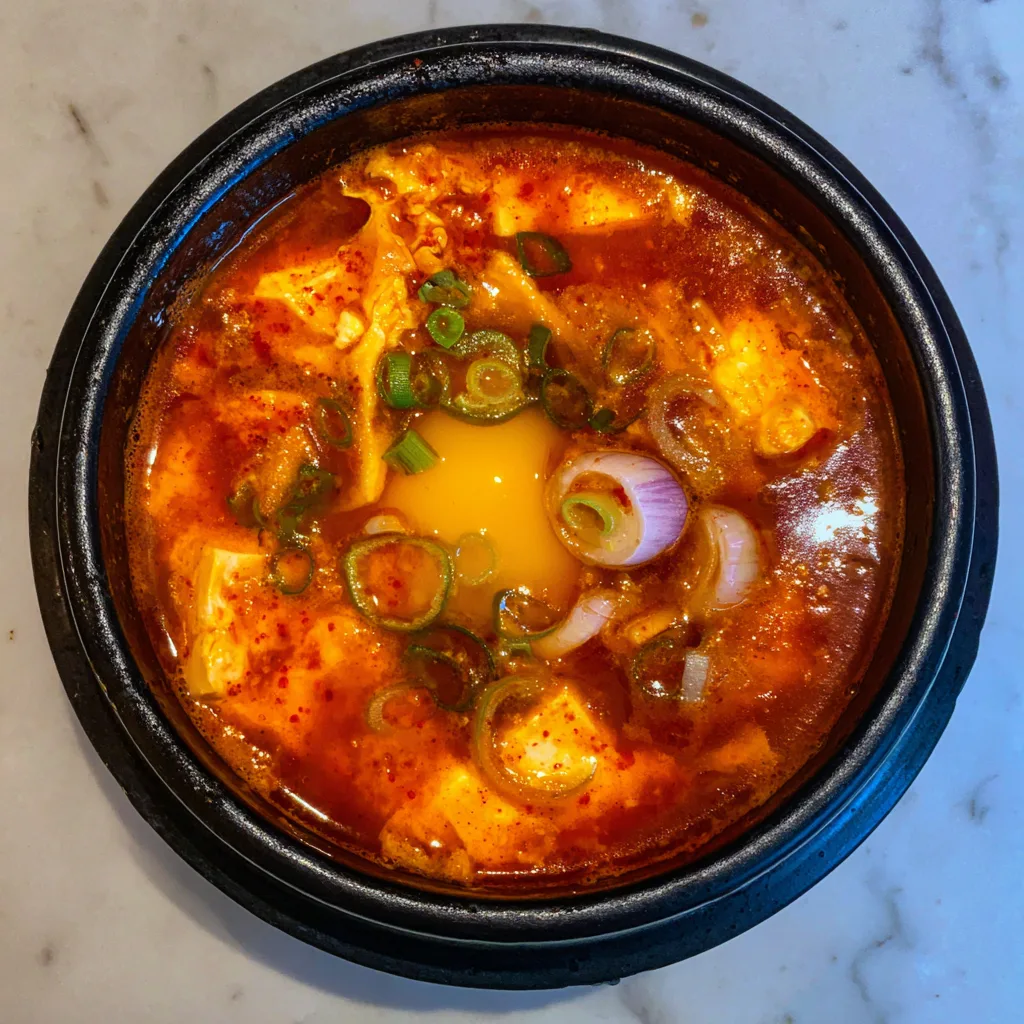
There's something magical about a bubbling pot of sundubu jjigae arriving at your table in a traditional stone bowl, steam rising and the vibrant red broth promising warmth and comfort. This Korean soft tofu soup is one of those dishes that feels like a warm hug on a cold day, with silky soft tofu swimming in a spicy, umami-rich broth alongside tender seafood. I fell in love with this dish during my first visit to a Korean restaurant, and I've been making it at home ever since. The beauty of sundubu jjigae lies in its simplicity-you don't need fancy techniques or hard-to-find ingredients to create something that tastes absolutely restaurant-quality. The soft, almost custard-like texture of the tofu contrasts beautifully with the bold, spicy broth, while the seafood adds a sweet brininess that ties everything together. Whether you're new to Korean cooking or a seasoned pro, this recipe will become your go-to comfort food.
Classic Sundubu Jjigae: Soft Tofu Stew with Seafood
Spicy, comforting Korean soft tofu stew with seafood, mushrooms, and a rich gochugaru-infused broth that's ready in 30 minutes.
Prep Time 10 minutes mins
Cook Time 20 minutes mins
Total Time 30 minutes mins
Course Soup
Cuisine Korean
Korean stone pot (dolsot) or heavy-bottomed pot a traditional Korean stone pot gives the most authentic presentation and keeps the stew piping hot throughout your meal, but a 3-quart heavy-bottomed pot or Dutch oven works perfectly well-the key is something that retains heat and distributes it evenly
Wooden spoon or silicone spatula for stirring without breaking up the delicate tofu-avoid metal utensils that might scratch your pot or damage the soft tofu pieces
Sharp knife and cutting board for prepping vegetables and seafood-a dedicated board for seafood is ideal to prevent cross-contamination
Measuring cups and spoons standard US measurements for accuracy with the broth and seasonings
Small bowl for mixing the gochugaru paste before adding to the pot
For the base
- 1 tablespoon sesame oil toasted sesame oil adds a nutty depth that's essential to Korean cooking
- 3 clove garlic minced, or use 1 tablespoon pre-minced for convenience
- 1 tablespoon gochugaru Korean red pepper flakes-this is what gives the stew its signature color and heat, find it at Asian markets or online
- 1 tablespoon gochujang Korean fermented chili paste adds complexity and umami to balance the heat
- 1 teaspoon soy sauce regular or low-sodium depending on your preference
- ½ teaspoon fish sauce adds savory depth, or substitute with additional soy sauce for a vegetarian version
For the broth
- 3 cup anchovy stock traditional Korean base made from dried anchovies and kelp, or substitute with vegetable stock or dashi
- 1 cup water to adjust consistency
For the stew
- 1 pound soft tofu also called silken tofu or sundubu-look for the softest variety you can find, usually sold in tubes in the refrigerated section
- 4 ounce shrimp peeled and deveined, medium-sized-about 8 to 10 shrimp
- 4 ounce clams littleneck or Manila clams, scrubbed clean-about 8 to 10 clams
- 4 ounce oyster mushrooms torn into bite-sized pieces, or substitute with shiitake mushrooms
- ½ cup zucchini sliced into half-moons, about 1/4 inch thick
- ½ cup onion thinly sliced-yellow or white onion works best
- 2 stalk green onion cut into 2-inch pieces, white and green parts separated
- 1 egg optional but traditional, cracked directly into the stew
- 1 teaspoon sugar balances the heat and acidity
For serving
- 2 cup cooked white rice short-grain or medium-grain rice is traditional
- kimchi for serving alongside-napa cabbage kimchi is classic
- sesame seeds for garnish, toasted if possible
Prepare the aromatics
Heat the sesame oil in your stone pot or heavy-bottomed pot over medium heat for about 1 minute until it shimmers and becomes fragrant. You'll know it's ready when you can smell that distinctive nutty aroma.
Add the minced garlic and stir constantly for 30 seconds until it becomes fragrant but hasn't browned yet. Garlic burns quickly, so keep it moving in the pot.
In a small bowl, mix together the gochugaru and gochujang with 2 tablespoons of your stock to create a paste. This helps the spices distribute evenly throughout the broth rather than clumping.
Add the gochugaru-gochujang paste to the pot and stir for about 30 seconds, letting the oils bloom the spices. The mixture should turn a deep, vibrant red and smell intensely aromatic.
Build the broth
Pour in the anchovy stock and water, stirring to combine everything thoroughly. Add the soy sauce, fish sauce, and sugar, stirring until the sugar dissolves completely.
Increase the heat to high and bring the broth to a rolling boil. This should take about 3 to 4 minutes. You want aggressive bubbles breaking the surface.
Once boiling, add the sliced onion, white parts of the green onion, and mushrooms. Let these simmer for 3 minutes to soften and release their flavors into the broth. The mushrooms will darken slightly and become tender.
Add the main ingredients
Reduce the heat to medium-high to maintain a steady simmer. Carefully add the soft tofu by scooping it with a large spoon directly from the package-don't worry about keeping it in one piece, as it naturally breaks into irregular chunks that look rustic and authentic. This is how it's supposed to look.
Gently nestle the clams into the stew, pushing them slightly into the liquid so they're partially submerged. Add the zucchini slices around the pot.
Let everything simmer for 5 minutes. The clams will begin to open during this time, releasing their briny juices into the broth and adding incredible depth of flavor. Discard any clams that don't open after 7 minutes of cooking.
Add the shrimp and the green parts of the green onion. Cook for another 2 to 3 minutes until the shrimp turn pink and opaque, curling into a C-shape. They cook quickly, so watch them carefully to avoid rubberiness.
Finish and serve
If using an egg, crack it directly into the center of the stew. Let it sit for about 1 minute without stirring-the heat from the broth will gently poach the egg. Some people like to stir it in for a silkier broth, while others prefer to keep the yolk intact for richness.
Taste the broth and adjust seasoning if needed. Add more gochugaru for heat, soy sauce for saltiness, or a pinch of sugar if it's too spicy for your preference.
Remove from heat and sprinkle with sesame seeds if desired. Serve immediately while piping hot, preferably in the stone pot if you used one-it will keep bubbling at the table for an impressive presentation. Accompany with individual bowls of steamed rice and kimchi on the side.
Absolutely! Replace the anchovy stock with vegetable stock or mushroom broth for depth. Omit the seafood and fish sauce, using additional soy sauce or a splash of mirin for umami. Add extra mushrooms, zucchini, and vegetables like bok choy or napa cabbage for substance. Skip the egg or use a tofu scramble on top. The gochugaru and gochujang still provide incredible flavor, making this a satisfying vegan Korean recipe.
You need the softest tofu available, labeled as "soft tofu," "silken tofu," or specifically "sundubu" in Korean markets. It usually comes in tubes rather than blocks and has a custard-like, almost liquid consistency when raw. Regular firm or extra-firm tofu won't work-the texture is completely wrong. The soft tofu should be so delicate it barely holds together, creating that signature creamy texture in the soup.
This recipe is moderately spicy with a warming heat rather than overwhelming burn. To reduce spiciness, cut the gochugaru in half and use less gochujang. To increase heat, add more gochugaru or include sliced fresh red chilies. Remember that the rice and tofu help moderate the spice as you eat. If you accidentally make it too spicy, add a bit more sugar or a splash of cream to mellow the heat.
Yes! Traditional sundubu jjigae often includes various seafood combinations-try mussels, squid, or firm white fish like cod. You can also make it with just one type of seafood or replace it entirely with thinly sliced pork belly, beef, or chicken thigh for a meat-based version. If omitting seafood entirely, increase the mushrooms and vegetables, and consider adding a tablespoon of Korean soup soy sauce for extra depth.
Store leftovers in an airtight container in the refrigerator for up to 2 days. The tofu will continue absorbing the broth and become more flavorful but slightly firmer. Reheat gently on the stovetop over medium-low heat, adding a splash of water or stock to thin the broth if needed. Avoid microwaving if possible, as it can make the seafood rubbery. The stew doesn't freeze well due to the delicate tofu texture, so it's best enjoyed fresh or within a couple of days.