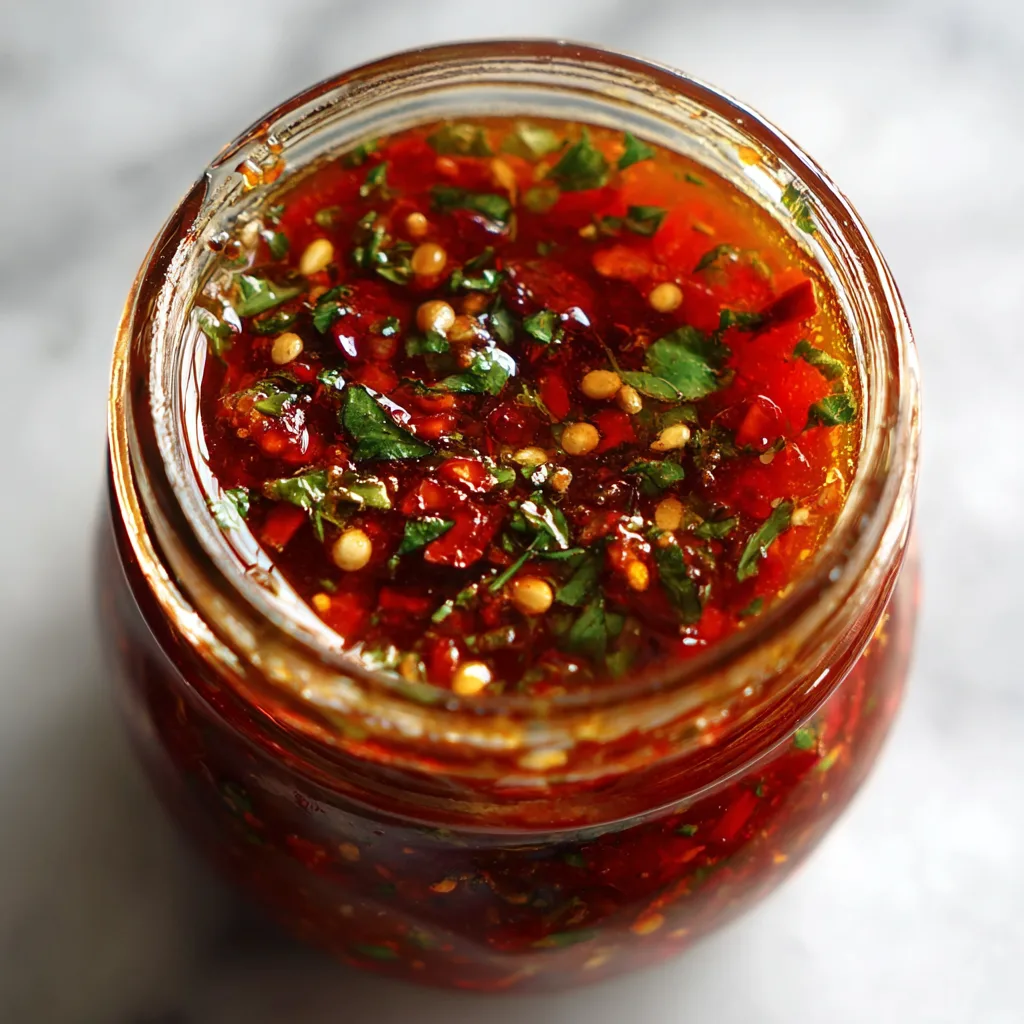
This spicy Thai chili sauce is the one I keep in the fridge when I want instant "wake up" flavor: hot enough to mean it, tangy from vinegar and lime, a little sweet to round the edges, and blended with fresh herbs so it tastes alive instead of flat. It's not a sticky sweet chili glaze; it's closer to a punchy, pourable thai chili pepper sauce you can spoon onto noodles, grilled meat, eggs, and roasted vegetables. The best part is you can dial the heat up or down without messing with the vibe, and it comes together in one small pot and a blender.
Spicy Thai Chili Sauce with Fresh Herbs (A Bright, Garlicky Thai Chili Hot Sauce Recipe)
A bright, garlicky homemade thai chili sauce with fresh herbs, lime, and vinegar for a spicy, pourable condiment.
Prep Time 20 minutes mins
Cook Time 20 minutes mins
Total Time 40 minutes mins
Course Side Dish
Cuisine Thai
Small saucepan 2 to 3 quart is perfect; a saucier also works and reduces splatter when simmering chiles
Blender a high-speed blender makes the smoothest sauce; an immersion blender works (blend in a tall container to avoid splashing)
Cutting board and chef’s knife use a non-porous board if possible because chile oils cling; a paring knife is handy for trimming stems
Microplane or fine grater for ginger; you can mince by hand if needed
Fine mesh strainer (optional) strain for a thinner, more "hot sauce" style; skip for a thicker, spoonable spicy thai chili sauce
heatproof spatula or wooden spoon for stirring; silicone helps scrape the blender clean
jar or bottle with lid a 2 cup jar works; or two 1 cup jars; sterilized is nice but not mandatory for short storage
disposable gloves (recommended) highly recommended when cutting thai chiles; the burn is real and likes to travel
For the chile base
- 12 thai red chiles stems removed; for less heat use 6 thai chiles and add 1 red bell pepper
- 4 clove garlic peeled; smash lightly for easier blending
- 1 shallot peeled and roughly chopped; substitute with 1/4 yellow onion
- 1 tablespoon neutral oil like avocado or grapeseed; helps bloom aromatics (olive oil is fine in a pinch)
- 1 tablespoon ginger finely grated; substitute with galangal if you have it
- ½ cup rice vinegar mild and clean; substitute with distilled white vinegar for a sharper bite
- ½ cup water helps it blend and simmer without scorching
- 2 tablespoon fish sauce adds savory depth; substitute with 2 tablespoon light soy sauce for a vegan option
- 2 tablespoon lime juice fresh is best; add after cooking for a brighter pop
- 2 tablespoon palm sugar grated or chopped; substitute with 2 tablespoon light brown sugar or honey
- ½ teaspoon kosher salt start here and adjust after blending; the fish sauce adds salt too
For the fresh herb finish
- ½ cup cilantro leaves and tender stems loosely packed; if you hate cilantro, use more basil and mint
- ¼ cup thai basil leaves loosely packed; substitute with regular basil (it's different, still delicious)
- 2 tablespoon mint leaves optional but amazing; makes the heat feel fresher
Prep
Put on gloves if you have them. Trim the stems from the thai chiles. For a slightly calmer sauce, slice the chiles lengthwise and scrape out some seeds; for full fire, leave them as-is.
Roughly chop the shallot. Smash the garlic cloves. Grate the ginger so it melts into the sauce (big chunks can stay fibrous). Measure the vinegar, water, fish sauce, and sugar so you're not scrambling once the pot is hot.
Cook the base (build flavor without burning it)
Set a small saucepan over medium heat and add the oil. When it shimmers, add the shallot and garlic. Stir until the edges just start to turn golden and it smells sweet and garlicky, about 2 minutes.
Add the thai chiles and ginger. Stir constantly for 1 minute to lightly toast the chiles. You're not trying to blacken anything here; you're waking the aromatics up.
Carefully pour in the rice vinegar and water (it will hiss). Add the palm sugar and salt, then stir until the sugar dissolves. Bring to a gentle simmer and cook until the chiles soften and the liquid reduces slightly, about 12 minutes. If it starts to catch on the bottom, lower the heat and add 1 tablespoon water.
Turn off the heat and stir in the fish sauce. Let the mixture cool for 5 minutes so it blends safely and doesn't blast steam out of the blender lid.
Blend (choose smooth or rustic)
Transfer everything from the pot to a blender. Add the lime juice. Blend until very smooth, about 30 seconds, scraping down once. Taste carefully (it's spicy): you want sharp, salty, and a little sweet.
Decide your texture. For a classic pourable thai hot sauce recipe texture, strain through a fine-mesh strainer into a bowl, pressing with a spoon. For a thicker, more spoonable sauce (great for noodles and rice bowls), skip straining.
Add herbs (keep them bright, not cooked)
Rinse and dry the herbs well. Add cilantro, thai basil, and mint to the blender with the warm (not boiling) sauce. Pulse just until the herbs are finely chopped and the sauce turns green-flecked, about 5 to 10 short pulses. Over-blending can make herbs taste grassy.
Taste again and adjust: add 1 tablespoon vinegar for more tang, 1 teaspoon sugar for more sweetness, or a pinch of salt if it tastes flat.
Store
Pour into a clean jar or bottle. Cool completely, then refrigerate. The flavor is good immediately, but it settles and gets more cohesive after 12 hours.
Use within 2 weeks for the freshest herb flavor. If you strained it and kept everything clean, it often lasts longer, but the herbs will slowly dull over time.
It's genuinely easy: chiles, vinegar, garlic, and herbs do the heavy lifting. Fish sauce and palm sugar make it taste more "Thai," but you can swap soy sauce for fish sauce and brown sugar for palm sugar and still get a punchy homemade thai chili sauce.
With 12 thai red chiles, it's hot. To reduce heat without losing flavor, use 6 thai chiles plus 1 red bell pepper, or scrape out the seeds and white membranes. You can also add 2 extra tablespoons vinegar and 2 extra tablespoons water after blending to mellow it without making it sweet.
Both work, but they behave differently. Chicken breast (boneless, skinless) is lean, so use the sauce as a finishing drizzle or quick dipping sauce to keep it bright and not overcooked. Chicken thighs (boneless, skinless or bone-in) have more fat, so they can handle a heavier spooning and taste extra juicy with the garlicky heat.
Straining gives you a thinner, more classic "hot sauce" pour. Unstrained is thicker and more rustic, which is great for clinging to noodles and rice bowls. Flavor-wise, unstrained is slightly fuller because you keep all the chile solids.
In the refrigerator, it's best within 2 weeks because the fresh herbs fade. You can freeze it in an ice cube tray (then bag the cubes) for up to 3 months. Thaw in the fridge; the texture may separate a bit, so shake or stir before using.