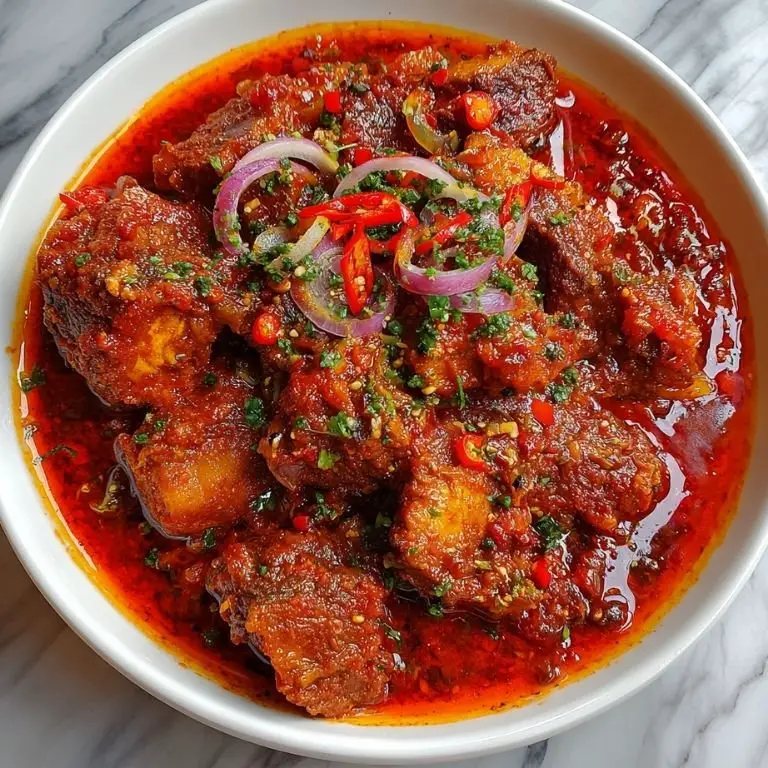
There’s something unforgettable about a good Nigerian party — the music, the dancing, the fashion — but ask any guest what really makes a party, and they’ll say it’s the stew. More specifically, the spicy Nigerian party stew with fried beef. This isn’t your average beef stew recipe. It’s rich, smoky, deeply spiced, and layered with bold, fiery flavors that coat every grain of rice in pure magic. This dish is a staple at weddings, birthdays, and festive gatherings across Nigeria and is a crown jewel of west African food culture. Made with slow-cooked tomatoes, peppers, and onions, and enriched with fried beef that’s crisp on the outside and juicy within, this stew is a masterclass in African dishes Nigerian food fans rave about.
This isn’t just a Nigerian beef stew recipe — it’s the Nigerian stew that defines party plates, piled high next to fluffy jollof rice or white rice, plantains, and moi moi. Whether you're familiar with Nigerian recipes or new to the world of African stew, this recipe will transport your taste buds straight to a bustling Nigerian celebration.
Spicy Nigerian Party Stew with Fried Beef
Prep Time 25 minutes mins
Cook Time 1 hour hr 15 minutes mins
Total Time 1 hour hr 40 minutes mins
Course Main Course
Cuisine Nigerian
Large Pot or Dutch Oven Essential for simmering the stew evenly and for frying the stew base.
Blender or food processor For blending the tomatoes, peppers, and onions into a smooth puree.
Deep Frying Pan or Pot To fry the beef. A cast-iron skillet works well if you don’t have a deep fryer.
Slotted spoon or spider strainer Helps lift fried beef out of the hot oil without excess grease.
Fine mesh sieve (optional) If you want to reduce the water content of your blended tomato mix before cooking.
For the Fried Beef
- 2 lbs beef preferably a mix of beef shoulder and brisket, cut into bite-sized chunks
- 1 teaspoon salt
- 1 teaspoon seasoning cubes Maggi or Knorr
- ½ teaspoon garlic powder
- ½ teaspoon ground ginger
- 1 small onion chopped
- Water enough to cover the beef
- Vegetable oil for frying
For the Stew Base
- 6 large Roma tomatoes or plum tomatoes, roughly chopped
- 3 large red bell peppers deseeded and chopped
- 2 scotch bonnet peppers adjust to taste
- 2 medium onions 1 for blending, 1 for frying
- 1 tablespoon tomato paste
- 1½ teaspoons curry powder
- 1 teaspoon thyme
- 1 teaspoon paprika optional, for color and smokiness
- 2 seasoning cubes
- Salt to taste
- 1 cup vegetable oil you can use the oil from frying the beef
Prepare the Beef
Start by seasoning your beef with salt, seasoning cubes, garlic powder, ground ginger, and chopped onions in a pot. Add enough water to cover the meat and bring it to a boil over medium-high heat. Simmer for about 30 minutes or until the beef is tender but not falling apart. Reserve the stock — it’s liquid gold and will deepen the flavor of the stew.
Fry the Beef
Heat oil in a deep pan and fry the beef pieces in batches until golden brown and crisp on the outside. Be careful not to overcrowd the pan. Drain on paper towels and set aside. You can reuse the same oil for the stew, which adds depth and authenticity.
Blend the Stew Base
In a blender, combine chopped tomatoes, red bell peppers, scotch bonnets, and one onion. Blend until smooth. For a more concentrated flavor and to speed up cooking, pour the blended mix into a pot and let it simmer for 10–15 minutes to reduce excess liquid.
Build the Stew
In a large pot or Dutch oven, heat 1 cup of the used oil over medium heat. Slice the remaining onion and sauté until golden. Add in the tomato paste and fry for 3–4 minutes. Then pour in the reduced tomato-pepper blend. Stir and cook for 10 minutes, stirring frequently to avoid burning.
Season the Stew
Add curry powder, thyme, paprika, salt, and seasoning cubes. Stir well. Add in the reserved beef stock and continue to cook for another 20 minutes, allowing the stew to thicken and the oil to rise to the top. This oil-floating-top layer is a signature sign of a properly made Nigerian stew.
Add Fried Beef
Toss the fried beef into the stew and stir. Let everything simmer together for another 10–15 minutes. The beef will absorb the flavors of the stew, and the sauce will cling to every piece. Taste and adjust seasoning if needed.
Serve
Serve hot, with steamed white rice, jollof rice, fried plantains, or even boiled yams. The combination of smoky stew and crispy fried beef is pure heaven.
Pairings
This Nigerian stew is intensely flavorful, so it pairs beautifully with neutral, starchy bases that absorb all the spicy goodness. Here are a few must-try pairings:
- White rice: The classic. If you’re trying this for the first time, white rice is the best canvas to appreciate the complexity of the stew.
- Jollof rice: A Nigerian party double-whammy. Double the tomato goodness, double the celebration.
- Fried plantains (dodo): Sweet plantains balance out the heat of the stew perfectly.
- Boiled yams or sweet potatoes: These tubers add a comforting texture and are perfect for soaking up the stew.
- Moi moi (steamed bean pudding): A traditional pairing, offering a soft contrast to the hearty stew.
- Eba, pounded yam, or amala: These are typical of south Nigerian cuisine and make a hearty, satisfying combo for stew lovers.
Looking to go pan-African? This dish complements other west African or even south African food selections. Serve alongside Ghanaian food staples like waakye or kenkey for a cultural fusion.
FAQs
1. What kind of beef should I use for Nigerian stew?
Use a mix of cuts like shoulder, brisket, and even some offcuts with bone for the most flavor. The connective tissue and slight marbling break down during cooking and deliver tenderness and taste. For a leaner option, you can use beef sirloin, but it won’t have the same depth as fattier cuts.
2. Can I use chicken instead of beef?
Absolutely. This stew base works beautifully for a Nigerian chicken stew. Just season and fry the chicken similarly, and follow the rest of the recipe. Chicken thighs work best due to their richer flavor, but drumsticks and wings are great too.
3. Is this the same as African beef stew or African chicken stew?
While there are similarities, especially in west African stew-making, this recipe is specifically a Nigerian beef stew recipe tailored for parties. African beef stew recipes vary by country — Ghana, Cameroon, and Congo all have unique approaches. However, this is among the most iconic versions of African stew.
4. Can I make this stew ahead of time?
Yes, and it’s actually better the next day. Like many stews, the flavors deepen overnight. You can make this stew up to 3 days ahead and refrigerate, or freeze it for up to a month. Just reheat gently on the stove and stir well.
5. Is this stew spicy? Can I make it milder?
It’s meant to be spicy — that’s part of the party charm. But you can control the heat by adjusting the amount of scotch bonnet peppers. For a milder version, use one pepper or substitute with long sweet peppers and add heat gradually.