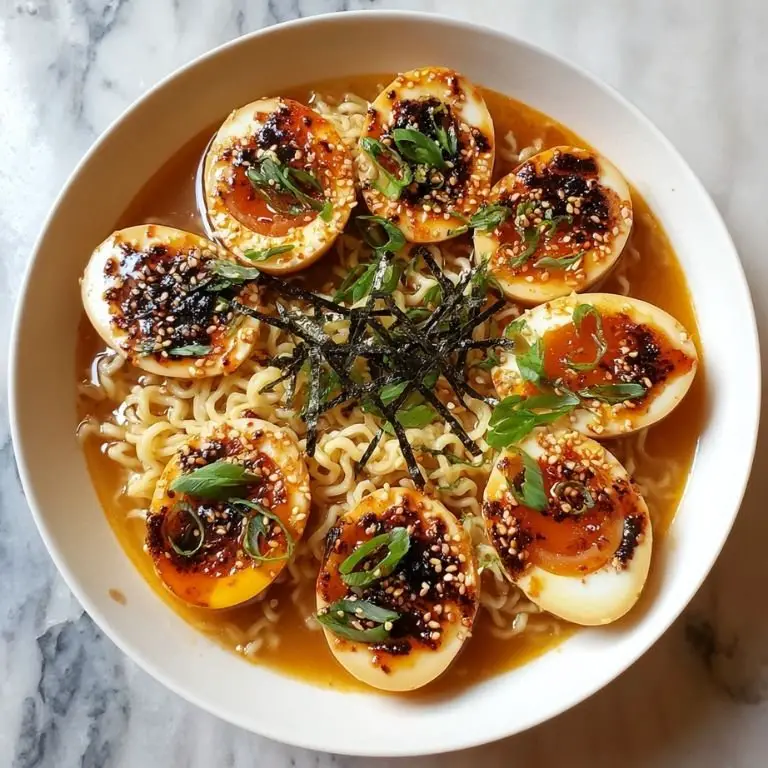
If you're looking to take your ramen game to the next level, let me introduce you to Spicy Korean Gochujang Ramen Eggs. These jammy, savory, spicy eggs are the perfect fusion of Korean boldness and Japanese elegance. Whether you're making a comforting bowl of ramen noodles with egg, crafting a next-level breakfast ramen, or just looking for an umami-packed snack, these eggs are your new best friend.
This isn't just another soy sauce egg. This is a ramen egg recipe that brings heat, depth, and just enough funk from the gochujang to make your taste buds sit up and pay attention. It’s a fantastic twist on traditional Japanese egg recipes and pairs beautifully with everything from a steaming bowl of noodles to a quick rice bowl. So, if you’ve been searching for the ultimate ramen egg marinade, this one is going to be hard to beat.
Spicy Korean Gochujang Ramen Eggs
Prep Time 10 minutes mins
Cook Time 7 minutes mins
Marinating 23 hours hrs 43 minutes mins
Total Time 1 day d
Course Appetizer, Breakfast, Brunch, Side Dish
Cuisine Korean
Servings 6 ramen eggs (3 servings if using 2 eggs per bowl)
Medium saucepan To boil the eggs. A heavy-bottomed one ensures even cooking.
Slotted spoon For easy removal of eggs from boiling water.
Mixing bowl To prepare the ramen egg marinade.
Ziploc bag or small container To marinate the eggs; a Ziploc helps the marinade fully surround the eggs.
Timer Precision is key for the perfect soft egg.
Bowl of ice water Essential to stop the cooking process and make peeling easier.
For the Eggs
- 6 large eggs room temperature, for best results
- Water enough to boil the eggs
- Ice for an ice bath
For the Marinade
- 3 tablespoons soy sauce use low-sodium if preferred
- 2 tablespoons mirin Japanese sweet rice wine
- 1 tablespoon sake optional, but adds complexity
- 1 tablespoon gochujang Korean fermented chili paste
- 1 tablespoon sesame oil
- 1 tablespoon rice vinegar
- 1 teaspoon sugar adjust to taste
- 1 garlic clove finely grated
- 1 teaspoon grated ginger
- 1 green onion finely chopped
- 1/2 cup water
Optional Garnish (for serving)
- Toasted sesame seeds
- Thinly sliced green onions
- Nori strips dried seaweed
Boil the Eggs
Bring a pot of water to a gentle boil. Using a spoon, carefully lower the room-temperature eggs into the water. Set your timer for 7 minutes for the ideal soft boiled eggs recipe result: a just-set white and creamy, jammy yolk. If you like them slightly firmer or softer, you can adjust by 30 seconds either way.
Ice Bath
While the eggs boil, prepare a bowl of ice water. As soon as the timer goes off, use a slotted spoon to transfer the eggs to the ice bath. Let them chill for at least 5 minutes. This halts the cooking and makes peeling much easier.
Peel Gently
Once cool, gently tap the eggs all over and peel under running water to avoid tearing the delicate whites. This is key to that picture-perfect ramen egg.
Make the Marinade
In a bowl, whisk together soy sauce, mirin, sake, gochujang, sesame oil, vinegar, sugar, garlic, ginger, and green onion. Stir in 1/2 cup water to slightly dilute the marinade—this keeps the eggs from being too salty.
Marinate
Place the peeled eggs in a Ziploc bag or a small container. Pour the marinade over, ensuring the eggs are fully submerged. If using a Ziploc, remove as much air as possible to allow the marinade to fully coat the eggs. Refrigerate for at least 12 hours, but for best flavor, let them sit for 24 hours.
Serve
Remove eggs from the marinade and slice in half. Serve on top of a hot bowl of ramen, over rice, or even as part of a korean ramen recipe or breakfast ramen bowl. Garnish with sesame seeds, green onion, or nori strips.
These ramen eggs are easy to prepare but deliver big flavor. Once you've tried this twist, you'll find it sneaking into all your top ramen recipes.
These spicy gochujang ramen eggs are insanely versatile, but they shine brightest when paired with the right bowl.
They also work great as a snack on their own—just slice and serve with a sprinkle of sesame seeds.
Use large, fresh eggs that are room temperature. Room temp eggs are less likely to crack when lowered into boiling water and tend to cook more evenly, giving you that ideal soft egg consistency.
While whole eggs are traditional in japanese ramen recipe dishes, you can technically marinate boiled egg whites, but you’ll miss out on that rich, jammy yolk that defines a proper ramen egg.
Technically yes, but it’s best to use it only once for safety and freshness. If you want to reuse it, bring it to a boil first, cool completely, and then use it for a second batch.
Absolutely! Just skip the gochujang and you’ll have a more classic soy eggs for ramen flavor profile. Great for purists or when you're making easy Japanese recipes.