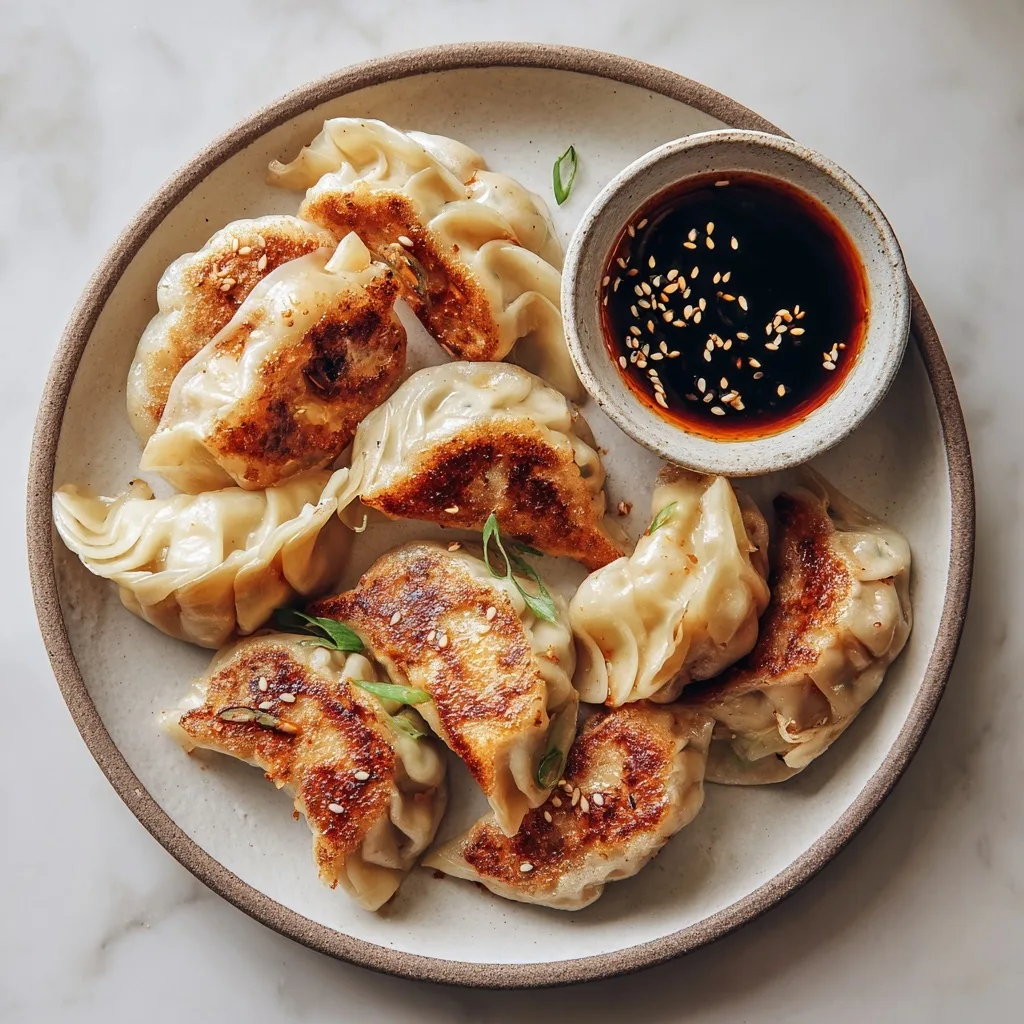
These spicy kimchi and pork dumplings are my weeknight answer to the "I want something cozy but also loud" mood: juicy ground pork, chopped kimchi, garlic, ginger, and scallions tucked into thin wrappers, then pan-fried until the bottoms go shatter-crisp and steamed so the tops stay tender. If you've ever searched for a dumplings recipe korean style, this is the one I actually make when I want maximum flavor without turning the kitchen into a weekend project. The trick is treating kimchi like an ingredient, not a garnish: squeeze it well, chop it fine, and let that tangy heat perfume the whole filling. You end up with korean mandu that are spicy, savory, and a little funky in the best way, with a punchy soy-vinegar dipping sauce that makes "just one more" basically inevitable.
Spicy Kimchi and Pork Dumplings (Crispy-Bottom Korean Mandu)
Crispy-bottom korean mandu stuffed with spicy kimchi-pork filling and served with a sesame-soy dipping sauce.
Prep Time 40 minutes mins
Cook Time 20 minutes mins
Total Time 1 hour hr
Course Main Dish
Cuisine Korean
Large Mixing Bowl at least 3-quart capacity for mixing filling; a stand mixer bowl works fine if that's what you have
Fine mesh strainer for squeezing and draining kimchi; alternatively use a clean kitchen towel or several layers of paper towel
chef knife a sharp 8-inch knife makes quick work of finely chopping kimchi and aromatics; kitchen shears are great for snipping kimchi directly into a bowl
Cutting board use a non-slip board; kimchi stains, so plastic is easier to clean than unfinished wood
Small skillet to fry a tiny test patty of filling so you can adjust seasoning before wrapping (highly recommended)
12-inch nonstick skillet with lid nonstick is forgiving for pan-fry-and-steam dumplings; a well-seasoned cast iron skillet works too, but be more generous with oil and keep heat moderate
measuring spoon and measuring cup accurate seasoning matters with kimchi's variability; if you cook by feel, still measure the first time so you can repeat it
Sheet pan to hold filled dumplings; line with parchment paper or dust lightly with cornstarch to prevent sticking
Small bowl of water for sealing wrapper edges; a pastry brush is optional but nice
clean damp towel or plastic wrap to cover wrappers while you work so they don't dry out and crack
For the spicy kimchi-pork filling
- 1 pound ground pork aim for 20% fat for juicy dumplings; ground chicken thigh works, but avoid extra-lean meats unless you add more sesame oil
- 1 cup napa cabbage kimchi well-fermented is best; squeeze very dry, then chop finely so it doesn't leak and tear wrappers
- 2 tablespoon kimchi juice optional but great for boosting tang and heat; skip if your kimchi is extremely salty
- 3 scallion scallion thinly sliced (both white and green parts)
- 3 clove garlic minced; use a microplane for a smoother filling
- 1 tablespoon ginger freshly grated; don't use too much or it will dominate
- 1 tablespoon gochujang adds depth and sweetness; substitute with 1 tablespoon gochugaru for a cleaner chile heat
- 1 tablespoon soy sauce use regular, not dark; if using low-sodium, taste and adjust after cooking a test patty
- 1 tablespoon toasted sesame oil a little goes a long way; adds nutty aroma
- 1 teaspoon granulated sugar balances kimchi's sourness; substitute with 1 teaspoon honey
- 1 teaspoon black pepper freshly ground is best
- 1 tablespoon cornstarch helps bind the filling and keeps it juicy, not wet
For wrapping and cooking
- 30 round dumpling wrapper about 3 1/2-inch wrappers; look for "mandu" or "gyoza" wrappers in the refrigerator section
- 2 tablespoon neutral oil avocado oil, grapeseed oil, or canola oil
- ½ cup water for steaming in the skillet; keep extra nearby in case the pan dries out
For the dipping sauce
- 3 tablespoon soy sauce regular or low-sodium
- 2 tablespoon rice vinegar unseasoned; substitute with apple cider vinegar in a pinch
- 1 tablespoon water tames saltiness and lets the sesame shine
- 1 teaspoon toasted sesame oil for aroma
- 1 teaspoon toasted sesame seed crush lightly between your fingers for more fragrance
- ½ teaspoon gochugaru optional for extra heat; skip if your dumplings are already very spicy
- 1 teaspoon scallion finely sliced, optional but nice
Mix the filling (and keep it dry enough to behave)
Drain and squeeze the kimchi: Put chopped kimchi in a fine-mesh strainer and press firmly to remove as much liquid as you can. You're aiming for kimchi that feels damp but not drippy. Save the liquid if you want to use the optional kimchi juice in the filling.
Chop the kimchi very fine. Big pieces can poke holes in wrappers and make sealing harder. Think: confetti, not ribbons.
In a large bowl, combine ground pork, chopped squeezed kimchi, scallion, garlic, ginger, gochujang, soy sauce, sesame oil, sugar, black pepper, cornstarch, and the optional kimchi juice. Mix with your hands or a fork until the mixture looks slightly tacky and uniform, about 1 minute. Don't overmix like meatballs; you want cohesive, not rubbery.
Cook a tiny test patty in a small skillet until cooked through, about 2 minutes total. Taste and adjust: more soy for salt, a pinch more sugar for balance, or another dab of gochujang for heat. This one step is basically the difference between good dumplings and "I need the recipe" dumplings.
Wrap the dumplings (korean mandu style, no stress)
Set up your station: dumpling wrappers under a damp towel, bowl of water, sheet pan lined with parchment or lightly dusted with cornstarch, and the filling with a spoon.
Place 1 wrapper in your palm. Add about 1 tablespoon filling to the center (a heaped spoonful is usually too much). Keep the edges clean; if filling smears the rim, it won't seal well.
Dip a finger in water and lightly wet half the edge of the wrapper. Fold into a half-moon and press to seal, pushing out air as you go. For a simple pleat: make 2 small pleats on the top edge only, pinching them to the flat bottom edge. Or skip pleats and just crimp firmly with your fingers; they'll still taste amazing.
Place sealed dumplings on the prepared sheet pan with a little space between them. Cover with a damp towel while you finish wrapping so the edges don't dry out and split.
If you're freezing for later: freeze dumplings in a single layer until solid, about 45 minutes, then transfer to a freezer bag. Cook from frozen; just add a splash more water during steaming.
Pan-fry and steam (the crispy-bottom payoff)
Heat a 12-inch nonstick skillet over medium-high heat. Add 1 tablespoon neutral oil and swirl to coat.
Arrange dumplings in the skillet in a single layer, flat side down, leaving a little space so they can crisp instead of steam. Cook until the bottoms are deep golden brown, about 3 minutes. You should see a browned "foot" forming.
Carefully add 1/2 cup water to the skillet (it will sizzle and steam immediately), then cover with a lid. Reduce heat to medium and steam until dumplings are cooked through and wrappers look slightly translucent, about 6 minutes. If the pan dries out before that, add 2 tablespoons water and re-cover.
Uncover and cook until the water fully evaporates and the bottoms re-crisp, about 2 minutes. Slide onto a plate crispy-side up so they stay crunchy. Repeat with remaining dumplings, adding more oil as needed.
Make the dipping sauce
In a small bowl, stir together soy sauce, rice vinegar, water, sesame oil, sesame seed, optional gochugaru, and optional scallion. Taste and tweak: more vinegar for brightness, a splash more water if it's too salty, or extra sesame oil if you want it rounder.
Use ground pork with some fat (around 20% fat is ideal). It keeps the filling juicy and forgiving. Very lean pork can taste dry, especially because kimchi is low-fat and acidic.
Squeeze it aggressively, then chop it fine. If the filling still looks loose, add 1 more teaspoon cornstarch and mix again. Wet filling is the #1 cause of torn wrappers and dumplings that burst during steaming.
You can, but it's easier to keep things moist with boneless skinless chicken thigh (ground or finely chopped). If you do use chicken breast, add 1 extra teaspoon sesame oil and don't overcook during the steam step.
The cooking method is potsticker-style (pan-fry then steam), which overlaps with gyoza, but the flavor profile and filling scream korean mandu thanks to kimchi, gochujang, and sesame oil.
Yes. Swap pork for 10 ounce finely chopped mushrooms (squeezed dry after cooking) plus 8 ounce crumbled firm tofu (pressed), then add 1 extra tablespoon cornstarch. Keep the kimchi squeeze step; vegetarian fillings can get watery fast.