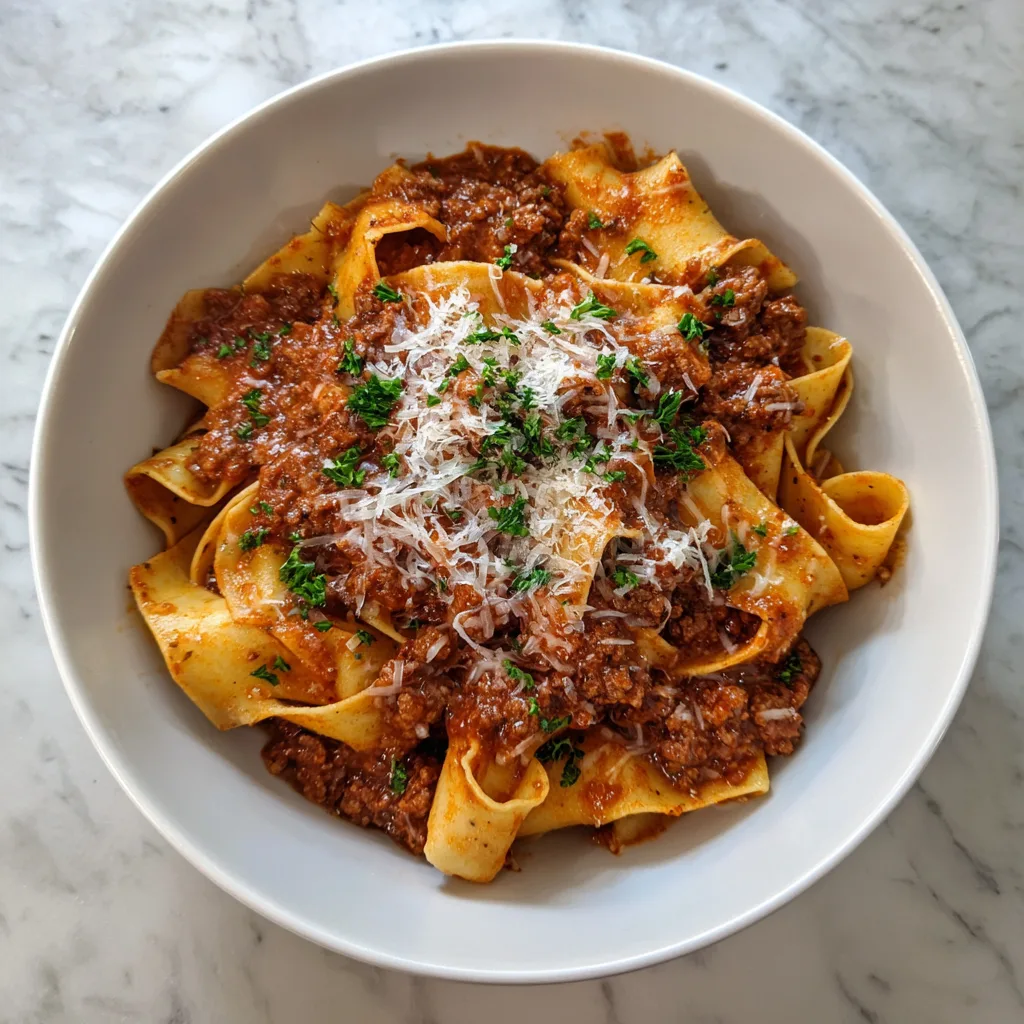
This is my kind of pasta bolognese recipe: slow-simmered enough to taste like you tried really hard, but bold enough to keep you awake at the table. We take the cozy backbone of a classic bolognese sauce recipe (aromatics, meat, tomato, a splash of dairy) and wake it up with spicy fresh chorizo. The sauce turns brick-red, glossy, and clingy, then gets poured over wide pappardelle noodles so every bite catches those little spicy crumbles and silky tomato-milk richness. It feels like an Italian trattoria met a spicy sausage sandwich and decided to become best friends.
Spicy Chorizo Bolognese over Pappardelle Noodles (Weeknight Comfort With a Kick)
Spicy chorizo and beef bolognese simmered until rich and glossy, tossed with pappardelle and finished with parmesan for a bold, cozy pasta night.
Prep Time 25 minutes mins
Cook Time 55 minutes mins
Total Time 1 hour hr 20 minutes mins
Course Main Dish
Cuisine Italian
large heavy pot or dutch oven 5 to 7 quart is ideal for simmering; a deep skillet works too, but you may need to stir more often to prevent scorching
large pasta pot at least 6 quart; any stockpot is fine as long as you can keep the pappardelle moving
Wooden spoon or heatproof spatula use it to break up meat and scrape fond; a flat-edged spatula is best for lifting browned bits
chef knife and cutting board a sharp knife makes the aromatics quick and even; a food processor can chop onion, carrot, and celery fast if you pulse carefully
Fine grater for parmesan and optional garlic; a microplane is perfect, or use the small holes on a box grater
For the spicy chorizo bolognese
- 2 tablespoon olive oil use extra virgin for flavor; swap avocado oil if you prefer
- 1 yellow onion finely diced; white onion works too
- 1 carrot peeled and finely diced for sweetness and body
- 2 celery stalk finely diced; adds that classic bolognese base flavor
- 4 clove garlic minced; reduce to 2 clove if you want it more traditional
- 12 ounce fresh chorizo raw bulk chorizo or casings removed; for less heat use mild chorizo or a sweet italian sausage
- 12 ounce ground beef 80/20 gives the richest result; ground pork works too
- 1 teaspoon kosher salt plus more for pasta water; if using fine salt, start with 3/4 teaspoon
- 1 teaspoon black pepper freshly ground for best bite
- 1 teaspoon dried oregano or 1 tablespoon chopped fresh oregano added at the end
- 1 teaspoon smoked paprika optional but great with chorizo; omit for a more classic profile
- 1/4 teaspoon ground nutmeg optional; it quietly makes the sauce taste more "bolognese"
- 3 tablespoon tomato paste caramelizing it deepens the sauce and makes it taste long-simmered
- 3/4 cup dry red wine cabernet or chianti; substitute beef stock if you do not cook with wine
- 1 can crushed tomatoes 28 ounce can; fire-roasted is fine, but plain tastes more classic
- 1 cup beef stock or chicken stock; use low-sodium to control salt
- 3/4 cup whole milk this is the trick for a creamy bolognese sauce texture without heavy cream; substitute half-and-half
- 1 parmesan rind optional; adds savory depth, remove before serving
- 1 bay leaf optional but adds a background herbal note
For the pappardelle and finishing
- 1 pound pappardelle dry or fresh; tagliatelle works if you cannot find pappardelle
- 1 tablespoon unsalted butter rounds out heat and helps the sauce cling; olive oil also works
- 3/4 cup parmesan cheese finely grated, plus more for serving; pecorino romano is a sharper alternative
- 2 tablespoon fresh parsley chopped; optional but nice for freshness
- 1 teaspoon crushed red pepper optional for extra heat; skip if your chorizo is already spicy
Prep (set yourself up for a calm simmer)
Finely dice the onion, carrot, and celery (small pieces melt into the sauce faster). Mince the garlic. If your chorizo is in links, remove the casings. Measure the wine, stock, and milk so they are ready to go when you need them.
Build the flavor base
Set a large heavy pot over medium heat and add the olive oil. Add the onion, carrot, and celery with a pinch of salt. Cook, stirring often, until the vegetables look softened and glossy, about 10 minutes. You are not aiming for browned veggies here; you want them sweet and tender so the sauce tastes full, not chunky.
Add the garlic, oregano, smoked paprika (if using), and nutmeg (if using). Stir for 30 seconds, just until the garlic smells fragrant. If the pot looks dry, add a small drizzle of oil to prevent scorching.
Brown the meats (this is where "the best bolognese sauce" starts)
Add the chorizo and ground beef. Use a wooden spoon to break the meat into small crumbles. Cook until most of the pink is gone and you see browned bits developing on the bottom of the pot, about 10 minutes. Season with the kosher salt and black pepper. Tip: keep the crumbles fairly small so they thread through the pappardelle instead of falling off in big clumps.
Stir in the tomato paste and cook, stirring constantly, until it darkens slightly and starts to stick in a good way, about 2 minutes. This quick caramelization gives the sauce that "simmered all afternoon" vibe.
Deglaze, simmer, and make it glossy
Pour in the red wine and scrape the bottom of the pot to dissolve any browned bits. Let the wine simmer until it reduces and you no longer smell harsh alcohol, about 3 minutes. This step is a big part of how to make bolognese sauce that tastes layered, not just "tomato and meat."
Add the crushed tomatoes and beef stock. Drop in the parmesan rind and bay leaf (if using). Bring the sauce to a gentle simmer, then reduce heat to low. Cook uncovered, stirring every 8 to 10 minutes, until the sauce thickens and looks cohesive and glossy, about 25 minutes. If it starts to stick, lower the heat and add a splash of stock or water.
Stir in the milk and continue to simmer until the sauce turns slightly lighter in color and looks silky, about 5 minutes. Taste and adjust with salt, pepper, and crushed red pepper (if using). Remove and discard the parmesan rind and bay leaf.
Cook the pasta and toss like you mean it
While the sauce finishes, bring a large pot of water to a boil and salt it generously (it should taste like the sea). Cook the pappardelle until al dente, about 10 minutes for dry pasta (or follow the package). Reserve 1 cup of pasta water, then drain.
Return the drained pasta to the pasta pot (or add it directly into the bolognese pot if it is big enough). Add the butter, 1/2 cup parmesan, and a ladle of sauce. Toss vigorously for 30 seconds, adding a splash of reserved pasta water as needed, until the noodles are glossy and the sauce clings. This tossing step is the difference between "sauce on top" and true bolognese sauce pasta.
Serve hot with more sauce spooned over, plus the remaining parmesan and parsley. For a dinner-party look, use tongs to twist pappardelle into loose nests, then top each with a generous scoop of spicy chorizo bolognese.
This sauce is rich, a little spicy, and deeply savory, so pair it with things that either cool it down or cut through it.
For dinner ideas with bolognese sauce nights, I like to keep dessert simple: vanilla gelato, fresh berries, or a cookie plate. After a bowl of spicy pasta, you want clean and calm, not another heavy project.
Use fresh (raw) chorizo that you cook like ground meat, either bulk or removed from casings. Cured, sliceable Spanish chorizo has great flavor but it will not melt into the sauce the same way; if that is all you have, dice it small and also include a pound of ground beef or pork for the right texture.
No, it is Italian-inspired. Traditional bolognese is more restrained and usually built around beef (often with pork) and gentle seasoning. This version borrows the method of a classic bolognese sauce recipe (aromatics, browning, deglazing, simmering, finishing with milk) but uses spicy chorizo to make it punchier.
For bolognese, you want ground meat rather than a whole cut like chicken breast or chicken thigh. If you want poultry, use ground chicken thigh or ground turkey (dark meat if possible) so the sauce stays juicy. If you only have very lean ground meat, add a tablespoon of olive oil during browning to keep it from drying out.
For too spicy, stir in a little more milk (2 to 4 tablespoons) and add extra parmesan at serving; dairy and fat soften heat. For too salty, add a splash of unsalted stock or water and simmer 5 minutes, or stir in an extra handful of crushed tomatoes. Also check your parmesan: it adds salt fast.
Yes. The sauce tastes even better the next day. Cool it quickly, refrigerate up to 4 days, or freeze up to 3 months. Reheat gently with a splash of water or stock to loosen. Cook pappardelle fresh each time so it stays silky and does not soak up all the sauce.