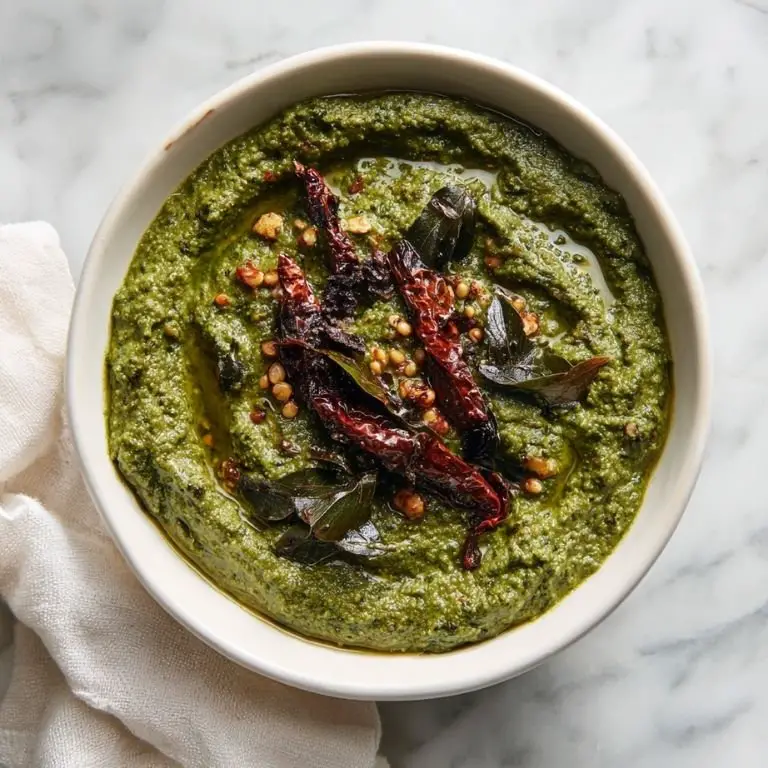
If you’re the kind of person who can’t imagine a South Indian breakfast without that spicy, tangy, flavor-packed sidekick, then this South Indian Curry Leaf Chutney is for you. With its bold aroma, nutty richness, and that unique earthiness from fresh curry leaves, this chutney is the perfect accompaniment to everything from dosas to rice. It’s one of those underrated chutneys that takes the backseat to coconut or tomato chutney but deserves the spotlight all on its own. And trust me, once you make it, it’ll become a staple in your kitchen—just like it has in mine.
Let’s dive into this recipe that’s both traditional and a little bit of a flavor bomb twist!
South Indian Curry Leaf Chutney
Prep Time 10 minutes mins
Cook Time 5 minutes mins
Total Time 15 minutes mins
Course Condiment
Cuisine Indian
Mixer Grinder or Blender A high-speed small jar mixer grinder (like a chutney jar in Indian mixer brands) works best. A regular blender is fine too but may need a bit more water to get it going.
Small Frying Pan Needed for tempering the spices at the end. A cast iron tadka pan or small skillet works perfectly.
Spatula To scrape out every bit of that green gold from the jar.
For the Chutney
- 1 cup fresh curry leaves washed and patted dry
- ½ cup grated coconut fresh or frozen; thaw if frozen
- 2 tablespoons roasted chana dal or roasted peanuts for variation
- 2-3 dried red chilies adjust based on spice preference
- 1 small piece of tamarind about 1 tsp pulp or paste
- 1 garlic clove optional, but adds a depth similar to lahsun chutney
- Salt to taste
- ½ cup water adjust for desired consistency
For the Tempering
- 1 tablespoon oil preferably sesame oil or coconut oil
- ½ teaspoon mustard seeds
- ½ teaspoon urad dal
- 1 dried red chili
- A pinch of asafoetida hing
- Few curry leaves
Prepping the Curry Leaves
Start by washing your curry leaves thoroughly and drying them with a clean towel or paper napkin. You want them moisture-free before sautéing to avoid any spluttering.
Roasting the Curry Leaves
In a small pan, add a teaspoon of oil and lightly roast the curry leaves on medium heat until they become crisp and fragrant—about 2 minutes. This not only enhances their flavor but also reduces their bitterness.
Blending the Chutney
In your mixer jar, combine the roasted curry leaves, grated coconut, roasted chana dal, dried red chilies, tamarind, garlic (if using), and salt. Add about ¼ cup of water and grind into a coarse paste. Scrape the sides, add more water if needed, and grind again to a smooth, slightly thick consistency.
Tempering
Heat oil in a small pan. Add mustard seeds and let them splutter. Add urad dal, dried red chili, a pinch of asafoetida, and curry leaves. Fry until the urad dal turns golden brown. Pour this tempering over the chutney and give it a mix.
And you’re done! This chutney smells heavenly and has a perfect balance of earthiness, spice, and tang.
Pairings
This South Indian Curry Leaf Chutney is incredibly versatile. Here’s how you can use it:
- With Dosa or Idli: The most traditional way to enjoy it. It goes great with plain dosa or even more unique versions like ragi dosa or set dosa. If you're already a fan of dosa chatni recipe variations, this will be a new favorite.
- As a Chapathi Side: While chutneys aren’t always paired with chapathi, this one holds its own well. The garlic notes and roasted flavors work surprisingly well as a chapathi recipe companion.
- With Rice: Mix a spoonful of this chutney with hot rice and a dollop of ghee—simple, soul-satisfying comfort food.
- Momos or Indian Chaat Recipes: Believe it or not, this chutney works as a spicy dip for steamed momos, especially if you like exploring momo chatni recipe ideas. It's also a flavorful twist alongside a chana chaat recipe or other chatpata recipe creations.
- As a Sandwich Spread: For a fusion spin, use this chutney as a base spread in sandwiches or wraps for a desi kick.
- With Kara Chutney or Lahsun Chutney: Serve this alongside other chutneys like a spicy kara chutney recipe or the strong, bold lahsun chutney for a chutney sampler plate.
FAQs
1. Can I use dry curry leaves instead of fresh ones?
It’s best to use fresh curry leaves for their vibrant flavor and aroma. Dry curry leaves are more muted and won’t give the chutney the same freshness, but if that’s all you have, you can use them after lightly roasting to revive some aroma.
2. Can I replace coconut with something else?
Yes, if you don’t have coconut, you can use roasted peanuts or even soaked almonds. It won’t be a traditional chutney, but the texture will be creamy, and the taste still great.
3. Is it better with or without garlic?
Garlic adds an extra layer of flavor, similar to lahsun chutney. If you like bold chutneys with a punch, include it. Otherwise, skip it for a purer curry leaf flavor.
4. How long can I store this chutney?
You can refrigerate this chutney for up to 3 days in an airtight container. It’s best enjoyed fresh, but you can also freeze it in small portions and thaw when needed.
5. Is this chutney spicy?
The spice level depends on the dried red chilies you use. For a medium spice, stick to Byadagi or Kashmiri chilies which add color but less heat. For a more chatpata recipe, go for Guntur chilies or add a green chili to the mix—bringing it closer to the heat level found in some green chatni recipes.