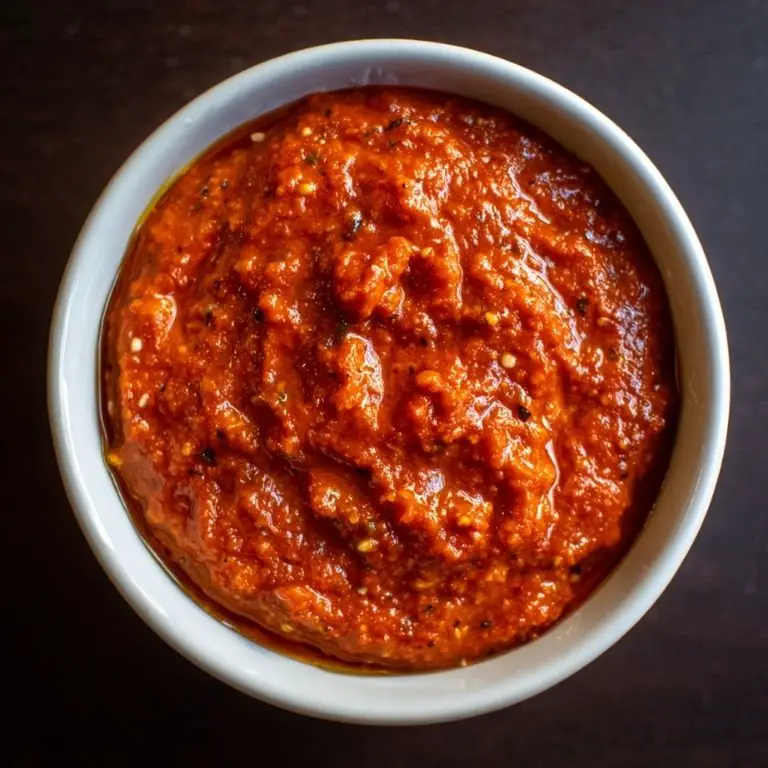
Ajvar is one of those dishes that instantly transports you to the heart of the Balkans. With every smoky bite, you taste tradition, open fire pits, and the comfort of rustic, slow-cooked food. This smoky homemade ajvar with garlic and olive oil is my take on a beloved classic, a deep red pepper relish that’s silky, savory, and slightly sweet. Whether you’re spooning it onto crusty bread, serving it with grilled meats, or using it as a punchy dip, ajvar deserves a permanent spot in your fridge. This recipe leans on the traditional roasting process, letting the charred flavor of red peppers and eggplant shine, while a generous amount of garlic and good-quality olive oil bring everything together.
Smoky Homemade Ajvar with Garlic and Olive Oil
Prep Time 30 minutes mins
Cook Time 1 hour hr
Total Time 1 hour hr 30 minutes mins
Course Appetizer, Condiment, Side Dish
Cuisine Balkan, Croatian, Macedonian, Serbian
Servings 2.5 cups (approximately)
Charcoal grill, gas grill, or oven To roast the peppers and eggplant. For the deepest flavor, a charcoal grill is ideal.
Large bowl For steaming the roasted peppers so the skins are easier to peel.
Plastic wrap or clean kitchen towel To trap steam after roasting.
Food processor or meat grinder Traditional ajvar is ground, not puréed. A meat grinder will give you the most authentic texture, but a food processor on pulse mode works fine.
Heavy-bottomed saucepan or sauté pan For simmering the mixture until thickened.
Wooden spoon For constant stirring during cooking.
Clean jars If you're planning to store the ajvar long-term.
- 6 large red bell peppers preferably sweet and ripe (you can also use romano peppers for a smokier flavor)
- 2 medium eggplants
- 6 cloves garlic peeled and minced
- 1/2 cup extra virgin olive oil
- 2 teaspoons salt or to taste
- 1 tablespoon white vinegar helps preserve the ajvar and adds brightness
- 1/2 teaspoon ground black pepper
- Optional: pinch of chili flakes for heat if you prefer spicy ajvar
Roast the Red Peppers and Eggplants
Start by washing the red peppers and eggplants. Dry them and place them directly over a grill or under a broiler. Roast them until the skins are blistered and blackened on all sides. This will take about 15–20 minutes. Turn them frequently for even charring.
This roasting step is what gives ajvar its signature smoky flavor. If you’re wondering how to make ajvar dip taste authentic, this is it.
Steam and Peel the Vegetables
Once roasted, immediately place the peppers and eggplants in a large bowl and cover it tightly with plastic wrap or a clean towel. Let them steam for about 15 minutes—this helps loosen the skins.
Peel the skins off the peppers and eggplants and discard the seeds and stems. Don’t rinse them under water; you’ll wash away the smoky flavor.
Grind or Process the Vegetables
Using a meat grinder fitted with a medium plate or a food processor with a pulse setting, grind the roasted peppers and eggplants until you reach a coarse, spreadable consistency. You want it smoother than salsa, but not quite a purée.
Cook the Ajvar
Heat the olive oil in a large sauté pan over medium-low heat. Add the minced garlic and let it cook for about 1 minute, just until fragrant. Add the vegetable mixture, salt, black pepper, and vinegar.
Cook the ajvar slowly over medium-low heat, stirring regularly, for about 45 minutes. The mixture should reduce, darken slightly, and become glossy. Be patient—it’s this slow cooking that intensifies the flavor and preserves the relish beautifully.
Taste and Adjust
Taste your ajvar and adjust the seasoning. If you like it spicier, now’s the time to add a pinch of chili flakes.
Store or Serve
Let the ajvar cool to room temperature. Spoon it into clean glass jars and refrigerate. It will keep for up to 2 weeks. For longer storage, you can sterilize the jars and water-bath can them for shelf stability.
This vegetable dip is wonderfully versatile. Here are some ways to serve your smoky homemade ajvar:
You’ll quickly see why this classic Balkan food staple is considered both a pepper relish and a vegetable dip—it wears many hats.
Traditional ajvar is made with sweet red peppers, like kapia or romano, which have a thin skin and deep flavor. If you can’t find them, red bell peppers are a good substitute. Avoid green peppers—they’re too bitter and won’t yield the right color or sweetness.
Eggplant is optional in some Serbian recipes, but it adds creaminess and depth. If you’re aiming for a Macedonian food twist, eggplant is often included. You can experiment and see what balance you prefer.
By default, ajvar is mild and sweet. However, in some regional versions, a few hot chili peppers are added for heat. Feel free to adjust the spice level to your taste.
Yes! Ajvar freezes well. Let it cool completely and store in airtight containers or freezer bags. Thaw in the fridge overnight and stir before using.
If your ajvar tastes bland, it likely needs more salt or time to cook. Don’t skimp on the olive oil—it helps carry flavor. Also, make sure your peppers are fully ripe and roasted properly to develop their sweetness.