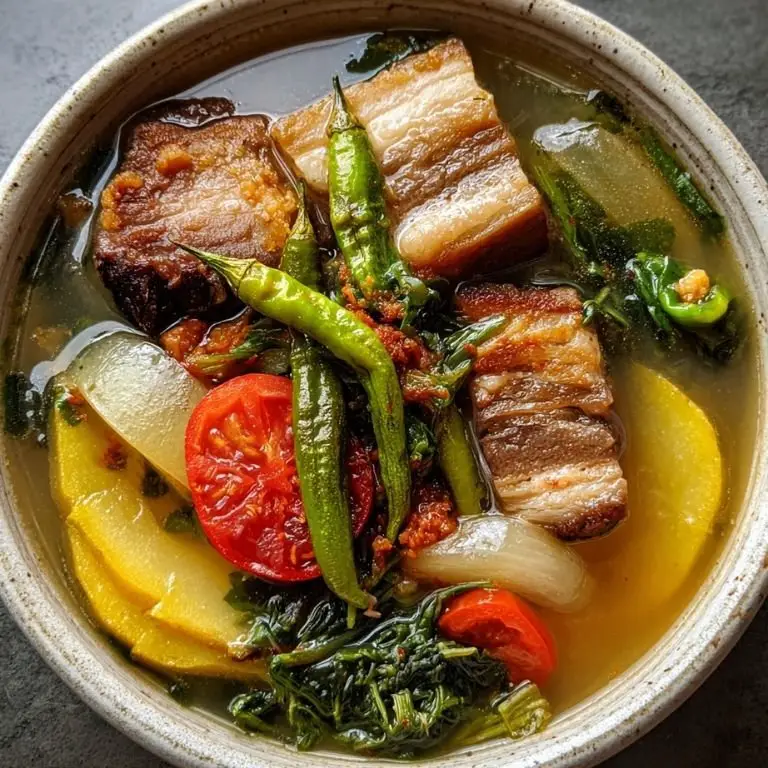
Sinigang na Baboy is one of those dishes that feels less like a recipe and more like a memory. If you grew up around Filipino food, chances are you’ve had a steaming bowl of this pork and tamarind soup on a rainy afternoon, served with rice and maybe a side of fish sauce with chili. It’s sour, savory, comforting, and incredibly forgiving to cook. This version stays true to classic flavors while offering enough detail for home cooks who want consistent, deeply flavorful results every time. Whether you’re exploring filipino cuisine for the first time or revisiting one of the best filipino recipes you already love, this dish delivers comfort in every spoonful.
Sinigang fits beautifully into weeknight rotations, special family lunches, and even meal prep if you enjoy soups that taste better the next day. It’s also one of those Filipino dinner recipes that feels hearty without being heavy, making it popular among those looking for healthy Filipino recipes that still satisfy.
Sinigang na Baboy
Prep Time 25 minutes mins
Cook Time 1 hour hr 30 minutes mins
Total Time 1 hour hr 55 minutes mins
Course Main Dish
Cuisine Filipino
Large stockpot or Dutch oven A heavy-bottomed pot ensures even heat distribution, preventing the pork from scorching while simmering.
Fine mesh strainer or colander Useful if you’re extracting juice from fresh tamarind pods.
Wooden spoon or ladle Ideal for stirring without damaging the vegetables.
Knife and Cutting Board Sharp knives make prepping vegetables quicker and safer.
Pork
Pork belly (1½ kg)
- Pork belly is the most traditional and flavorful cut for sinigang na baboy. The balance of meat and fat creates a rich broth that still tastes clean and sour. You can also use pork ribs or pork shoulder but belly gives the most classic result.
Water (10 cups)
- This forms the base of your broth. Using enough water allows the pork to simmer gently and release flavor without becoming overly salty or concentrated.
Sour Agent
Fresh tamarind (200 g, pods or paste form)
- Tamarind is what defines sinigang. Fresh pods give the most authentic sourness but tamarind pulp or paste works well too. Powdered sinigang mix can be used in a pinch, though fresh tamarind delivers a brighter flavor.
Aromatics
Onion (1 large, quartered)
- Adds sweetness and depth to balance the sour broth.
Tomatoes (2 medium, quartered)
- Tomatoes contribute gentle acidity and body to the soup.
Vegetables
Radish or daikon (1 medium, sliced thick)
- Adds sweetness and absorbs the sour broth beautifully.
Eggplant (1 large, sliced)
- Soft and silky when cooked eggplant is a staple in many philippines recipes.
String beans (1½ cups, cut into 2-inch lengths)
- Adds texture and freshness.
Kangkong or spinach (2 cups)
- Kangkong water spinach is traditional, but regular spinach works well as a substitute.
Green chili peppers (2 pieces)
- These add aroma and mild heat rather than spiciness.
Seasoning
Fish sauce (3 tablespoons)
- Provides saltiness and umami that defines philippines food.
Salt (to taste)
- Used sparingly depending on how salty your fish sauce is.
Prepare the Tamarind
If using fresh tamarind pods, boil them in 2 cups of water for about 10 minutes until soft. Mash them gently with a spoon, then strain the liquid into a bowl, discarding the solids. Set the tamarind juice aside. This step gives you that clean, natural sourness that defines filipino recipes authentic to their roots.
If using tamarind paste or pulp, dilute it in warm water and set aside.
Start the Broth
In a large pot, combine pork belly, water, onion, and tomatoes. Bring to a boil over medium-high heat. Skim off any scum that rises to the surface to keep the broth clear and clean-tasting.
Once boiling, lower the heat to a gentle simmer and cover partially. Let the pork cook for about 45 minutes or until tender. This slow simmering is key to achieving soft pork without drying it out.
Add the Tamarind
Pour the prepared tamarind juice into the pot. Stir gently and let it simmer for another 10 minutes. Taste the broth at this stage. Sinigang should be pleasantly sour but balanced. You can add more tamarind juice if needed.
Season the Soup
Add fish sauce and salt gradually, tasting as you go. Fish sauce doesn’t just add salt; it deepens the overall flavor, which is why it’s essential in many ulam pinoy filipino recipes.
Add the Vegetables in Stages
Start with radish, as it takes longer to cook. Simmer for 5 minutes, then add eggplant and string beans. Cook until the vegetables are tender but not falling apart.
Add green chilies next, letting them infuse the broth with aroma.
Finish with Greens
Finally, add kangkong or spinach. Turn off the heat and let the residual warmth wilt the greens. This keeps them vibrant and fresh-tasting.
Rest and Serve
Let the soup rest for 5 minutes before serving. Like many filipino dishes recipe traditions, sinigang tastes even better once the flavors have settled.
Serve hot with steamed white rice and optional fish sauce with calamansi and chili on the side.
Pairings
Sinigang na Baboy is typically served with rice, but it pairs beautifully with a variety of sides:
- Steamed jasmine or medium-grain rice
Essential for soaking up the sour broth.
- Fried fish or dried fish
Adds crunch and contrast, common in traditional philippines food meals.
- Simple vegetable side dishes
Lightly sautéed greens or pickled vegetables balance the richness of the pork.
- Fresh fruit
Ripe mango or pineapple makes a refreshing end to the meal.
This dish also works well as part of a larger spread of Filipino dinner recipes, alongside adobo, grilled seafood, or vegetable dishes.
FAQs
1. What cut of pork is best for sinigang na baboy?
Pork belly is the most traditional and flavorful choice because it adds richness to the broth. Pork ribs and pork shoulder are also good options if you prefer less fat.
2. Can I make sinigang without fresh tamarind?
Yes. Tamarind paste or pulp works well, and many home cooks use packaged sinigang mix for convenience. Fresh tamarind, however, gives the most authentic flavor.
3. Is sinigang considered a healthy dish?
Yes, it can be. Sinigang is broth-based, packed with vegetables, and not fried. Choosing leaner pork cuts makes it one of the more healthy filipino recipes.
4. Can I store and reheat sinigang?
Sinigang keeps well in the refrigerator for up to three days. Reheat gently on the stove to preserve the vegetables’ texture.
5. Are there variations of sinigang besides pork?
Absolutely. Sinigang can be made with shrimp, fish, beef, or even tofu. Pork remains the most popular version in Filipino cuisine and across many Philippines recipes.