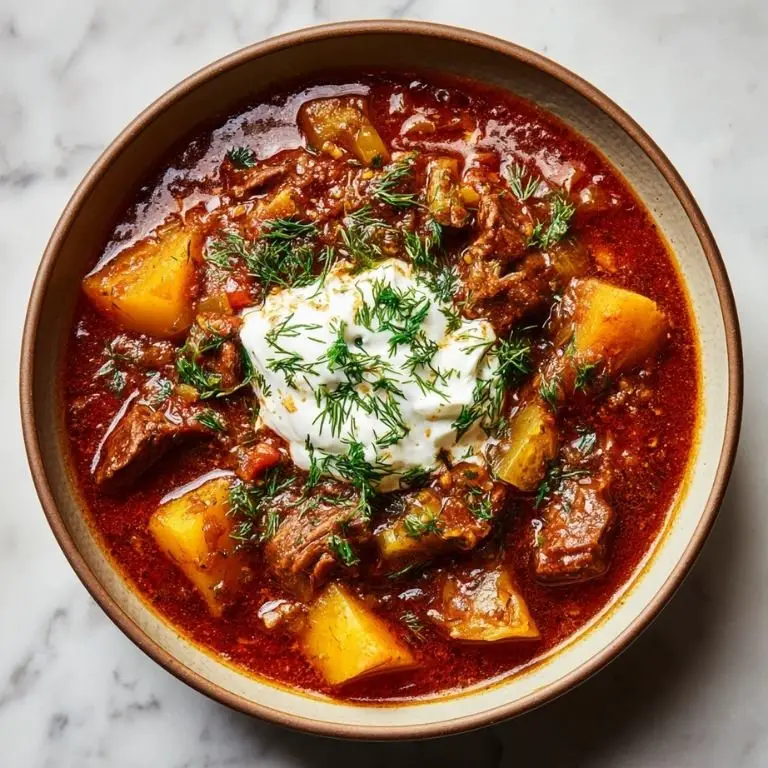
There’s something soul-warming about a big pot of goulash bubbling away on the stove, especially as the weather turns crisp and cool. This Rustic Russian Goulash with Potatoes and Pickles brings an earthy, slightly tangy twist to the traditional Eastern European stew. It’s the kind of dish that feels like it’s been passed down through generations, made with simple ingredients that turn into something magical after a slow simmer. Unlike the paprika-heavy Hungarian beef goulash or the zesty polish pork goulash, this Russian version leans into heartiness with tender beef chunks, buttery potatoes, and the briny punch of pickles that gives it a signature edge.
Rustic Russian Goulash with Potatoes and Pickles
Prep Time 20 minutes mins
Cook Time 1 hour hr 40 minutes mins
Total Time 2 hours hrs
Course Main Course
Cuisine Russian
Heavy-bottomed pot or Dutch oven This is ideal for slow simmering and browning the meat evenly. If you don’t have one, a large soup pot will work just fine, though you'll need to monitor the heat more carefully.
Wooden spoon For stirring and scraping up the delicious fond (the browned bits).
Sharp knife and cutting board Essential for prepping the meat, potatoes, and pickles.
Measuring cups & spoons For accuracy, especially when balancing the tanginess with pickle juice.
Ladle To serve the stew generously and neatly.
For the Goulash
- 2 lbs beef chuck or stewing beef cut into 1-inch cubes
- 2 tablespoons vegetable oil or sunflower oil
- 1 large onion finely chopped
- 3 cloves garlic minced
- 1 tablespoon tomato paste
- 1 teaspoon smoked paprika optional, for a hint of warmth
- 1 tablespoon flour for thickening
- 1 cup beef broth
- 1 cup water
- 1 bay leaf
- 1 teaspoon caraway seeds optional but traditional
- Salt and black pepper to taste
- 4 medium potatoes peeled and chopped into chunks
- 1/2 cup chopped dill pickles preferably Russian-style or barrel-fermented
- 2 tablespoons pickle juice from the jar
- 1 tablespoon fresh dill chopped
- Sour cream for serving
Optional Garnish
- Extra chopped dill
- Thinly sliced scallions or green onions
Sear the Beef
Start by heating the vegetable oil in your Dutch oven over medium-high heat. Add the beef in batches, making sure not to crowd the pan. Brown the pieces on all sides—this step builds the base flavor. Once browned, remove the beef and set aside.
Build the Aromatics
In the same pot, reduce heat to medium and add the chopped onions. Sauté until they soften and turn golden, about 8–10 minutes. Stir in the garlic and cook for another minute. Then add the tomato paste and paprika, stirring until the tomato paste darkens slightly—this deepens the stew’s richness.
Add Flour and Liquids
Sprinkle the flour over the mixture and stir well to coat the onions and tomato paste. Cook for 1 minute to get rid of the raw flour taste. Slowly pour in the beef broth and water, stirring constantly to prevent lumps. Scrape up any browned bits stuck to the bottom.
Simmer the Goulash
Return the browned beef to the pot. Add the bay leaf, caraway seeds (if using), and season generously with salt and pepper. Bring to a boil, then reduce heat to low, cover, and simmer for 1 hour. Stir occasionally to keep the bottom from sticking.
Add Potatoes
After 1 hour, add the chopped potatoes to the pot. Simmer uncovered for another 30–40 minutes, or until the beef is fork-tender and the potatoes are cooked through. Stir occasionally and check for seasoning—this is a great time to adjust the salt or add more paprika if you’d like more warmth.
Incorporate Pickles and Dill
Once everything is tender, stir in the chopped pickles and pickle juice. Let it simmer for an additional 10 minutes. This last step is key—it brings a bright, briny contrast that makes Russian goulash stand out from other goulash recipes Polish, Hungarian, or Austrian in origin.
Serve
Ladle the goulash into bowls and top with a dollop of sour cream and a sprinkle of fresh dill or scallions. The sour cream melts into the hot stew, making each spoonful creamy and luscious.
Rustic Russian goulash is best served piping hot with something to mop up that rich, tangy gravy. Here are a few great pairings:
For those who love carb-heavy comfort food, this dish also works well served over egg noodles or with a scoop of buttery mashed potatoes. If you're a fan of Hungarian goulash with spaetzle, you’ll find a similar satisfaction in these starchy additions.
Beef chuck is the gold standard. It has just the right amount of marbling and connective tissue, which breaks down during the long simmer and yields melt-in-your-mouth texture. Avoid lean cuts like sirloin—they can turn dry and chewy.
Absolutely. This dish adapts wonderfully to a slow cooker. Just brown the beef and onions beforehand, then transfer everything to your crockpot. Cook on low for 6–8 hours or high for 4 hours. If you’re exploring hungarian goulash recipes crockpot style, this approach works for that as well.
The pickles add brightness and a subtle tang that balances the beef’s richness. It’s a distinct characteristic of Russian goulash compared to authentic goulash recipes from places like Hungary or Germany, which tend to lean on paprika or wine for acidity.
Yes, pork shoulder works great in place of beef and makes for a dish more similar to polish pork goulash. It’s a little fattier, which contributes even more richness to the broth. Just adjust your simmering time slightly—pork tends to cook a bit faster than beef.
While Hungarian beef goulash is famous for its heavy use of paprika and sometimes served with spaetzle or dumplings, Russian goulash focuses more on a tomato-forward base with pickles for acid. German beef goulash often includes red wine and root vegetables and can lean slightly sweet or smoky. Each variation—from Bavarian goulash to goulash Czech style—reflects local traditions and available ingredients.