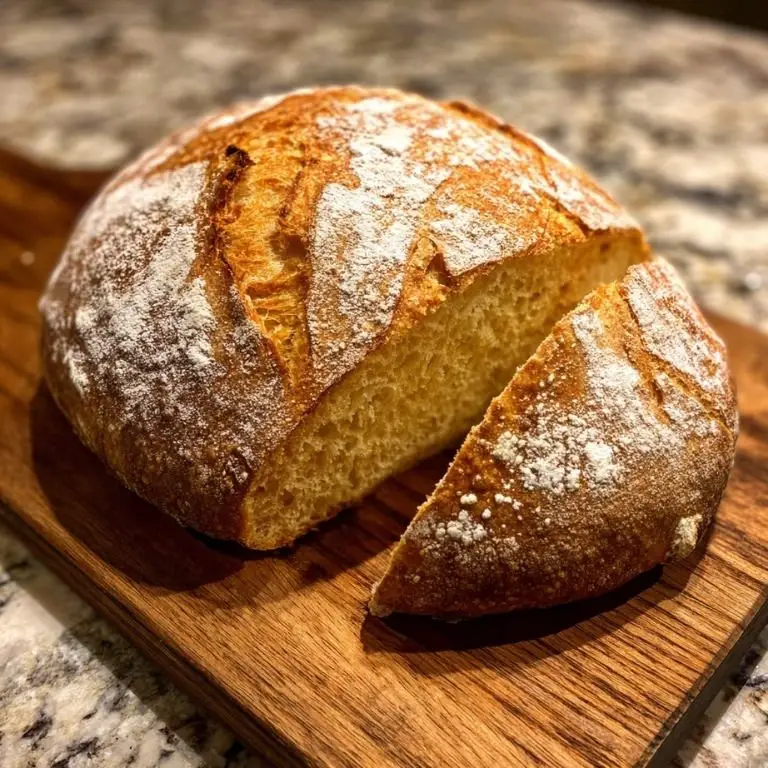
There’s something nostalgic and comforting about the scent of freshly baked bread wafting through your kitchen, and this rustic potato sourdough loaf brings that comfort to a whole new level. Made with creamy mashed potatoes and a bubbly sourdough starter, this loaf is hearty, tender, and full of flavor. It’s the kind of bread that makes you want to tear off a piece straight from the oven, slather it with butter, and eat it standing over the sink — no judgment here. Whether you’re a seasoned baker or new to yeast bread recipes, this potato bread recipe homemade version will be one you’ll keep coming back to.
Rustic Potato Sourdough Loaf
Prep Time 25 minutes mins
Cook Time 45 minutes mins
Resting and Fermenting 6 hours hrs 50 minutes mins
Total Time 8 hours hrs
Course Bread, Side Dish
Cuisine European
Servings 1 large loaf (about 10 slices)
Mixing bowls At least two, one for mixing and one for proofing.
Kitchen scale Measuring by weight is key to consistency in bread baking.
Dough scraper or spatula Helpful for folding and shaping sticky dough.
Dutch oven Essential for achieving that golden, crusty exterior. If you don’t have one, a heavy oven-safe pot with a lid will work.
Clean kitchen towel or proofing basket To support the dough during its final rise.
Sharp knife or lame For scoring the loaf before baking.
- 400 g bread flour or substitute with all-purpose if needed
- 150 g mashed potatoes plain, unsalted — leftovers work perfectly
- 100 g active sourdough starter fed and bubbly
- 180 g warm water
- 10 g salt
- 1 tbsp olive oil optional, for a softer crust
- 1 tsp honey or sugar to feed the starter and balance the tang
Optional Add-ins:
- Chopped rosemary thyme, or roasted garlic for added flavor
- A handful of shredded cheddar for a cheesy potato bread version
Mix the Dough
In a large mixing bowl, combine the mashed potatoes, active sourdough starter, and warm water. Stir until well blended. Add the flour, salt, and honey. Mix with your hands or a spatula until a shaggy dough forms. The dough will be sticky — that’s normal.
Bulk Fermentation (First Rise)
Cover the bowl with a towel or plastic wrap and let it rest for 30 minutes. Then, perform a series of stretch and folds every 30 minutes for the next 2 hours to strengthen the dough. To do this, grab one side of the dough, stretch it upward, and fold it over the center. Rotate the bowl and repeat on all four sides.
After the final fold, let the dough rest undisturbed for 4–5 hours at room temperature until it’s puffy and has increased in size.
Shape the Dough
Lightly flour your work surface and gently tip the dough out of the bowl. Shape it into a round or oval loaf by folding the edges toward the center. Let it rest seam-side down for 10 minutes.
Then, flip the dough over and tighten the shape by pulling it toward you on the surface to build tension.
Final Proof
Place the shaped loaf into a proofing basket or bowl lined with a floured towel. Cover and let it rise in the fridge overnight (8–12 hours). This slow rise develops flavor and helps the dough firm up for baking.
Bake
Preheat your oven to 475°F (245°C) with your Dutch oven inside for at least 30 minutes. Carefully turn the dough out onto parchment paper, score the top with a sharp knife or lame, and place it into the hot Dutch oven.
Cover and bake for 25 minutes. Then uncover and bake for another 20 minutes until deeply golden and crusty.
Remove the bread and let it cool completely before slicing (seriously — waiting is the hardest part).
This rustic loaf makes an ideal sidekick for both sweet and savory dishes. Its slightly tangy crumb and soft potato interior can stand up to bold flavors while still being subtle enough for a simple breakfast.
And if you're into pastry pizza territory, a slice of this bread topped with sauce, cheese, and a quick broil becomes a lazy-day favorite.
Absolutely — just make sure they aren’t heavily seasoned or loaded with butter and cream, as that can affect the dough. A plain mashed potato base works best for a balanced flavor.
Yes! If you’re short on starter or just prefer a quicker method, you can adapt this into a more traditional yeast bread recipe. Use 2 tsp of active dry yeast and reduce the fermenting time. This turns it into an easy potato bread option perfect for weeknights.
Bread flour gives you the best structure, but all-purpose works fine too. If you’re looking into self rising flour recipes bread, note that self-rising flour already contains leavening and salt, so you’ll need to adjust the recipe and skip added salt and starter/yeast.
Not quite. Irish potato bread, or boxty, is more of a griddle cake than a loaf. But both share that hearty, humble potato base. If you're craving that vibe in loaf form, this rustic sourdough version is a delicious bread to start with.
Yes — divide the dough into 8–10 pieces during shaping, proof them on a baking sheet, and bake for 20–25 minutes. It’s a great take on potato bread rolls or a soft potato rolls recipe with sourdough flair.