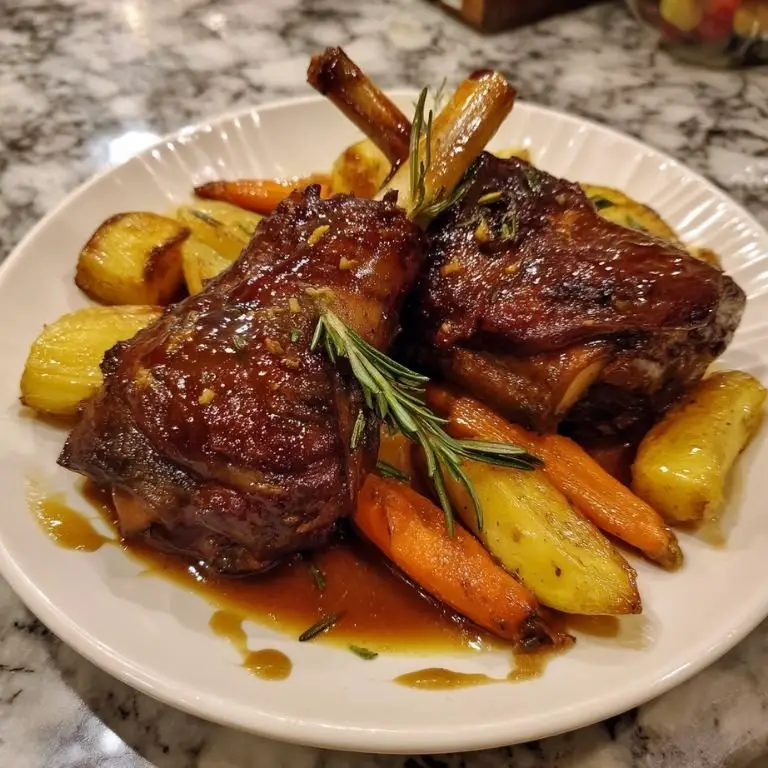
There’s something truly special about the aroma of rosemary, garlic, and Dijon mustard slow-cooking together, especially when wrapped around a pot of meltingly tender lamb shanks. This rosemary dijon lamb shanks with roasted root vegetables recipe is a hearty, comforting dish that feels just as right on a chilly winter night as it does for a celebratory weekend dinner. These braised lamb shanks are infused with bold flavors from a Dijon-rosemary marinade and gently cooked in the oven until the meat falls off the bone. Pair that with caramelized root vegetables and you’ve got one of the most soul-satisfying lamb dishes around.
This lamb shank recipe is perfect for those who want to experiment beyond the usual lamb shoulder roast or explore roast lamb recipes with a more elevated, rustic twist. If you're into slow cooked lamb shanks or are searching for new lamb recipes that highlight rich, developed flavors, this dish will quickly become a favorite.
Rosemary Dijon Lamb Shanks with Roasted Root Vegetables
Prep Time 25 minutes mins
Cook Time 3 hours hrs
Total Time 3 hours hrs 25 minutes mins
Course Main Course
Cuisine French, Mediterranean
Large Dutch oven or oven-safe braising pot Essential for searing and then slow-braising the lamb shanks in the oven. If you don’t have one, a deep roasting pan tightly covered with foil will do.
Chef’s knife and cutting board For prepping veggies and aromatics.
Measuring cups and spoons Accuracy matters here, especially for seasoning.
Sheet pan or roasting tray For the root vegetables.
Tongs To sear and turn the lamb shanks evenly.
Aluminum foil To help trap steam in the roasting pan if you're not using a Dutch oven.
Meat thermometer (optional) While lamb shanks are very forgiving, some like to check internal temps. Aim for 195–205°F for ultimate tenderness.
For the Lamb Shanks
- 4 lamb shanks about 1.5–2 lbs each
- 2 tablespoons olive oil
- 1 large yellow onion chopped
- 4 garlic cloves minced
- 2 tablespoons Dijon mustard
- 1 tablespoon fresh rosemary finely chopped (or 1 ½ tsp dried)
- 1 teaspoon thyme leaves
- 2 cups beef broth
- 1 cup dry red wine Cabernet Sauvignon or Merlot works great
- 1 tablespoon balsamic vinegar
- Salt and freshly ground black pepper to taste
- Zest of 1 lemon optional, for brightness at the end
For the Roasted Root Vegetables
- 3 large carrots peeled and cut into chunks
- 2 parsnips peeled and cut into chunks
- 1 sweet potato peeled and diced
- 1 small rutabaga or turnip peeled and diced
- 2 tablespoons olive oil
- 1 teaspoon garlic powder
- 1 teaspoon rosemary dried or fresh
- Salt and pepper to taste
Step 1: Prep and Season the Lamb Shanks
Pat your lamb shanks dry with paper towels. Season generously with salt and pepper on all sides. This helps form a nice crust when seared.
In a small bowl, mix Dijon mustard, chopped rosemary, thyme, and a tablespoon of olive oil. Rub this mixture all over the lamb shanks. Let them rest at room temperature while you prep the rest of your ingredients.
Step 2: Sear the Shanks
Heat the remaining tablespoon of olive oil in a large Dutch oven over medium-high heat. Sear the lamb shanks in batches until they are browned on all sides—about 3 to 4 minutes per side. Remove the shanks and set aside.
Step 3: Build the Flavor Base
In the same pot, lower the heat to medium and add the chopped onion. Sauté until translucent and beginning to caramelize—about 5 minutes. Add the minced garlic and sauté for another minute.
Deglaze the pan with the red wine, scraping up all the browned bits from the bottom. Let the wine reduce by half (about 5–7 minutes), then stir in the beef broth and balsamic vinegar.
Step 4: Braise the Lamb
Return the lamb shanks to the pot, nestling them into the liquid. Cover tightly with a lid and transfer the pot to a preheated oven at 325°F.
Let the lamb shanks braise for about 2.5 to 3 hours, or until the meat is fork-tender and pulling away from the bone. This is where the magic happens—these braised lamb shanks become deeply flavorful and tender, ideal for fans of slow cooked lamb shanks or classic braised lamb dishes.
Step 5: Roast the Root Vegetables
About 45 minutes before the lamb is done, toss the chopped carrots, parsnips, sweet potatoes, and rutabaga with olive oil, garlic powder, rosemary, salt, and pepper.
Spread them on a baking sheet and roast in the oven at 400°F for 35–40 minutes, or until caramelized and tender. Give them a toss halfway through to ensure even cooking.
Step 6: Finishing Touches
Once the lamb shanks are done, remove them from the pot and set aside, tented with foil. Skim any excess fat from the top of the braising liquid. Simmer the liquid on the stovetop for about 10 minutes to reduce it into a luscious sauce. Add lemon zest at the end if desired for brightness.
Serve the lamb shanks over a bed of roasted root vegetables and spoon the sauce generously over the top.
Pairings
This dish pairs wonderfully with creamy polenta, which soaks up the rich sauce like a dream—making it ideal if you're looking to serve lamb shanks and polenta together. You can also go with buttery mashed potatoes or a cauliflower mash for a lighter option.
On the wine front, a full-bodied red like Syrah, Cabernet Sauvignon, or even a spicy Zinfandel works beautifully with the richness of the lamb and the earthy root vegetables.
For a green side, try garlicky sautéed kale or roasted Brussels sprouts with a drizzle of balsamic reduction. Their slight bitterness balances the sweet, roasted notes of the vegetables.
FAQs
1. Can I use lamb shoulder instead of lamb shanks?
While this recipe is designed for lamb shanks, lamb shoulder roast can work if cut into large chunks. Keep in mind that shanks have more connective tissue, which breaks down beautifully during braising, resulting in more tender lamb.
2. Do I have to use red wine?
Red wine adds depth, but you can substitute with more beef broth and a splash of pomegranate juice or balsamic vinegar for acidity. If you're after a more classic braised lamb taste, stick with wine.
3. Can I make this recipe in advance?
Absolutely. In fact, this is one of those lamb recipes that tastes even better the next day. Simply cool and refrigerate the shanks in their braising liquid. Reheat slowly on the stove or in the oven before serving.
4. What's the best cut for a lamb ragu recipe?
For a lamb ragu recipe, opt for boneless lamb shoulder or even shank meat after it’s cooked and shredded. The braised meat texture is perfect for thick sauces and pasta.
5. Can I cook this in a slow cooker?
Yes! After searing the shanks and deglazing the pan, transfer everything to a slow cooker. Cook on low for 8 hours. You’ll get incredibly tender lamb with minimal fuss—ideal for busy days or when making slow cooked lamb shanks.