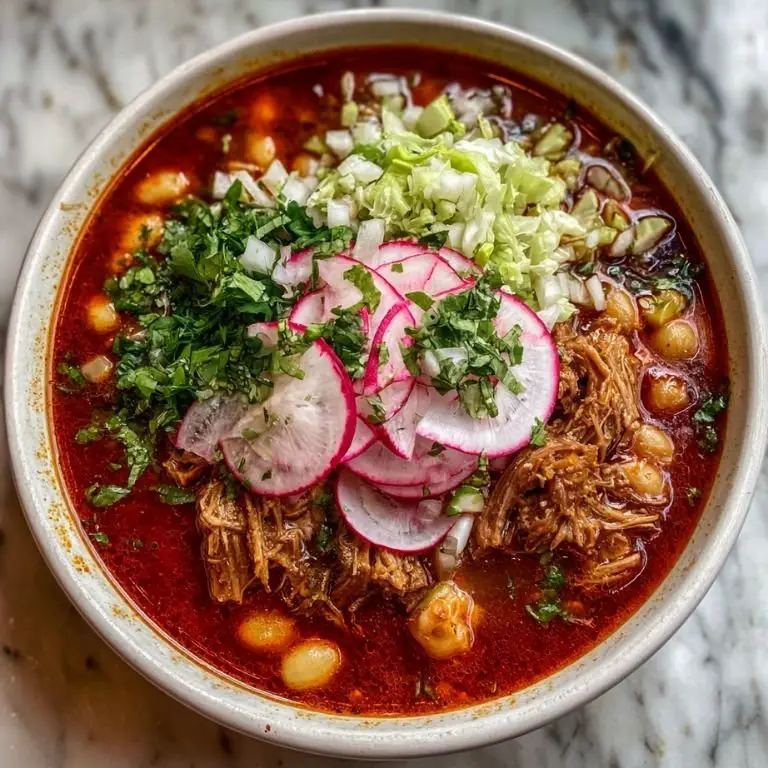
Pozole rojo is one of those dishes that instantly makes a kitchen feel warmer and more welcoming. This version of pork pozole rojo with radishes and cabbage leans into deep chile flavor, tender pork, and a richly seasoned broth that tastes like it’s been simmering all day—because it has. It’s hearty without being heavy, festive without being fussy, and endlessly customizable at the table. While pozole is considered one of the most beloved traditional Mexican dishes, this recipe keeps things approachable for home cooks who want authentic flavor without complicated techniques. If you love Mexican pork stew, Mexican pulled pork, or even bold dinner ideas Mexican authentic, this is the kind of recipe that earns a permanent spot in your rotation.
Pork Pozole Rojo with Radishes and Cabbage
Prep Time 30 minutes mins
Cook Time 2 hours hrs 30 minutes mins
Total Time 3 hours hrs
Course Main Course
Cuisine Mexican
Large heavy-bottomed pot or Dutch oven Essential for long, even simmering; a stockpot works as well
Medium saucepan For soaking and softening dried chiles
Blender Needed to puree the red chile sauce until smooth; an immersion blender can work but may require extra straining
Fine mesh strainer Helps remove chile skins for a silky broth
Sharp chef’s knife For prepping pork and toppings
Cutting board Preferably one with a groove to catch juices
Ladle Makes serving easier
For the Pork and Broth
- Pork shoulder also called pork butt – Well-marbled and ideal for slow simmering, similar to cuts used in mexican pork carnitas or pork tacos mexican
- White hominy canned – Drained and rinsed thoroughly to remove excess starch
- Yellow onion – Adds sweetness and depth to the broth
- Garlic cloves – Essential for savory backbone
- Bay leaves – Subtle herbal note that rounds out the pork
- Mexican oregano – Earthy and more citrusy than Mediterranean oregano
- Salt – Start light; adjust later
- Water or low-sodium pork broth – Water keeps the pork flavor clean broth adds richness
For the Red Chile Sauce
- Dried guajillo chiles – Mild heat with deep red color
- Dried ancho chiles – Slightly sweet and smoky
- Dried árbol chiles – Optional for extra heat
- White vinegar – Brightens the sauce
- Ground cumin – Warm spice that pairs well with pork
- Black pepper – Gentle heat and balance
Fresh Toppings and Garnishes
- Radishes thinly sliced – Crisp and peppery contrast
- Green cabbage finely shredded – Fresh crunch that lightens each bite
- White onion finely diced – Sharp and refreshing
- Fresh cilantro – Herbal finish
- Lime wedges – Essential for balance
- Dried oregano – For sprinkling at the table
Prepare the Pork Base
Cut the pork shoulder into large chunks, about two inches each. Add the pork to your large pot along with half the onion, several garlic cloves, bay leaves, and salt. Cover with water or pork broth. Bring to a gentle boil, then reduce to a low simmer. Skim off any foam that rises to the surface during the first 20 minutes. This step ensures a clean, clear broth—key for a great mexican pork stew.
Let the pork simmer until it becomes fork-tender and easily shreds, which usually takes about two hours. The aroma alone will tell you you’re on the right track.
Make the Red Chile Sauce
While the pork cooks, remove the stems and seeds from the dried chiles. Toast them briefly in a dry pan until fragrant, then transfer to a saucepan and cover with hot water. Let them soak for about 20 minutes until softened.
Blend the softened chiles with garlic, cumin, black pepper, vinegar, and a bit of the soaking liquid until smooth. Strain the sauce through a fine-mesh strainer to remove any tough skins. This step is optional but highly recommended for a silky pozole broth.
Combine and Simmer
Once the pork is tender, remove it from the pot and shred it into bite-sized pieces. Discard bay leaves and onion chunks. Stir the red chile sauce into the broth, then add the shredded pork back in along with the rinsed hominy.
Simmer everything together for another 30 minutes, allowing the flavors to fully meld. Taste and adjust seasoning with salt as needed. The broth should be deeply red, savory, and slightly smoky.
Prepare the Toppings
While the pozole finishes, slice radishes, shred cabbage, dice onion, and chop cilantro. Arrange everything in bowls or on a platter so everyone can build their own perfect bowl.
Serve
Ladle hot pozole into deep bowls and let everyone top theirs with radishes, cabbage, onion, cilantro, oregano, and a generous squeeze of lime. Serve with warm corn tortillas or tostadas on the side.
Pairings
Pozole rojo is a meal on its own, but the right sides and drinks can elevate it even more.
- Corn tortillas or tostadas: Perfect for scooping up pork and broth
- Simple avocado slices: Creamy contrast to the chile-rich soup
- Rice and beans: A light side if you’re feeding a crowd
- Agua fresca: Hibiscus or tamarind balances the savory broth
- Mexican-style slaw: Adds extra crunch and freshness
Leftover pork from pozole can also be repurposed into pork tacos recipes later in the week, or crisped up for tacos similar to Mexican pork carnitas. The broth itself freezes beautifully and makes an excellent base for other dishes.
FAQs
1. What cut of pork works best for pozole rojo?
Pork shoulder is the best choice because of its fat content and ability to stay tender during long cooking. It’s the same reason it’s used for mexican pulled pork and pork tacos mexican.
2. Can I use lean pork like pork chops?
Lean cuts such as mexican pork chops are not ideal for pozole because they can become dry and tough. Stick with well-marbled cuts for the best texture.
3. Can pozole be made with chicken instead?
Yes, but that becomes a different dish. Many people enjoy chicken versions using thighs; chicken breast recipes are less ideal because they lack fat and flavor for long simmering.
4. Is pozole considered an authentic Mexican dish?
Absolutely. Pozole is one of the most iconic traditional mexican dishes, with regional variations across the country, especially in Jalisco and Guerrero.
5. How does pozole differ from other pork stews?
Unlike other pork stews or even some puerto rican recipes that rely heavily on sofrito, pozole is defined by hominy and dried chile-based broth, giving it a unique texture and flavor profile.