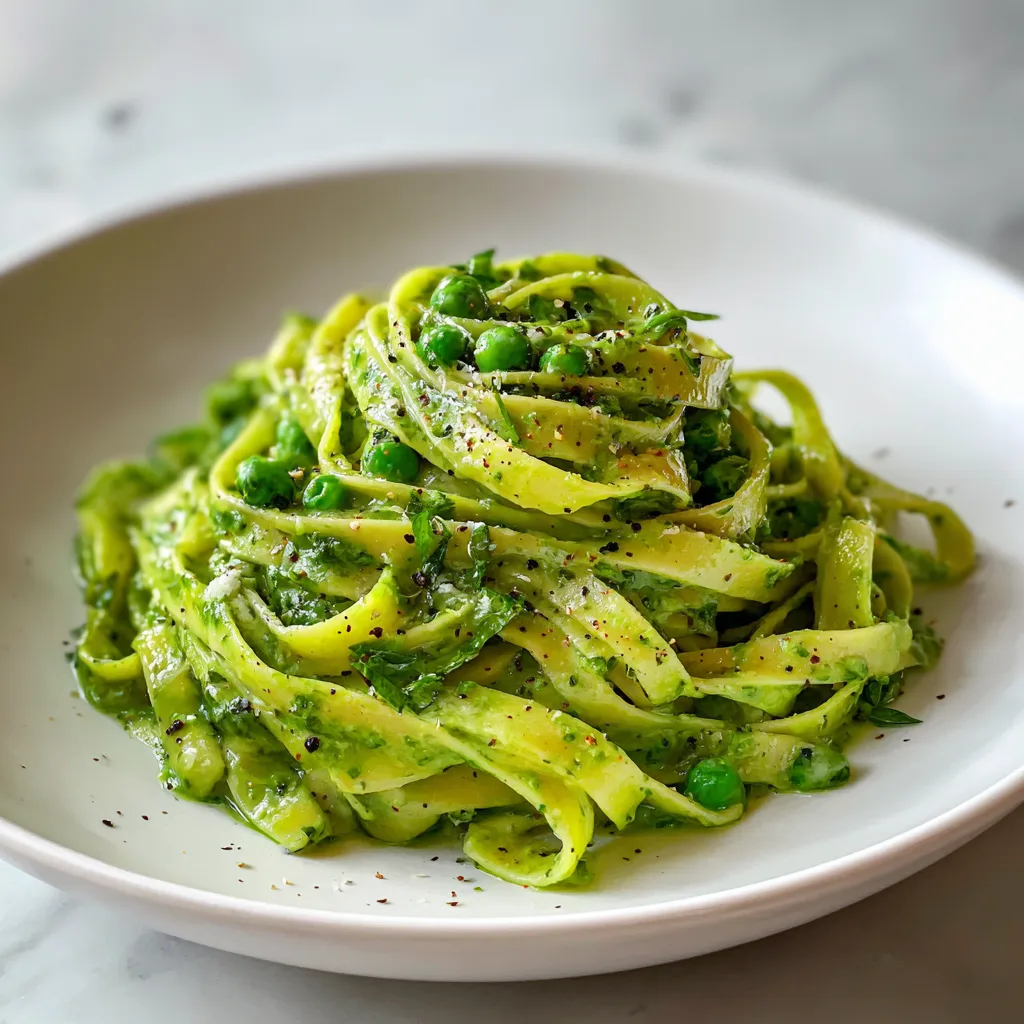
If your dinner mood is "fresh, green, and vaguely luxurious," this fresh pea and mint fettuccine is the move. It is a silky, herby green sauce pasta that tastes like spring peas and garden mint had a very glamorous pasta night. The sauce is blended (so it looks like an actual emerald dream), then warmed just enough to turn glossy and clingy without losing its pop of color. It is fast, forgiving, and surprisingly craveable, especially with lemon zest, salty parmesan, and a fistful of crunchy pistachios.
Emerald Mint Bliss: Fresh Pea and Mint Fettuccine (a bright green pasta recipe for spring nights)
Silky fettuccine tossed in a blended pea-and-mint green sauce with lemon, parmesan, and pistachios.
Prep Time 20 minutes mins
Cook Time 20 minutes mins
Total Time 40 minutes mins
Course Main Dish
Cuisine Italian
Large pot at least 6 quart for boiling pasta; a Dutch oven works too
High-speed blender for the smoothest sauce; a food processor works, but the sauce will be a bit more rustic (still delicious)
Large skillet 12 inch is ideal for finishing the pasta and emulsifying with pasta water; a wide sauté pan works too
Fine mesh strainer or colander for draining pasta; save pasta water before draining
Microplane or fine grater for lemon zest and parmesan; a box grater works in a pinch
measuring cup to scoop and portion hot pasta water for the sauce
For the fettuccine
- 12 ounce fettuccine dried or fresh; linguine or spaghetti also works if that is what you have
- 1 tablespoon kosher salt for salting the pasta water (the water should taste pleasantly salty)
For the pea and mint green sauce
- 2 cup green pea fresh shelled or frozen; if frozen, no need to thaw
- 1 cup packed baby spinach optional but helps the color stay boldly green; substitute arugula for peppery bite
- ½ cup fresh mint leaf plus more for finishing; if you only have basil, swap it in for a basil-leaning take (hello, basil pasta recipes vibe)
- 1 small garlic clove raw garlic gives sharpness; for mellower garlic, briefly sauté it in the oil first
- ⅓ cup extra-virgin olive oil use a fruity one; substitute avocado oil for a more neutral flavor
- ½ cup grated parmesan plus more to serve; swap pecorino for a saltier finish, or use nutritional yeast for dairy-free
- 1 tablespoon lemon juice fresh is best; this keeps the sauce bright and cuts the richness
- 1 teaspoon lemon zest optional but strongly recommended for that fresh lift
- ½ teaspoon black pepper freshly ground
- ¼ teaspoon crushed red pepper optional; adds gentle heat without turning it into a spicy sauce
For finishing and crunch
- ½ cup pistachio toasted and chopped; substitute pine nut, walnut, or toasted breadcrumb
- 2 tablespoon unsalted butter optional but makes the sauce extra glossy; substitute vegan butter or skip
- 1 tablespoon mint leaf torn, for serving
Prep the green components (keep the color vivid)
Bring a kettle of water to a boil (or use the pasta pot once it is boiling). Set a bowl of ice water nearby. This quick blanch-and-chill step is the easiest trick for a neon-green pasta sauce.
Blanch the peas: add green pea to boiling water and cook for 2 minutes, just until bright and tender. Immediately scoop them into the ice water to stop the cooking, then drain well. (If you are using very tender fresh peas, shorten the blanch to keep them sweet.)
Blanch the spinach (optional but great): in the same boiling water, dunk the baby spinach for 15 seconds until wilted, then transfer to ice water. Squeeze very dry with clean hands. Waterlogged greens are the fastest way to dilute flavor and make a watery sauce.
Cook the pasta
Fill a large pot with water, bring to a boil, and stir in kosher salt. Add fettuccine and cook until just shy of al dente (follow the package time, then subtract 1 minute). You want a little bite because the pasta will finish in the sauce.
Before draining, scoop out 1½ cup hot pasta water. This starchy water is your sauce insurance: it helps the blended peas turn into a silky, clingy coating instead of a thick paste. Drain the pasta and set aside (do not rinse).
Blend the pea and mint green sauce
In a high-speed blender, combine blanched green pea, squeezed spinach (if using), fresh mint leaf, garlic clove, extra-virgin olive oil, grated parmesan, lemon juice, lemon zest, black pepper, and crushed red pepper (if using).
Add ½ cup of the reserved hot pasta water and blend until very smooth, scraping down as needed. If it looks too thick to pour, blend in more pasta water, 2 tablespoon at a time. The goal is a sauce that flows like a loose smoothie and turns silky once warmed.
Taste and adjust. Add a pinch more salt if needed (remember parmesan adds salt), plus extra lemon juice if you want it brighter. This is the moment to make it yours.
Finish the pasta (the glossy restaurant step)
Set a large skillet over medium-low heat. Add the blended green sauce and warm for 2 minutes, stirring constantly. Keep the heat gentle: high heat can dull the color and make the cheese tighten up.
Add the drained fettuccine to the skillet and toss to coat. Add ¼ cup pasta water and keep tossing until the sauce clings to every strand, about 1 minute. If it looks thick or sticky, add more pasta water a splash at a time until it turns glossy and loose.
For extra shine and a richer mouthfeel, swirl in unsalted butter (optional) and toss until melted. Turn off the heat. Taste again and adjust with a pinch of salt, pepper, or lemon.
Serve immediately topped with chopped pistachio, extra grated parmesan, and torn mint leaf. This is the kind of green pasta recipe that loves a dramatic finishing sprinkle.
Pairings
What to serve with it
This pasta is bright and herbal, so it plays best with crisp, simple sides.
- Salad: arugula with shaved fennel, lemon, and olive oil. Keep it sharp and snappy to echo the mint and peas.
- Vegetables: charred asparagus or blistered snap pea with flaky salt. A little smoky edge is perfect against the sweet peas.
- Bread: toasted baguette or focaccia with olive oil and a pinch of salt. You will want something to swipe through the green sauce left on the plate.
Protein add-ons (if you want to make it heartier)
- Shrimp: quickly sauté shrimp in olive oil with garlic and a pinch of crushed red pepper, then pile on top. The sweetness matches the peas.
- Chicken: pan-seared chicken breast cutlet (thin, quick-cooking) is the cleanest match. Slice and serve over the pasta so the sauce stays vibrant.
- Crispy prosciutto: crisp it in a skillet and crumble over the top for salty crunch.
Drinks
- Wine: sauvignon blanc or a dry pinot grigio. You want citrus and minerality, not oak.
- No-alcohol: sparkling water with lemon and a few mint leaves, or iced green tea with a squeeze of citrus.
Leftovers idea
If you have extra, chill it and treat it like a cold green pasta salad the next day: loosen with a splash of olive oil and lemon, then add cucumbers or chopped radish for crunch.
FAQs
Is this basically pesto, or something different?
Different. Pesto leans heavily on basil, nuts, and raw garlic. This is a pea-and-mint green sauce pasta that gets body from blended peas and a silky finish from starchy pasta water. If you swap mint for basil, it can drift toward a pesto-adjacent vibe, but it stays softer and sweeter than classic pesto.
Can I use spaghetti instead of fettuccine (how to make green spaghetti with this sauce)?
Yes. Cook spaghetti the same way, reserve pasta water, then toss in the skillet until glossy. If you are specifically looking for how to make green spaghetti, the key is not the noodle shape, it is emulsifying the blended sauce with hot pasta water so it clings instead of pooling.
Can I make it dairy-free?
Yes. Skip parmesan and butter, then add 2 tablespoon nutritional yeast plus an extra pinch of salt. Blend in 1 tablespoon tahini or a spoon of cashew butter for creaminess if you like.
What type of chicken works best if I want to add meat?
Go with boneless, skinless chicken breast cutlets or thin-sliced chicken breast. They cook quickly and stay mild, which lets the peas and mint shine. Boneless chicken thigh is also great if you prefer richer flavor, but it will read a little heavier against the bright sauce.
My sauce turned dull or thick. What happened, and can I fix it?
Dull color usually comes from too much heat or overcooking the greens. Keep the skillet on medium-low and warm the sauce gently. Thick sauce is usually just not enough pasta water. Fix it by tossing in more hot pasta water a splash at a time until the sauce becomes glossy and coats the noodles. A little extra lemon juice can also wake it back up.