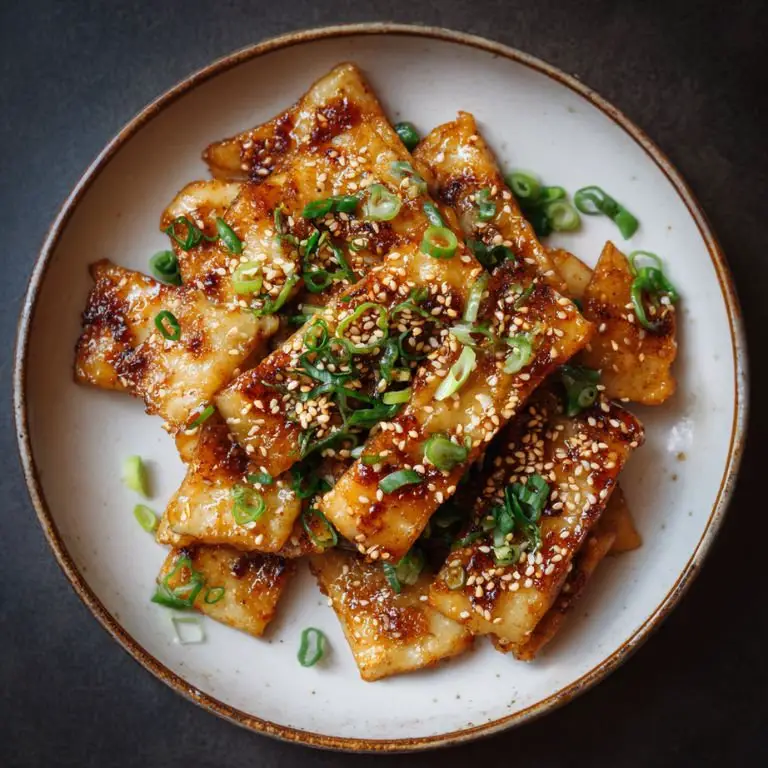
Pan-Fried Korean Eomuk with Sesame and Scallion: A Comforting Street Food Classic

Written by Sarah Gardner

There’s something incredibly nostalgic and cozy about Korean street food, and if you’ve ever wandered through a market in Seoul, chances are high you've come across sizzling skewers of eomuk, also known as korean fish cakes. This pan-fried Korean eomuk with sesame and scallion is a quick and flavorful side dish or banchan that takes a humble ingredient and turns it into something addictive and satisfying. Lightly crispy on the outside, tender and chewy inside, and finished with fragrant sesame oil and chopped scallions, this is the kind of dish that works perfectly on a lunch plate, in a lunchbox, or alongside a steaming bowl of korean fish cake soup on chilly days.

Whether you're new to Korean fish cakes or already familiar with dishes like eomuk bokkeum, this recipe provides a quick and fuss-free way to experience one of Korea’s most beloved comfort foods, without needing deep frying or complex techniques.

Pan-Fried Korean Eomuk with Sesame and Scallion

Prep Time 5 minutes
Cook Time 7 minutes
Total Time 12 minutes
Course Appetizer, Side Dish
Cuisine Korean
Servings 2 (as a side dish or light snack)

Equipment

  • Nonstick Skillet or Frying Pan Ideal for even heat distribution and easy cleanup. A well-seasoned cast iron pan also works beautifully.
  • Tongs or spatula For flipping and sautéing the eomuk without breaking them.
  • Cutting board and sharp knife To slice the eomuk and scallions.
  • Mixing bowl (optional) If you'd like to pre-mix your sauce ingredients before adding them to the pan.

Ingredients
  

  • 4 rectangular sheets of korean fish cakes eomuk, thawed if frozen
  • 1 tablespoon neutral oil like vegetable or canola oil
  • 2 teaspoons toasted sesame oil
  • 2 scallions thinly sliced (green and white parts separated)
  • 1 teaspoon soy sauce preferably Korean ganjang
  • 1/2 teaspoon sugar
  • 1 clove garlic finely minced
  • 1 tablespoon toasted sesame seeds
  • Pinch of black pepper
  • Optional: 1 teaspoon gochugaru Korean red chili flakes for heat

Instructions
 

Prep the Ingredients

  1. Begin by slicing the korean fish cake sheets into bite-sized strips or rectangles, about 1 inch wide and 2 inches long. This shape mimics the common style used in eomuk bokkeum dishes. Slice the scallions, keeping the white and green parts separated for better layering of flavor.

Heat the Oil

  1. In a nonstick skillet over medium-high heat, add the neutral oil. Once shimmering, toss in the eomuk pieces. Stir-fry for about 3-4 minutes, letting them develop a light golden crust. You want them slightly crispy at the edges but still soft and chewy inside.

Add Aromatics

  1. Add the minced garlic and the white parts of the scallion. Cook for another minute until fragrant but not burnt.

Season

  1. Lower the heat slightly and stir in soy sauce, sugar, and black pepper. If using gochugaru, add it here. Mix well to evenly coat the fish cake pieces.

Finish

  1. Turn off the heat and drizzle in the toasted sesame oil. Add the green parts of the scallions and sprinkle with toasted sesame seeds. Give everything a quick toss to combine.

Serve

  1. Serve warm or at room temperature. This dish pairs wonderfully with rice or can be packed into a lunchbox. It’s a great make-ahead item and holds up well when chilled.

Pairings

This savory and aromatic side dish can be paired with a variety of Korean and Asian meals. Here are a few suggestions:

1. Steamed White Rice

A classic pairing, and for good reason. The salty, slightly sweet flavor of the pan-fried eomuk contrasts beautifully with plain steamed rice.

2. Kimchi or Other Banchan

Add it to a spread of Korean side dishes. The textures and flavors play well together, especially if you include kimchi, pickled radish, or sautéed spinach.

3. Korean Fish Cake Soup (Eomukguk)

While this pan-fried dish is dry, pairing it with a light, warming korean fish cake soup recipe creates a complete eomuk experience. It’s a contrast of crispy and chewy textures with rich broth.

4. Bibimbap or Fried Rice

Chop the cooked fish cake into smaller pieces and toss it into bibimbap or fried rice for added protein and umami.

5. Cold Noodles (Naengmyeon)

Especially during warmer months, the savory warmth of this eomuk dish complements the refreshing tang of cold buckwheat noodles.

FAQs

1. What type of fish cake should I use for this recipe?

Use rectangular sheets of korean fish cakes, usually labeled as eomuk or odeng in Korean markets. They’re different from Japanese fish cakes or Western-style patties. Look for ones that are lightly browned, soft, and pliable.

2. Can I use homemade Korean fish cakes?

Yes, you can. If you're following a korean fishcakes recipe at home, just make sure they’re firm enough to hold their shape during stir-frying. Some people use a blend of white fish, flour, egg, and seasoning to create their own.

3. Are there vegan options for this dish?

Yes! Many brands now offer vegan Korean fish cakes made from tofu, konjac, or mushrooms. Just check the ingredients list and make sure to adjust seasoning slightly, as plant-based versions can be milder.

4. Can I make this ahead of time?

Absolutely. This dish tastes great at room temperature and can be stored in the fridge for up to 3 days. Just reheat in a skillet or microwave before serving. The sesame oil helps it retain flavor without becoming greasy.

5. Can I add vegetables to this dish?

Certainly. Bell peppers, carrots, and onions all pair well and add color. Just slice them thin and stir-fry them along with the fish cake slices for a variation of this basic fishcakes korean stir-fry.

Copyright 2025 The Hungry Goddess, all rights reserved.