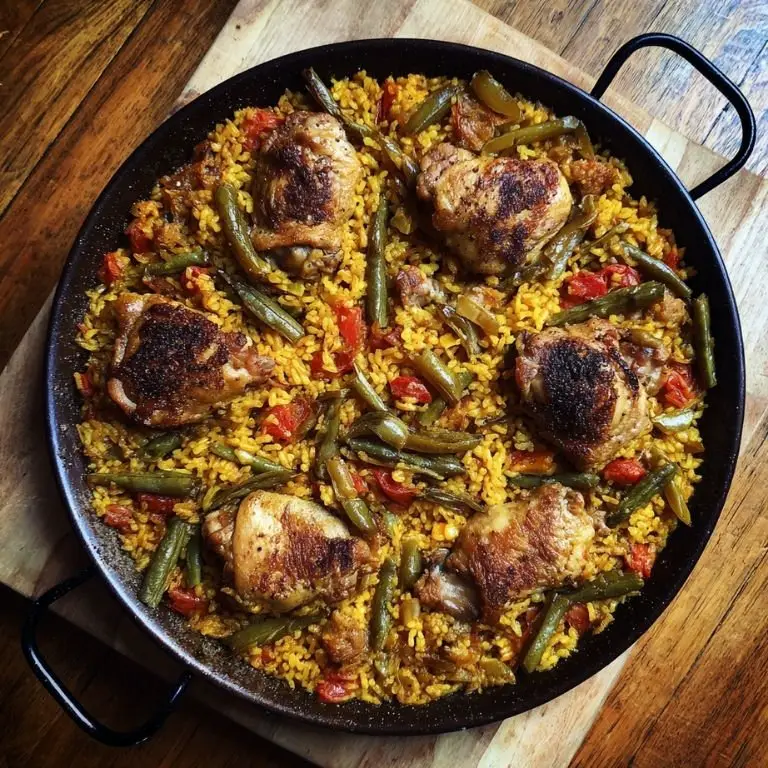
Paella Valenciana is more than just a dish—it’s a celebration of tradition, culture, and the rich agricultural heritage of the Valencian region. This classic paella valenciana dish, made with tender chicken, snappy green beans, and fragrant saffron-infused rice, is the definition of comfort food with a Spanish soul. Unlike the seafood-heavy paella de marisco or the popular paella mixta receta, this version honors the original paella valenciana recipe with its rustic simplicity and rootedness in the land. It's a dish that's perfect for sharing and a fantastic introduction to comida española for anyone looking to dive into authentic paella.
Paella Valenciana with Chicken, Green Beans, and Saffron
Prep Time 15 minutes mins
Cook Time 45 minutes mins
Total Time 1 hour hr
Course Main Course
Cuisine Spanish, Valencian
Paella pan (15–17 inches) Traditional and shallow, this allows for even cooking and maximum surface area. If you don’t have one, a large cast-iron skillet or wide stainless steel sauté pan can work as a substitute.
Burner or stove large enough to accommodate the pan Outdoor propane burners or induction stoves are popular choices.
Wooden spoon or flat spatula For stirring and checking the socarrat.
Grater For the tomato.
For the Paella
- 2 tablespoons olive oil preferably Spanish extra virgin
- 6 bone-in skin-on chicken thighs, cut into smaller pieces
- Salt and freshly ground black pepper to taste
- 1 cup flat green beans like Romano or Italian beans, trimmed and cut into 2-inch pieces
- 1 medium ripe tomato grated or finely chopped
- 1 clove garlic minced
- 1/2 teaspoon sweet smoked paprika
- 1/4 teaspoon saffron threads crushed and soaked in 2 tablespoons of warm water
- 1 1/2 cups short-grain rice Bomba or Calasparra rice preferred
- 4 cups chicken stock low-sodium, warm
- 1 sprig rosemary optional but traditional
- Lemon wedges for serving
Sear the Chicken
Heat the olive oil in your paella pan over medium heat. Once hot, season the chicken pieces with salt and pepper and sear them skin-side down. Brown them on all sides until golden, about 10–12 minutes. This renders the fat and builds a flavorful base.
Add the Green Beans
Toss in the green beans and sauté for 4–5 minutes. They should blister slightly and pick up some of the flavor from the pan.
Make the Sofrito
Push the chicken and beans to the side. Add the garlic and cook for about 30 seconds until fragrant. Then stir in the grated tomato and paprika. Cook this mixture (called sofrito) for about 3–4 minutes until it thickens slightly and the tomato loses its rawness.
Add the Rice and Saffron
Pour in the rice and stir to coat it in the tomato mixture. Toast the rice gently for 1–2 minutes to enhance its nutty flavor. Then add the saffron water, giving everything a quick stir.
Add the Stock
Pour in the warm chicken stock evenly across the pan, ensuring the rice is submerged but not stirred afterward. Nestle the chicken pieces evenly in the rice. Add the rosemary sprig if using.
Cook the Paella
Bring to a boil, then reduce the heat to a gentle simmer. Cook uncovered for about 20 minutes. Do not stir. The rice should absorb the liquid and cook through. Rotate the pan occasionally for even cooking if your burner heats unevenly.
Create the Socarrat
In the last 3–5 minutes of cooking, increase the heat slightly to develop the socarrat. Listen for a gentle crackling sound—but don’t burn it. Once the liquid is fully absorbed and the rice is tender, remove from heat.
Rest and Serve
Cover the pan with a clean dish towel and let it rest for 5–10 minutes. This helps the flavors settle and the rice finish cooking. Serve with lemon wedges.
Pairings
Paella valenciana is a well-rounded dish on its own, but here are some pairing suggestions to make your Spanish meal even more festive:
Beverages
- Spanish white wine like Albariño or Verdejo offers crisp acidity that cuts through the richness of the chicken.
- A rosé from Navarra or Tempranillo-based Rioja works well with the earthy saffron and paprika.
- For non-alcoholic options, consider sparkling water with lemon or a chilled hibiscus tea.
Sides
- A simple ensalada mixta with olives, tomatoes, and hard-boiled egg
- Pan con tomate (toasted bread rubbed with garlic and tomato)
- Marinated olives or Spanish manchego cheese with quince paste
And of course, if you’re hosting a full comida española spread, you could serve a paella vegetariana or a receta de paella de mariscos as alternatives to showcase regional diversity.
FAQs
1. Can I use boneless chicken for paella valenciana?
While boneless chicken can work in a pinch, traditional paella valenciana uses bone-in, skin-on chicken thighs. The bones add flavor to the broth and help keep the meat juicy during the long cooking time.
2. Is there a specific rice I must use for paella?
Yes, short-grain rice like Bomba or Calasparra is essential. These varieties absorb liquid without becoming mushy, ensuring the right texture. Avoid long-grain rice or Arborio as they don’t behave the same way.
3. What makes this recipe different from paella mixta or paella de marisco?
This is a paella valenciana tradicional, which focuses on land-based ingredients like chicken and green beans. Paella mixta combines meat and seafood, while paella de marisco is all about seafood. Each has its own charm, but this one sticks to the roots of Valencian cuisine.
4. Do I need saffron, or can I substitute it?
Saffron gives the dish its signature golden color and earthy aroma. While some use turmeric as a budget substitute, it lacks saffron’s unique depth. For true paella española receta, saffron is non-negotiable.
5. Can I make this in advance?
Paella is best enjoyed fresh, straight from the pan. However, leftovers can be stored in the fridge and reheated on the stove or in the oven. Just note that the texture may change slightly.