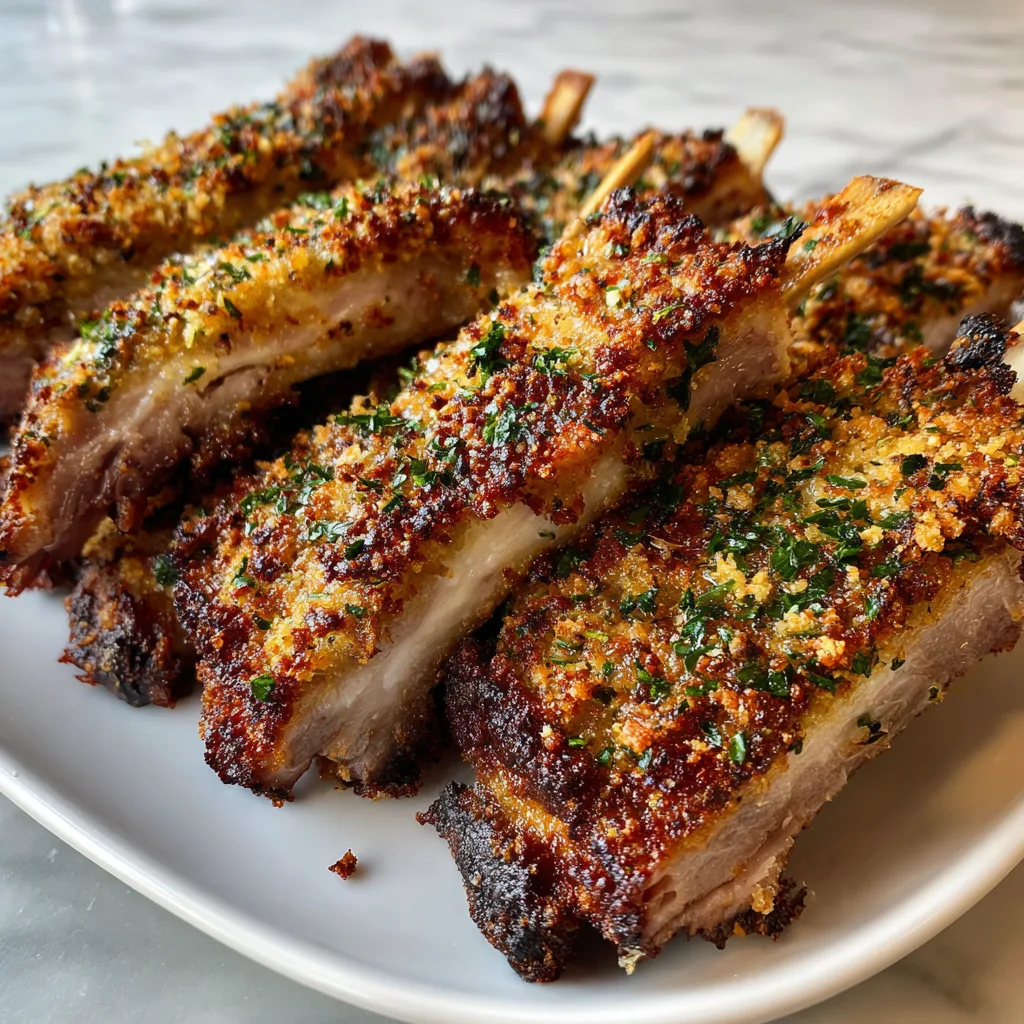
This pork short ribs recipe is my answer to the eternal question: how do you get ribs that are actually tender inside, but still crispy on the outside, without babysitting a grill all day? The move here is a two-stage oven bake. First, the ribs steam-roast under foil until the fat turns silky and the meat relaxes. Then you slather on a punchy mustard layer and press on an herby breadcrumb crust that bakes into a crackly, savory shell. It tastes like a fancy bistro pork chop met a rib night and decided to show off. Bonus: the pan drippings turn into a quick, tangy spoonable sauce if you feel like going the extra mile (it is worth it).
Crispy Oven-Baked Pork Short Ribs With Mustard and Herb Crust (Crunchy, Juicy, No Frying)
Tender pork short ribs roasted until juicy, then finished with a dijon-herb crust for a crispy, savory bite.
Prep Time 25 minutes mins
Cook Time 1 hour hr 35 minutes mins
Total Time 2 hours hrs
Course Main Dish
Cuisine American
Rimmed baking sheet a sturdy half-sheet pan is ideal to catch drippings; a 9 x 13-inch metal baking pan also works, but browning is a little gentler
wire rack (optional but helpful) helps air circulate so the crust crisps faster; if you do not have one, bake directly on the pan and flip once during the uncovered stage
Heavy-duty aluminum foil for the covered roast stage; parchment is not a substitute here because you want a tight seal
Instant-read thermometer the easiest way to avoid dry ribs; if you do not have one, use the bend test (the meat should feel very tender when you tug a rib)
Small bowl for mixing the crust; a pie plate also works for easier dredging
Small saucepan (optional) for turning pan drippings into a quick mustardy sauce; you can also do this in a microwave-safe bowl
For the ribs
- 3 pound pork short ribs bone-in, meaty pieces; look for thick, well-marbled ribs (if you only find boneless country style pork ribs in oven cuts, see notes below)
- 1 teaspoon kosher salt use 3/4 teaspoon if using fine salt
- 1 teaspoon black pepper freshly ground if possible
- 1 teaspoon smoked paprika or sweet paprika for a milder smoke vibe
- 1 teaspoon garlic powder or 2 grated garlic clove added to the mustard layer
- 1/2 teaspoon onion powder optional, but it rounds out the crust
- 1 cup chicken broth or water plus 1 teaspoon soy sauce for extra savoriness
Mustard layer
- 2 tablespoon dijon mustard smooth dijon gives the best spread; whole grain mustard is great for texture
- 1 tablespoon maple syrup or honey; this helps the crust brown without tasting sweet
- 1 teaspoon apple cider vinegar brightens the richness; rice vinegar also works
Herb crust
- 3/4 cup panko breadcrumb panko makes the crispest crust; regular breadcrumb works but is less crunchy
- 1/4 cup parmesan cheese finely grated; optional but highly recommended for salty, crisp edges
- 2 tablespoon fresh parsley finely chopped; swap with cilantro if you want a brighter, greener finish
- 1 tablespoon fresh thyme leaves only; or use 1 teaspoon dried thyme
- 1 teaspoon lemon zest optional, but it wakes everything up
- 2 tablespoon olive oil or melted butter for a richer crust
Optional quick pan sauce
- 1 teaspoon dijon mustard stirs into the drippings for a glossy finish
- 1 teaspoon apple cider vinegar add more to taste if you like it sharp
- 2 tablespoon cold butter optional, for a restaurant-style sauce
Prep
Heat the oven to 325 F. Set a wire rack on a rimmed baking sheet if you have one (it helps the heat circulate).
Pat the pork short ribs very dry with paper towel. Dry surface = better browning later, and it also helps the mustard layer cling.
In a small bowl, mix kosher salt, black pepper, smoked paprika, garlic powder, and onion powder. Sprinkle the seasoning all over the ribs, turning to coat every side. If you have time, let them sit for 10 minutes on the counter while you set up the pan (this mini rest helps the seasoning melt in).
Covered roast (tender stage)
Arrange the ribs on the rack or directly on the baking sheet, leaving a little space between pieces. Pour the chicken broth into the pan (not over the ribs). The liquid creates gentle steam so the meat softens without turning into braised pork ribs texture.
Cover the pan tightly with heavy-duty foil. You want a good seal so the steam stays in. Roast for 70 minutes.
After 70 minutes, carefully peel back the foil (watch the steam). The ribs should look pale but feel noticeably tender when you pinch with tongs. If you are using a thermometer, you are aiming for about 185 F in the thickest part for this stage.
Mustard and herb crust
Increase the oven temperature to 450 F. Leave the ribs uncovered while the oven heats (this helps evaporate surface moisture so the crust stays crisp).
Mix the mustard layer: in a small bowl stir together 2 tablespoons dijon mustard, maple syrup, and apple cider vinegar.
Mix the crust: in another bowl combine panko breadcrumb, parmesan cheese, parsley, thyme, lemon zest, and olive oil. The crumbs should look evenly moistened, like damp sand. If they still look dusty, add 1 more tablespoon olive oil.
Brush a thin, even coat of the mustard mixture over the top and sides of each rib. Do not drown them; too much mustard can make the crust slide.
Press the herb crust onto the mustard-coated ribs. Use your hands and really pack it on so it adheres. Any crumbs that fall onto the pan can be sprinkled back on top.
Uncovered roast (crispy stage) and optional broil
Return the pan to the 450 F oven and roast uncovered for 20 minutes. The crust should look deep golden and feel crisp to the touch.
If you want extra crunch, switch the oven to broil on high and broil for 3 minutes, watching closely. The crust can go from perfect to scorched fast.
Rest the ribs for 7 minutes before serving. Resting keeps the meat juicy and gives the crust a chance to set so it does not crumble off when you cut in.
Optional quick pan sauce (highly recommended)
While the ribs rest, tilt the pan and spoon off excess fat, leaving behind the browned drippings. Place the pan over low heat on the stove (or scrape drippings into a small saucepan).
Whisk in 1 teaspoon dijon mustard and 1 teaspoon apple cider vinegar. Simmer for 30 seconds, scraping up any browned bits.
For a silky finish, whisk in cold butter off the heat until glossy. Spoon the sauce around (not over) the crust so it stays crisp.
If you are planning a bigger spread, this also plays nicely with classic BBQ-style sides even though it is an oven situation: think baked beans, slaw, and cornbread. It reads like an easy short ribs recipe for weeknights, but it absolutely eats like weekend food.
For this recipe, use bone-in pork short ribs (often sold as meaty rib segments, sometimes from the shoulder end of spare ribs). Bone-in is ideal because the bones protect the meat during the hot final roast and help it stay juicy.
Yes. Boneless country-style ribs are usually cut from the shoulder, so they are meatier and can cook a bit faster. Keep the method the same, but start checking tenderness at the end of the covered stage. They are ready to crust once they feel very tender when squeezed with tongs.
Pork ribs need time for fat and connective tissue to soften. The covered roast creates a moist environment so the meat turns tender without drying out. Then the uncovered high heat is what makes the crust crisp.
Texture is the best cue: after the covered stage, the meat should feel pliable and tender. After the high-heat stage, the crust should be browned and crisp. If you use a thermometer, aim for about 195 F to 200 F for fall-apart tender ribs, but do not panic if you land a little lower; the carryover heat during the rest helps.
Yes. Do the covered roast earlier in the day, cool the ribs, then refrigerate. Before serving, bring them closer to room temperature, apply the mustard and crust, and do the 450 F roast. This keeps the crust fresh and crispy instead of soggy.