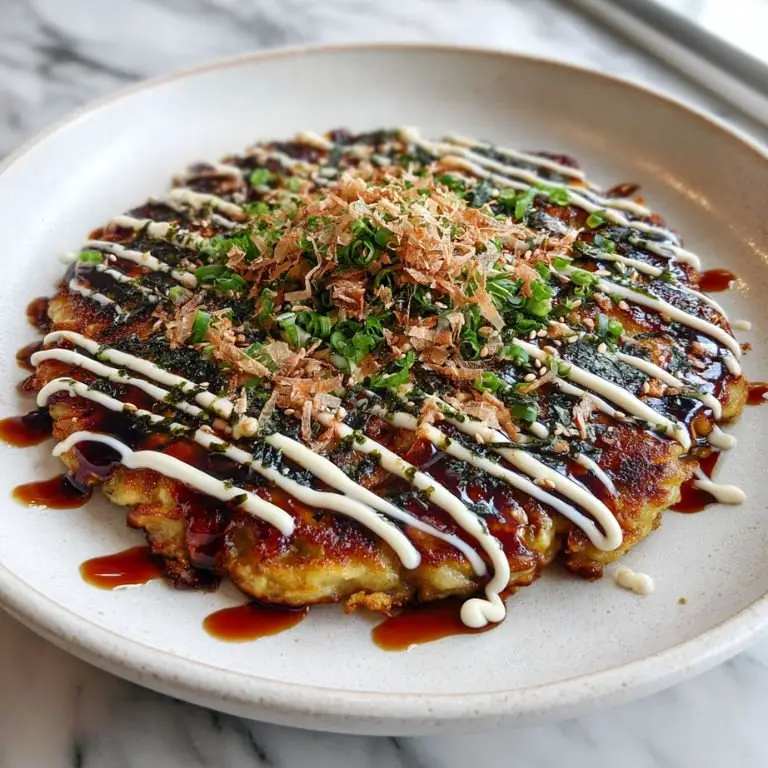
If you’ve ever wandered through the bustling streets of Osaka, Japan’s street food capital, the scent of sizzling okonomiyaki on teppan grills is unmistakable. These savory pancakes, stuffed with vegetables and topped with tangy-sweet okonomiyaki sauce, are a comfort food staple in Japanese homes and markets. But today, we’re flipping the script with an Osaka-style vegan okonomiyaki with vegan dashi — a healthier, plant-based twist on an iconic Japanese dish. This version delivers the umami you crave without compromising on flavor or authenticity. It's crispy on the edges, tender in the center, and packed with fresh vegetables and herbs, making it a great addition to your lineup of vegan japanese food or healthy japanese recipes.
Osaka-Style Vegan Okonomiyaki with Vegan Dashi
Prep Time 25 minutes mins
Cook Time 20 minutes mins
Total Time 45 minutes mins
Course Main Course
Cuisine Japanese
Servings 2 large pancakes (or 4 smaller ones)
Large mixing bowls for prepping batter and veggies separately
Flat non-stick skillet or griddle essential for even cooking; a cast-iron pan also works great
Spatula or pancake flipper preferably wide and sturdy to flip the pancake intact
Grater or food processor for grating nagaimo or potato
Small saucepan to prepare vegan dashi
Whisk for mixing the batter smoothly
For the Vegan Dashi
- 4 cups water
- 1 piece 4-inch kombu (dried kelp)
- 4 dried shiitake mushrooms
For the Batter
- 1 cup all-purpose flour substitute with gluten-free flour for an okonomiyaki gluten free version
- 2 tablespoons potato starch or cornstarch
- 1 teaspoon baking powder
- 1 cup vegan dashi see above
- 1 tablespoon soy sauce or tamari
- 1 teaspoon sesame oil
For the Filling
- 2 cups finely shredded cabbage
- ½ cup grated nagaimo or potato helps bind the pancake
- ½ cup julienned carrots
- ½ cup chopped scallions green and white parts
- ½ block firm tofu crumbled (for extra texture and protein)
- 2 tablespoons chopped fresh shiso leaves or parsley optional, for those who enjoy okonomiyaki with fresh herbs
For Topping
- Vegan okonomiyaki sauce store-bought or homemade with ketchup, vegan Worcestershire, soy sauce, and sugar
- Vegan mayonnaise
- Nori seaweed flakes
- Pickled ginger beni shoga
- Toasted sesame seeds
- Extra scallions
Step 1: Make the Vegan Dashi
Start by preparing the vegan dashi, which forms the umami backbone of the dish. In a small saucepan, combine 4 cups of water, kombu, and dried shiitake mushrooms. Let them soak for at least 30 minutes, then bring to a simmer over medium heat. Just before it boils, remove the kombu (to avoid bitterness). Continue simmering the mushrooms for another 10 minutes, then strain and reserve the liquid.
Step 2: Prepare the Batter
In a large mixing bowl, whisk together flour, potato starch, baking powder, soy sauce, and sesame oil. Gradually add 1 cup of the cooled vegan dashi, whisking until smooth. The batter should be thick but pourable — like a slightly thick pancake batter.
Step 3: Prepare the Vegetables and Tofu
Grate the nagaimo or potato into a separate bowl (wear gloves if using nagaimo to avoid skin irritation). Fold in the shredded cabbage, carrots, scallions, and crumbled tofu. Add this veggie mix into the batter and gently fold to combine. If using herbs like shiso or parsley, stir them in at this point.
Step 4: Cook the Okonomiyaki
Heat a bit of oil in a skillet over medium heat. Pour half of the mixture into the pan and shape it into a thick, round pancake (about 1-inch thick). Cover and cook for 7–8 minutes until the bottom is golden and crisp. Flip carefully using a spatula, cover again, and cook the other side for 6–7 minutes.
Repeat for the second pancake.
Step 5: Add the Finishing Touches
Once cooked through, transfer your pancakes to a plate. Drizzle with vegan okonomiyaki sauce and vegan mayo in criss-cross patterns. Sprinkle with nori flakes, toasted sesame seeds, scallions, and a bit of pickled ginger for that classic Osaka finish.
What goes well with vegan okonomiyaki? A lot! Here are a few ideas to round out your meal:
This simple soup brings warmth and depth, perfect to complement the umami of the okonomiyaki.
These rice balls filled with pickled plum or miso paste make for a satisfying side and are a great addition to any japanese vegetarian recipes rotation.
Both drinks cleanse the palate and balance the savory richness of the pancakes.
A light and tangy vinegared salad that adds crunch and brightness to your meal.
For those who love a little fusion flair, a crisp cucumber kimchi from the vegan korean food or korean vegetarian recipes canon pairs surprisingly well with okonomiyaki.
Yes! This vegan okonomiyaki recipe uses grated potato or nagaimo as the primary binder, and crumbled tofu adds structure and protein. Silken tofu can also work if blended into the batter.
Firm or extra-firm tofu is best for this recipe. It crumbles nicely and gives the pancakes a hearty texture without falling apart.
It can be! Just substitute the flour with a gluten-free all-purpose blend and use tamari instead of soy sauce. This makes an excellent okonomiyaki gluten free option that doesn’t skimp on taste.
Yes. You can prep the batter and filling a few hours in advance and refrigerate it. Cooked pancakes also reheat well in a toaster oven or skillet.
While this vegan version deviates from the original use of eggs and seafood, it stays true to the authentic Japanese recipes in technique, flavor layering, and presentation. The use of vegan dashi and traditional toppings like nori and beni shoga keeps it grounded in the classic Osaka tradition.