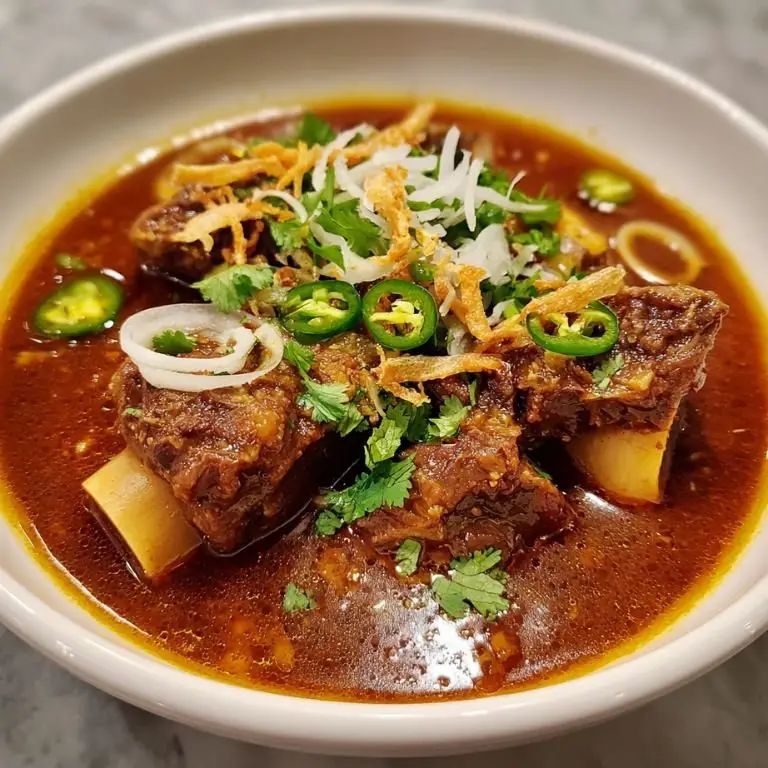
There’s something soul-soothing about a slow-cooked stew that simmers away until the meat is falling off the bone and the spices meld into a deep, aromatic gravy. Mutton nihari, with its roots in Mughal kitchens and a legacy firmly planted in Pakistani recipes, is one such dish. Traditionally eaten as a nashta recipe (yes, that's right—this hearty dish was once a breakfast staple!), this indulgent stew is now enjoyed any time of day. The luxurious spiced gravy, the tender mutton, and the earthy aroma of slow-roasted nihari masala make this a dish worth waiting for. Whether you're preparing it for a special Sunday family meal or recreating a taste of bihari food, this mutton nihari will have everyone asking for seconds.
Mutton Nihari with Rich Spiced Gravy
Prep Time 30 minutes mins
Cook Time 4 hours hrs
Total Time 4 hours hrs 30 minutes mins
Course Main Dish
Cuisine South Asian
Heavy-bottomed pot or Dutch oven Crucial for long hours of simmering without burning the base. A clay pot (handi) is even more traditional if you have access to one.
Spice grinder For making the nihari masala from whole spices. A mortar and pestle works too.
Slotted spoon and ladle For managing the meat and serving.
Mixing bowls For yogurt, flour slurry, and spice mixing.
Slow cooker or pressure cooker (alternative) If you’re short on time, a pressure cooker can speed things up. A slow cooker will mimic traditional overnight cooking methods nicely.
For the Nihari Masala (homemade)
- 2 tablespoons coriander seeds
- 1 tablespoon fennel seeds
- 1 teaspoon cumin seeds
- 1 teaspoon black peppercorns
- 4 cloves
- 2 black cardamoms
- 2 green cardamoms
- 1 small piece of mace
- 1/2 teaspoon ground nutmeg
- 1 small cinnamon stick
- 1 dried bay leaf
- 1 teaspoon Kashmiri red chili powder
- 1 teaspoon turmeric powder
- 1 teaspoon ground ginger
- Toast whole spices lightly and grind into a powder. Mix with remaining powdered spices.
For the Nihari
- 1.5 kg mutton use bone-in cuts like beef shanks or mutton shank for richer flavor
- 2 medium onions finely sliced
- 2 tablespoons garlic paste
- 2 tablespoons ginger paste
- 1 cup plain yogurt whisked
- 1 cup oil or ghee preferably desi ghee
- 6 cups water or bone broth for extra richness
- 4 tablespoons wheat flour for thickening
- Salt to taste
- Fresh coriander julienned ginger, and lemon wedges for garnish
Optional: 2-3 marrow bones (nalli nihari style)
Prepare the Nihari Masala
Start by toasting the whole spices on medium heat until fragrant. This takes about 2–3 minutes. Let them cool and grind into a powder using a spice grinder. Mix with the rest of the powdered spices to complete your homemade nihari masala.
Sear the Mutton
In your heavy pot, heat the oil or ghee and sauté the sliced onions until golden brown. Remove half for garnishing later. To the remaining onions, add the garlic and ginger pastes. Cook until the raw smell disappears.
Add the mutton and sear until browned on all sides. This will lock in the flavor and help develop that deep color in the final dish.
Add Masala and Yogurt
Sprinkle the nihari masala and salt over the meat. Cook for a few minutes until the spices coat the meat and begin to darken. Add the whisked yogurt and cook for another 10–15 minutes, stirring occasionally to prevent sticking.
Simmer Low and Slow
Add 6 cups of warm water or bone broth, stir, and bring to a gentle boil. Cover and let it simmer on the lowest heat possible for at least 3.5 to 4 hours. If using a pressure cooker, cook for 45–50 minutes, but you’ll sacrifice some of the depth of flavor.
Thicken the Gravy
Make a slurry with wheat flour and a few tablespoons of water. Gradually stir into the nihari to thicken the gravy. Let it simmer uncovered for another 15 minutes to remove the raw flour taste and allow the flavors to meld.
Add Nalli (Optional)
If using marrow bones for a traditional nalli nihari, add them in the final hour of simmering so the marrow melts into the curry. This gives the nihari its luxurious texture and traditional taste.
Garnish and Serve
Ladle the nihari into bowls, top with reserved fried onions, chopped cilantro, julienned ginger, green chilies, and a squeeze of lemon. Serve piping hot with naan or kulcha.
Mutton nihari is a showstopper all on its own, but pairing it right elevates the whole meal.
If you're serving this as part of a larger spread of Pakistani dishes, it goes beautifully alongside biryani, haleem, or even a fusion starter like spicy mathari recipe or mathri recipe with green chutney.
Bone-in cuts like shanks are ideal, as they release collagen and marrow into the gravy. If you prefer a richer, silkier curry, go for mutton legs or include marrow bones (nalli nihari). For variety, you could also try a beef nihari recipe, which uses beef shanks for a deeper, heartier taste.
Yes, a chicken nihari recipe is a lighter, faster-cooking alternative. Use bone-in chicken thighs or drumsticks to maintain richness. However, you’ll need to cut down on the simmering time to around 60–75 minutes.
Absolutely! While homemade masala gives more control, several brands offer great premixed nihari masala recipe blends. Just make sure to adjust salt and chili to taste, as these mixes can vary in strength.
Yes—and it actually tastes better the next day as the flavors deepen. You can store it in the fridge for up to 3 days or freeze for a month. Reheat gently and add a little water to loosen the gravy if needed.
To build a festive table, serve nihari with bihari food classics like seekh kebabs, jowar recipes such as bhakri for a rustic touch, and even incorporate dishes from other regions—maybe a Middle Eastern-inspired koshari recipe on the side.