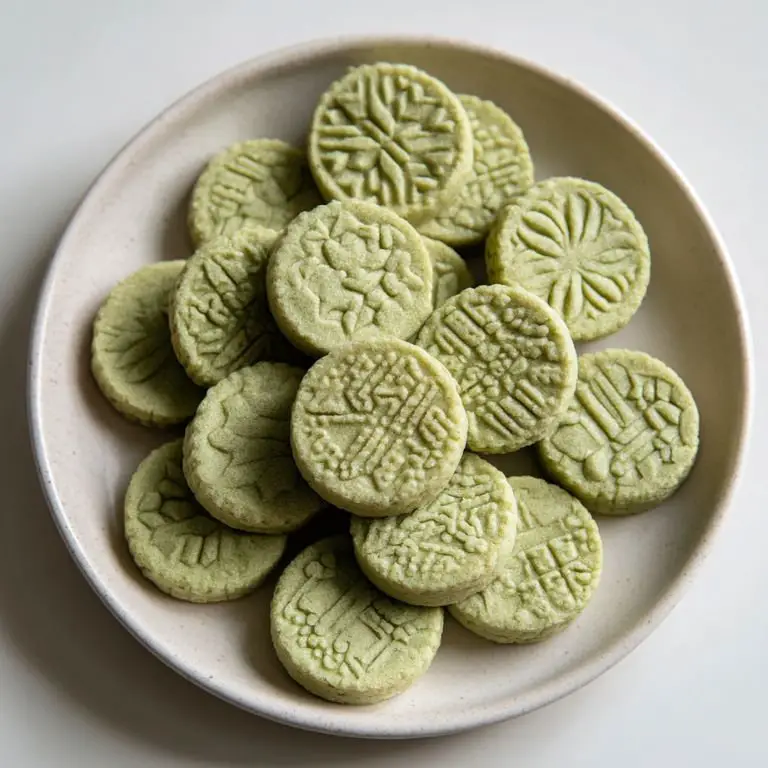
When you think of Korean food, you might first picture sizzling bulgogi, bubbling kimchi jjigae, or the ever-popular tteokbokki recipe. But nestled in the quieter corners of a traditional Korean table is a lesser-known gem: dasik—a delicate tea cookie served during important cultural events and tea ceremonies. Today, we’re diving into matcha dasik tea cookies with rice flour, a unique take on traditional Korean food that blends the earthy notes of matcha green tea with the soft, powdery texture of glutinous rice flour. These cookies are subtle, lightly sweet, and wonderfully elegant, making them perfect for modern-day tea time or special occasions like Chuseok.
Whether you’re exploring healthy Korean recipes, creating a dessert platter to accompany Korean banchan recipes, or simply craving a bite of nostalgia with your Korean tea, these matcha dasik cookies check all the boxes.
Matcha Dasik Tea Cookies with Rice Flour
Prep Time 20 minutes mins
Total Time 20 minutes mins
Course Dessert, Snack
Cuisine Korean
Servings 20 Small Cookies
Dasik molds (Dasikpan) These carved wooden molds imprint floral or geometric patterns. If unavailable, silicone mooncake molds or cookie stamps can work in a pinch.
Fine mesh sifter Essential for evenly mixing the dry ingredients and preventing clumping.
Mixing bowl and spatula A small rubber spatula works best for pressing and mixing without losing powder.
Small sieve or tea strainer To dust any extra matcha or sugar as a finishing touch.
Baking parchment or wax paper To rest the cookies and prevent sticking.
Dry Ingredients
- 1 cup glutinous rice flour sweet rice flour – Do not substitute with regular rice flour. The glutinous variety gives the cookie its signature chewy-powdery texture.
- 2 tablespoons matcha powder – Use ceremonial or high-quality culinary-grade matcha for the best color and flavor.
- 3 tablespoons honey powder or powdered sugar – For a smooth lightly sweet profile.
- Pinch of fine sea salt – Enhances the natural sweetness and balances the matcha's earthy notes.
Optional Additions
- 1 teaspoon roasted black sesame seeds – For nutty undertones and added texture.
- 1 tablespoon finely chopped pine nuts or walnuts – To mirror traditional Korean desserts often made with nuts.
- Food-safe gold leaf – For decoration especially during festivals like Chuseok.
Step 1: Prepare the Rice Flour
Start by lightly toasting the glutinous rice flour in a dry skillet over low heat for 5–7 minutes. Stir constantly to avoid burning. This step removes the raw flour taste and gives a soft, nutty aroma. Let it cool completely before using.
Step 2: Mix Dry Ingredients
In a medium bowl, sift together the cooled rice flour, matcha powder, powdered sugar (or honey powder), and a pinch of salt. The sifting ensures the mixture remains light and airy—essential for achieving the crumbly texture of dasik.
Step 3: Add Honey or Syrup
Slowly drizzle in about 2 tablespoons of honey or rice syrup while stirring. The amount may vary slightly based on humidity and the type of sweetener. The goal is a crumbly yet cohesive texture that holds shape when pressed—like damp sand at the beach.
Step 4: Optional Flavor Enhancements
If using nuts or sesame seeds, gently fold them into the dough now. These add texture and a nod to more traditional Korean sweet treat profiles.
Step 5: Press into Molds
Take small portions of the dough and press them into your dasik mold firmly. Use the back of a spoon or your fingers to ensure the mix is packed in tightly. Gently tap the mold to release the formed cookie. If you're using cookie cutters, press the dough flat inside the cutter placed on parchment, then lift the cutter.
Step 6: Let Them Set
Place the finished cookies on parchment paper. Let them air dry for at least 2–3 hours, or until the exterior is firm and matte. There’s no baking involved, but a proper rest helps them keep their shape and enhances the melt-in-your-mouth texture.
Step 7: Final Touch
Dust with a touch of extra matcha powder or a pinch of powdered sugar using a tea strainer. If you’re feeling fancy, add a small speck of gold leaf in the center.
Pairings
These tea cookies were made to be enjoyed slowly and mindfully, just like their origin in traditional Korean tea ceremonies.
- Korean tea: Pair your matcha dasik with roasted boricha (barley tea), omija cha (five-flavor berry tea), or even traditional green tea to enhance its earthy notes.
- Korean dishes: Serve after a lighter meal like kimbap or a seasonal banchan platter to cleanse the palate.
- Dessert platter: Combine with other Korean desserts like yakgwa (honey pastries) or Korean rice cake like baekseolgi for a beautiful spread during Chuseok or family gatherings.
- Modern fusion: Pair with a scoop of black sesame or matcha ice cream for a creative east-meets-west dessert.
FAQs
1. Can I use regular rice flour instead of glutinous rice flour?
No. Glutinous rice flour (also called sweet rice flour) is crucial for the right texture. It gives dasik its tender yet crumbly quality, unlike regular rice flour which can be gritty.
2. Is this cookie considered a Korean dessert or a snack?
It’s both! Traditionally, dasik is a korean dessert served with tea but it's also considered a light snack, especially during special holidays or ceremonies.
3. What kind of matcha should I use?
Choose a high-quality culinary or ceremonial-grade matcha. This not only affects flavor but also impacts color vibrancy, making your cookies visually stunning.
4. Can I make these ahead of time?
Absolutely. Dasik stores well in an airtight container for up to a week. Keep them in a cool, dry place, away from humidity to maintain texture.
5. Is dasik gluten-free?
Yes, since it’s made with glutinous rice flour, not wheat, these cookies are naturally gluten-free—perfect for those avoiding gluten but still wanting to enjoy authentic Korean food.