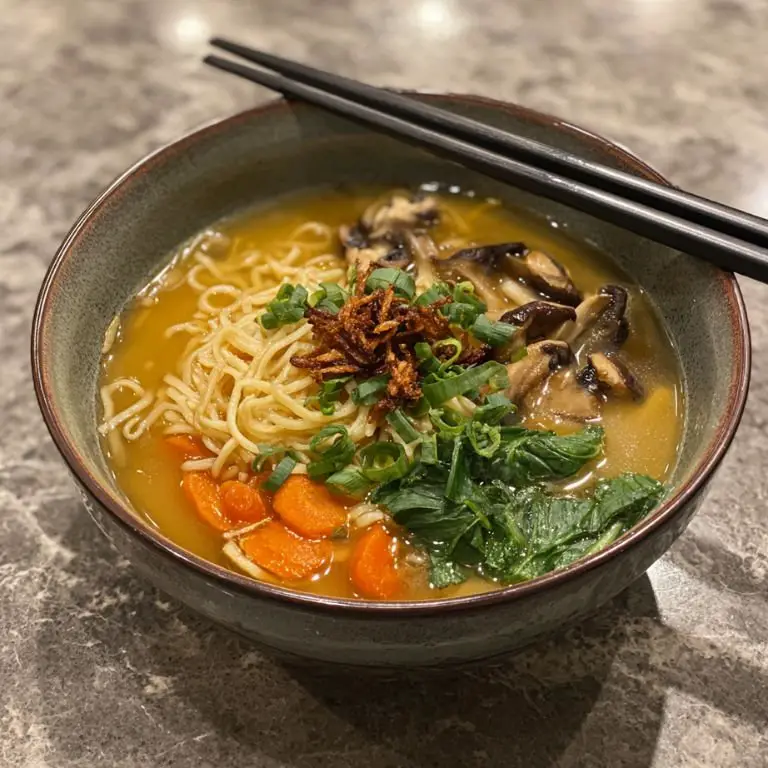
There’s something quietly magical about a bowl of misua soup, especially when it’s made to celebrate a birthday or simply nourish the body. This Longevity Misua Soup with Mushrooms and Greens is a beautiful, comforting dish that brings together thin wheat noodles (mee sua), earthy mushrooms, and fresh leafy greens in a fragrant, savory broth. Often served during birthdays in Chinese households, this dish symbolizes long life and good fortune, and it’s one of those simple Chinese recipes that feels deeply soul-satisfying. Whether you're looking to explore more traditional Chinese food recipes or just want to try a warm, nutrient-packed bowl for a rainy night, this soup is a must-try.
Longevity Misua Soup with Mushrooms and Greens
Prep Time 15 minutes mins
Cook Time 25 minutes mins
Total Time 40 minutes mins
Course Main Course, Soup
Cuisine Chinese
For the Soup Base
- 6 cups chicken broth preferably homemade or low-sodium
- 4 cloves garlic minced
- 1 tablespoon ginger peeled and julienned
- 1 small yellow onion thinly sliced
- 1 tablespoon sesame oil
- 2 tablespoons light soy sauce
- 1 tablespoon Shaoxing wine or dry sherry
- Salt and white pepper to taste
For the Soup Add-ins
- 120 g about 4 oz dried misua noodles (also known as mee sua or Chinese wheat noodles)
- 1 cup shiitake mushrooms sliced (fresh or soaked dried)
- 1 cup oyster mushrooms torn into bite-sized pieces
- 1 bunch baby bok choy or choy sum chopped
- 1/2 cup sliced carrot optional for color and sweetness
- 2 eggs lightly beaten (optional, for a silky egg-drop finish)
- Scallions chopped, for garnish
- Fried garlic or shallots for topping
Optional protein additions
- Sliced cooked chicken breast or thigh
- Silken tofu cubes
- Leftover chashu pork yes, from that chasu pork recipe you’ve been saving!
Build the Aromatic Base
In a large soup pot over medium heat, add the sesame oil. Once hot, sauté the garlic, ginger, and onions until fragrant—about 2-3 minutes. This is the foundation of many authentic chinese food dishes and lends the soup its signature aroma.
Add the Broth
Pour in the chicken broth, soy sauce, and Shaoxing wine. Bring to a simmer and let it bubble gently for 10 minutes. Taste and adjust with salt and white pepper. If you like spice, a pinch of crushed Sichuan pepper or a few drops of chili oil nods to those bold sichuan recipes.
Prepare the Noodles
While the broth simmers, bring a separate pot of water to a boil. Drop in the misua noodles and cook for just 1 minute—yes, they’re that quick. Drain immediately to avoid overcooking. This step helps prevent the noodles from clouding your soup.
Wondering how to make mee suah soup taste clean and not starchy? Always parboil the noodles first.
Add Mushrooms and Greens
Back to your simmering soup base: add the shiitake and oyster mushrooms. Cook for 5-7 minutes until tender. Then stir in the carrots and greens. These just need 2-3 minutes to wilt and brighten.
This combination is inspired by the plant-forward approach in many authentic asian recipes, where vegetables play a key starring role.
Egg Drop (Optional)
If you’re going the egg-drop route, slowly pour the beaten eggs into the simmering soup in a thin stream while stirring gently. This creates delicate egg ribbons that make the broth even more satisfying.
Assemble and Serve
Divide the cooked misua noodles between bowls. Ladle the hot soup over the noodles. Top with chopped scallions and a sprinkle of fried garlic or shallots. Add your protein of choice—whether that’s leftover chasu pork, tofu, or chicken.
Serve piping hot and enjoy immediately!
Perfect Pairings
A dish as warm and gentle as Longevity Misua Soup deserves thoughtful accompaniments. Here are some great options:
- Steamed dumplings or potstickers: These are excellent to round out your bowl, especially if filled with pork or mushrooms.
- Sichuan mala noodles (on the side): For spice lovers, pairing this gentle soup with fiery noodles creates a beautiful balance of flavors, perfect if you’re hosting and want to showcase different sides of asian cuisine recipes.
- Chinese pickled vegetables: These offer acidity and crunch to contrast the soft, warming nature of the soup.
- Light jasmine tea or oolong: A soothing drink enhances the overall experience, especially during colder months.
FAQs
1. Can I use another type of noodle if I can't find misua?
Misua (mee sua) noodles are very thin and cook extremely fast, so substituting them with other noodles will change the texture. However, somen noodles or angel hair pasta can work in a pinch. Just cook them al dente and rinse well.
2. Should I use chicken breast or thigh meat?
Chicken thigh meat is juicier and adds more flavor, making it perfect for soups. That said, if you prefer leaner meat, chicken breast works fine—just don’t overcook it.
3. Is this the same as birthday noodles chinese families eat?
Yes, it’s a close cousin! Misua noodles are traditionally served during birthdays and celebrations in Chinese culture, as they symbolize long life and prosperity. The addition of mushrooms and greens is a popular regional variation.
4. What mushrooms work best?
Shiitake and oyster mushrooms are ideal for their meaty texture and umami-rich flavor. If you want to experiment, try enoki or wood ear mushrooms for different textures, both commonly found in authentic chinese food.
5. How can I make this vegetarian?
Use vegetable broth instead of chicken, skip the meat, and go heavy on mushrooms and tofu. The soup will still be hearty and satisfying.