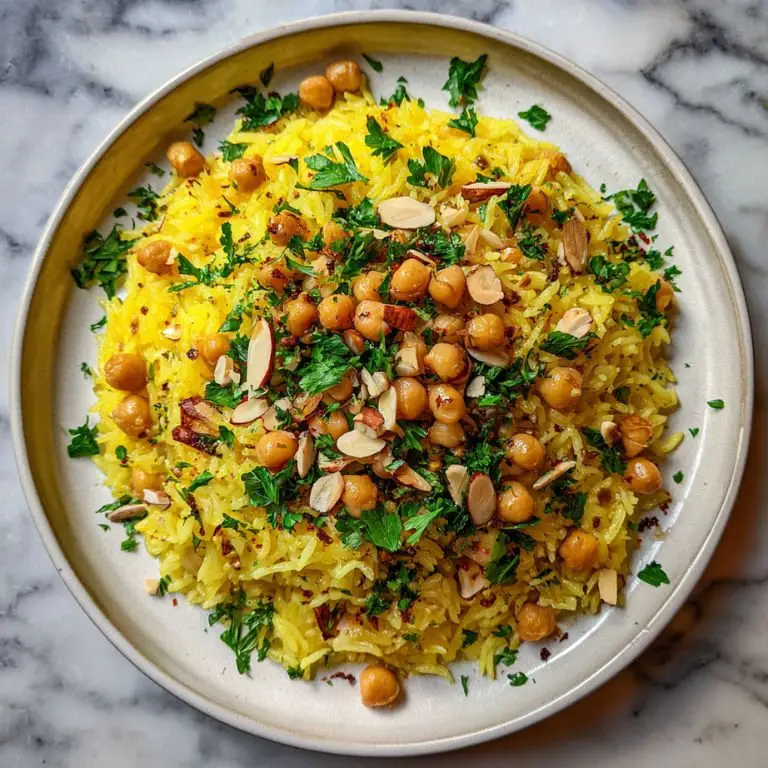
There’s something undeniably comforting about a bowl of warm, fragrant rice that’s both simple and satisfying. Lebanese turmeric rice with almonds and chickpeas is a humble dish with a golden glow and layers of flavor that make it a standout at any table. Whether you’re searching for easy dinner recipes or planning spring dinner recipes with vibrant flavors, this dish delivers. It’s a beautiful fusion of warmth, crunch, and earthy depth that captures the essence of Lebanese cooking—and it’s easier to make than you might think.
This isn't just another yellow rice recipe. This is a full-on embrace of Middle Eastern comfort food—deeply rooted in tradition yet adaptable to modern kitchens. With toasted nuts, buttery rice, and tender chickpeas, this dish can serve as a standalone vegetarian main or a dazzling side for roasted meats. Think of it as a cross between homemade yellow rice and a more layered, nutty pilaf. If you’ve tried Egyptian rice or Turkish rice before and loved the texture and subtle aromatics, you're in for a treat.
Lebanese Turmeric Rice with Almonds and Chickpeas
Prep Time 10 minutes mins
Cook Time 25 minutes mins
Total Time 35 minutes mins
Course Main Course, Side Dish
Cuisine Lebanese
Medium saucepan or Dutch oven Ideal for evenly cooking the rice and building flavor. A nonstick saucepan also works if that’s what you have.
Frying pan or skillet Used for toasting the nuts until golden and fragrant.
Fine-mesh sieve For rinsing the rice to remove excess starch. This step is crucial for fluffy, non-sticky rice.
Wooden Spoon or Spatula Helps stir the rice gently without breaking the grains.
For the rice
- 1 ½ cups long-grain rice preferably basmati or jasmine for a fluffier texture
- 2 tablespoons olive oil or ghee
- 1 small yellow onion finely chopped
- 2 garlic cloves minced
- 1 ½ teaspoons ground turmeric
- ½ teaspoon ground cumin
- 2 ¾ cups vegetable broth or water
- Salt to taste about 1 ½ teaspoons if using unsalted broth
- 1 can 15 oz chickpeas, rinsed and drained
For the topping
- ⅓ cup slivered almonds
- ⅓ cup pine nuts optional but traditional
- 2 tablespoons olive oil or butter
- Fresh parsley chopped (for garnish)
Rinse the rice
Start by rinsing your rice under cold water until the water runs clear. This helps remove surface starches and prevents clumping, ensuring a fluffy finish.
Sauté the aromatics
In a medium saucepan, heat 2 tablespoons of olive oil over medium heat. Add the chopped onion and cook for 3–4 minutes until translucent. Stir in the garlic and cook for another 30 seconds, just until fragrant.
Spice it up
Sprinkle in the turmeric and cumin. Let them toast in the oil for about 1 minute, stirring constantly. This step helps bloom the spices and brings out their earthy, vibrant notes.
Add the rice and chickpeas
Add the rinsed rice and chickpeas to the pot, stirring to coat each grain in the spiced oil. This not only enhances the flavor but also improves the rice texture.
Simmer to perfection
Pour in the broth and add salt. Bring everything to a boil, then reduce the heat to low, cover, and let simmer for about 15–18 minutes, or until the liquid is absorbed and the rice is tender.
Toast the nuts
While the rice cooks, heat 2 tablespoons of olive oil or butter in a skillet. Add the slivered almonds and pine nuts. Toast over medium heat for 3–5 minutes, stirring constantly, until golden and aromatic. Be careful—nuts can go from golden to burnt in a flash.
Fluff and finish
Once the rice is done, remove it from the heat and let it sit covered for 5 minutes. Fluff with a fork and transfer to a serving dish. Top generously with the toasted nuts and chopped parsley.
Perfect Pairings
This Lebanese turmeric rice dish is incredibly versatile when it comes to pairings. Its nutty richness and earthy spice make it a standout among middle eastern rice recipes.
- Grilled meats: Lamb kebabs, grilled chicken thighs, or beef kofta pair wonderfully. The subtle spices in the rice complement the bold flavors of grilled meat.
- Yogurt-based sauces: A simple cucumber-yogurt sauce (like tzatziki) adds a cool, tangy balance.
- Roasted vegetables: Think za’atar-spiced carrots or eggplant with tahini drizzle. The rice makes a great base for middle eastern side dishes.
- Fresh salads: A tabbouleh or fattoush salad brings brightness to the table, cutting through the warmth of the dish.
Want to make it part of your easy dinner recipes rotation? Pair it with store-bought rotisserie chicken and a side salad for a weeknight win.
FAQs
1. Can I use brown rice instead of white rice?
Yes, but you’ll need to adjust the cooking time and liquid. Brown rice typically takes 40–45 minutes to cook and requires a bit more water. The texture will be chewier, but still delicious.
2. Is it better to use canned or freshly cooked chickpeas?
Both work well, but canned chickpeas are more convenient. If you’re cooking chickpeas from scratch, make sure they’re fully tender before adding them to the rice.
3. What type of rice is best for Lebanese rice recipes like this?
Long-grain white rice, such as basmati or jasmine, is ideal. It cooks up fluffy and absorbs the turmeric beautifully. Short-grain varieties can work but may result in a stickier texture, more like Egyptian rice.
4. Can I skip the nuts?
Yes, though they add a wonderful texture and richness. For a nut-free version, try crispy fried onions or roasted chickpeas as a topping.
5. How does this compare to other middle eastern yellow rice recipes?
Lebanese yellow rice tends to be more subtly flavored than Turkish rice or saffron-heavy Persian styles. It's a middle ground between the deeply savory homemade yellow rice of the Middle East and the bright, butter-forward yellow rice recipes found in North Africa and the Mediterranean.