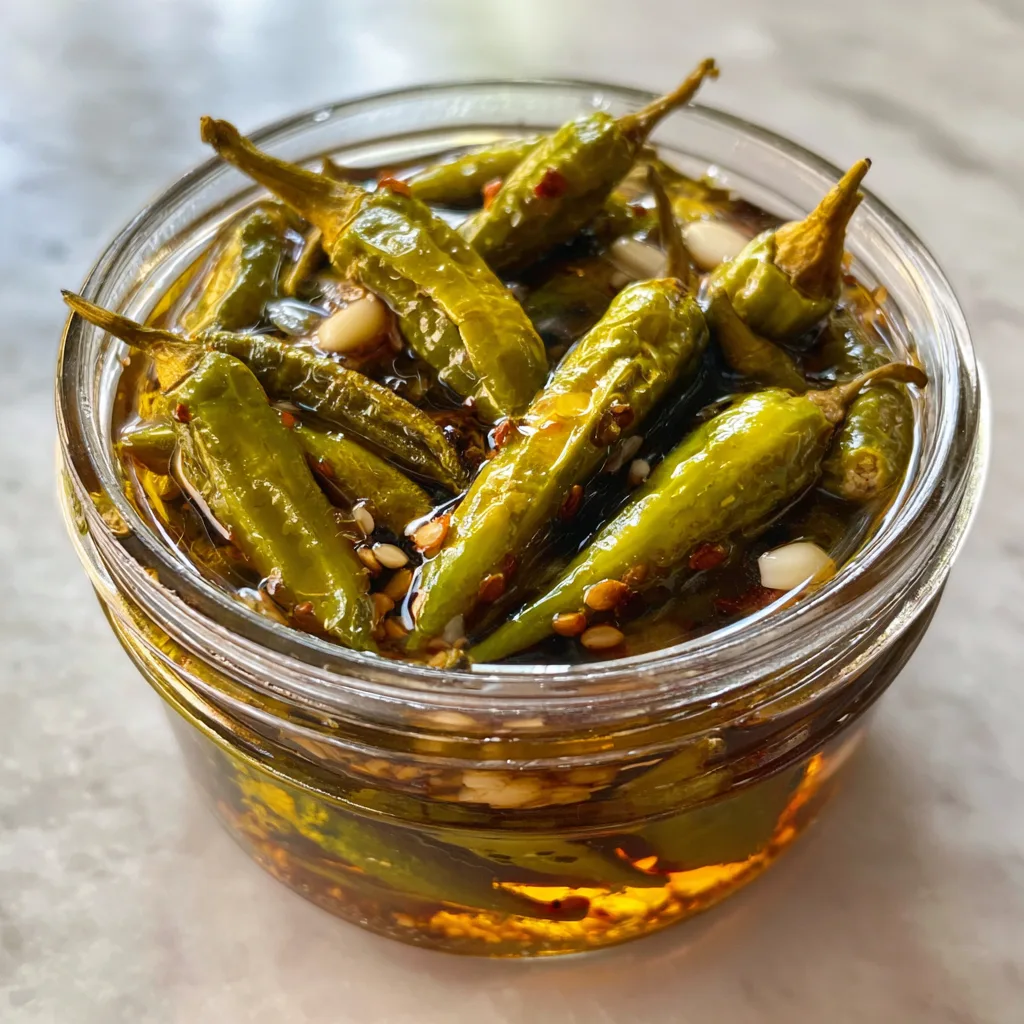
If your idea of a perfect bite is crunchy, briny, and just a little dangerous, these traditional Korean pickled green chili peppers are for you. This is gochu jangajji: green chiles tucked into a garlicky soy-vinegar brine that hits salty-sour-sweet in one go, with a slow-building heat that makes plain rice taste like a real meal. I like this version because it stays crisp (no sad, floppy peppers) and it's flexible: keep it classic and clean, or lean into aromatics like ginger and scallion. It's the kind of little side dish that quietly steals the show next to grilled meat, noodles, or a simple fried egg.
Traditional Korean Pickled Green Chili Peppers (Gochu Jangajji) - Salty, Tangy, Snackable Heat
Crunchy green chiles pickled in a soy-vinegar brine with garlic for an addictive Korean banchan.
Prep Time 25 minutes mins
Cook Time 15 minutes mins
Total Time 40 minutes mins
Course Side Dish
Cuisine Korean
wide-mouth glass jar with lid 1 quart jar is perfect for long chiles; use two 1 pint jars if that's what you have. Glass is best because vinegar can pick up metallic notes in reactive containers.
Small saucepan 2 quart size is plenty for the brine. A stainless steel pan is ideal; nonstick is fine too.
kettle or pot for boiling water for quick jar sanitation. Alternatively, run the jar through a dishwasher hot cycle and let it air-dry.
Tongs or Chopsticks helps pack peppers tightly without bruising them. Clean hands also work, but tongs keep things tidy.
measuring cup and spoon for consistent brine ratios. If you don't have measuring tools, keep the brine tasting boldly salty-sour with a noticeable touch of sweetness.
For the peppers
- 1 pound green chili pepper thin-skinned peppers stay crisp (korean cheongyang, serrano, or long green chile). Avoid very thick-skinned peppers unless you slice them.
- 6 garlic clove lightly smashed; use more if you want it punchier
- 2 scallion cut into 2 inch pieces (optional but very traditional)
- 6 slice fresh ginger thin slices (optional; adds a clean, spicy perfume)
For the traditional soy-vinegar brine
- 1 cup water filtered if your tap water tastes strongly of chlorine
- 1 cup soy sauce regular (not dark). Use tamari for gluten-free.
- ¾ cup rice vinegar unseasoned; apple cider vinegar works but tastes louder
- ½ cup granulated sugar balances salt and sharpness; brown sugar is ok for a deeper flavor
- 1 tablespoon toasted sesame seed optional; stir in after the brine cools for a nuttier finish
Optional finishing touches
- 1 teaspoon toasted sesame oil a tiny drizzle right before serving (not in the jar) keeps flavor fresh
- 1 small carrot thin matchsticks for extra crunch (optional; makes it feel like a little platter of asian pickled vegetables)
Prep and jar setup
Wash the jar and lid well. To quickly sanitize, pour boiling water into the jar, swish, then carefully pour it out and let the jar air-dry. (You don't need true canning sterilization here because this is a refrigerator pickle, but a clean jar keeps flavors brighter and helps the pickles last.)
Rinse the green chiles and dry them thoroughly. Water clinging to peppers can dilute the brine and soften the texture.
Decide how spicy you want your jar. For a cleaner, steadier heat, leave peppers whole and poke 1 small hole in each pepper with a skewer or the tip of a knife. For faster flavor and more immediate heat, slice each pepper into 1/2 inch pieces. Whole peppers stay crunchier; sliced peppers season faster.
Pack the jar: add the garlic, scallion, and ginger first, then stack the peppers tightly. A snug pack keeps peppers submerged and crisp. If using carrot, tuck the matchsticks around the edges.
Cook the brine
In a small saucepan, combine the water, soy sauce, rice vinegar, and sugar. Set over medium heat and stir until the sugar dissolves completely.
Bring the brine to a gentle boil, then let it simmer for 2 minutes. This quick simmer melds flavors and slightly tames the vinegar edge without making it dull.
Turn off the heat and let the brine cool for 5 minutes. You want it hot enough to lightly "kiss" the peppers (helping the brine penetrate), but not so violently boiling that it overcooks them into softness.
Pickle, cool, and chill
Carefully pour the warm brine into the packed jar, making sure the peppers are fully submerged. Tap the jar on the counter to release trapped air bubbles.
If any peppers float, use a clean small piece of parchment paper pressed on top as a simple "lid" to keep everything under the brine. Alternatively, use a small fermentation weight.
Let the jar cool uncovered at room temperature until no longer warm, then seal with the lid and refrigerate.
For best flavor and crunch, wait 24 hours before eating. They'll taste more rounded after 3 days. This is a true banchan-style jar that keeps getting better in the fridge.
Optional: after the brine is fully cool, sprinkle in the toasted sesame seed. Save the sesame oil for serving time so it doesn't mute the bright pickled snap in the jar.
How to serve (the fun part)
Serve a few peppers as a salty, spicy bite alongside rice and grilled food. For whole peppers, slice before eating or eat carefully like a very flavorful snack.
My favorite quick plate: warm rice, a fried egg, a spoon of gochujang, a few gochu jangajji, and some roasted seaweed. The pickles act like the spark plug.
Keep everything refrigerated. Use clean chopsticks or a clean fork every time to keep the brine clear and the flavors fresh.
Thin-skinned, crisp peppers are best. If you can find Korean cheongyang peppers, they're the most classic. Serrano works beautifully and is easy to find; long green chiles also work but can be milder. For a gentler jar, use jalapeño and leave them whole; for more heat, slice serrano.
It's traditional in flavor and method (soy sauce, vinegar, sugar, garlic), but it's made as a refrigerator pickle for simplicity and safety. That also makes it fit the vibe of korean quick pickled vegetables: fast to assemble, quick to taste, and easy to keep crisp.
You'll get a decent pickle after 24 hours, but the brine really sinks in after 3 days. Whole peppers take longer than sliced peppers. If you want them ready fast, slice them and give the jar a gentle shake once or twice in the first day.
Yes, the cut matters because fat loves acid. These peppers are amazing with pork belly (high-fat, needs brightness), boneless chicken thigh (rich, juicy), and grilled short rib (beefy and slightly sweet). With lean meat like chicken breast, use the brine sparingly so the meal doesn't skew too salty; add a drizzle of sesame oil at serving to round it out.
I don't recommend water-bath canning this specific brine as written because soy sauce changes the balance and home canning requires tested acidity and processing times. Treat it as a refrigerator pickle: keep it cold, use clean utensils, and enjoy within 1 month for best crunch and flavor.