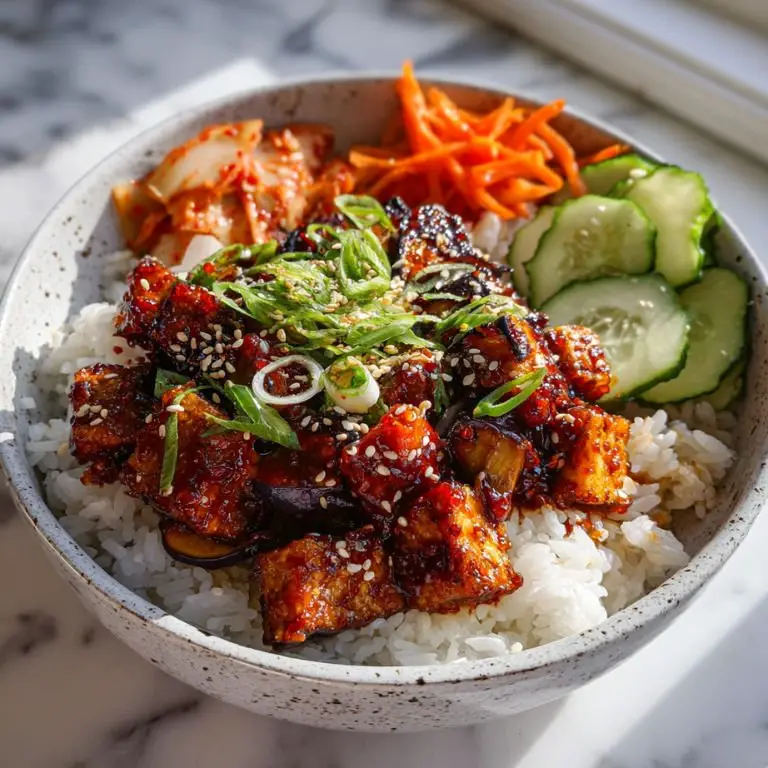
Looking for healthy dinner recipes that deliver bold flavor, comfort, and a satisfying balance of textures? These Korean-inspired eggplant tofu bowls with rice are the ultimate plant-based comfort food—umami-packed, sweet, spicy, and seriously addictive. Whether you're diving into more vegetarian Korean recipes or simply want to switch up your usual dinner ideas, this bowl has your name on it. Think of it as a love letter to miso aubergine and gochujang-laced stir-fries, brought together in one glorious, colorful bowl.
This dish is deeply rooted in Asian eggplant recipes, but it gets its own twist with tofu pan-fried until golden, then coated in a sticky, sweet and spicy sauce made from gochujang, garlic, and soy. It’s the kind of bowl that could easily stand beside a tteokbokki recipe on a Korean street food spread. Even meat-lovers who normally lean toward crispy chilli beef or other spicy beef favorites will find something to obsess over here. Let’s dive in.
Korean Inspired Sticky Eggplant & Tofu Rice Bowls
Prep Time 15 minutes mins
Cook Time 25 minutes mins
Total Time 40 minutes mins
Course Main Course
Cuisine Asian, Korean
Large nonstick or cast iron skillet Ideal for pan-frying tofu and eggplant. A well-seasoned cast iron skillet helps get that golden crust on tofu.
Mixing bowls For tossing tofu in cornstarch and mixing your sauce ingredients.
Tongs or spatula To flip tofu and eggplant without breaking them apart.
Fine mesh strainer or tofu press Optional but helpful for pressing excess water from tofu. A heavy book wrapped in a paper towel works in a pinch.
Rice cooker or pot with lid For cooking rice. A rice cooker gives consistent results, but stovetop works just as well.
For the Tofu and Eggplant
- 1 block 14 oz firm tofu, pressed and cut into 1-inch cubes
- 2 medium Asian eggplants or 1 large globe eggplant, sliced into half-moons
- 2 tablespoons cornstarch
- 3 tablespoons neutral oil like avocado or vegetable oil
- Salt to taste
For the Sweet and Spicy Gochujang Sauce
- 2 tablespoons gochujang Korean fermented red chili paste
- 1 tablespoon soy sauce
- 1 tablespoon rice vinegar
- 1 tablespoon maple syrup or honey
- 1 teaspoon sesame oil
- 1 teaspoon grated ginger
- 2 garlic cloves minced
- 1 tablespoon water to thin, as needed
For the Bowls
- 2 cups cooked jasmine or short-grain rice
- 1/2 cucumber sliced
- 1 medium carrot julienned or shredded
- 2 scallions sliced
- Toasted sesame seeds for garnish
- Kimchi optional, but highly recommended
Prep the Tofu
Start by pressing your tofu to remove as much water as possible—this helps it crisp up better. Wrap the block in paper towels and place a heavy object (like a skillet or cookbook) on top for 10–15 minutes.
Once pressed, cut tofu into 1-inch cubes and toss them in a bowl with cornstarch and a pinch of salt until evenly coated.
Sear the Tofu
Heat 1.5 tablespoons of oil in your skillet over medium-high heat. Add tofu cubes in a single layer, letting them crisp undisturbed for 3–4 minutes per side, until golden and crisp. Remove and set aside.
Cook the Eggplant
In the same skillet, add another 1.5 tablespoons of oil and toss in the sliced eggplant. Sprinkle with a little salt and sauté until golden brown and tender, about 7–9 minutes. You want them soft but with a little bite—avoid turning them to mush.
Make the Sauce
While the eggplant is cooking, whisk together your gochujang, soy sauce, maple syrup, vinegar, sesame oil, garlic, ginger, and water in a small bowl. Taste and adjust—add more maple syrup for sweetness or vinegar for brightness.
Combine Everything
Return the tofu to the skillet with the cooked eggplant. Pour in the gochujang sauce and stir gently to coat all the pieces evenly. Let it bubble for 1–2 minutes to thicken and caramelize slightly.
Assemble the Bowls
Scoop a generous portion of rice into each bowl. Top with the eggplant-tofu mixture, then add fresh veggies like cucumber, carrot, and scallions. Sprinkle with sesame seeds and add a spoonful of kimchi if desired.
Serve warm and enjoy that perfect bite of crispy tofu, tender eggplant, sweet and spicy glaze, and cool, crunchy veg.
Pairings
This bowl is a complete meal on its own, but you can definitely jazz it up even more:
- Kimchi Pancakes or Mandu (Korean dumplings): Great side for a Korean-inspired dinner night.
- Miso soup or seaweed salad: Adds a refreshing contrast to the bold flavors of the bowl.
- Iced barley tea (boricha) or jasmine green tea: These traditional beverages balance the spice and richness beautifully.
Craving meat? You can pair this bowl with a small side of crispy beef Chinese-style or a fried beef stir-fry to make it a fusion-style plate. That combination would not be out of place next to a bowl of Filipino food, where bold, layered flavors are always celebrated.
FAQs
1. Can I use globe eggplant instead of Asian eggplant?
Yes, absolutely. While Asian eggplants are slightly sweeter and have thinner skin, globe eggplant works well. Just slice it thinner and salt it before cooking to draw out any bitterness.
2. What’s the best tofu for this recipe?
Use firm or extra-firm tofu. Silken tofu won’t hold up during frying and will turn to mush. Pressing the tofu well is crucial for that golden, crispy texture.
3. Can I add protein if I’m not vegetarian?
Of course. Pan-fried ground beef or even a crispy beef alternative makes a delicious combo here. If you’re a fan of ground beef recipes, try browning it with a bit of gochujang and garlic for a Korean-inspired stir-fry topping.
4. Is gochujang very spicy?
It has heat, but it’s balanced by sweetness and umami. If you're new to it, start with a small amount and build up. It’s what gives that signature kick in many Korean dishes, including a classic gochujang recipe.
5. Can this be a meal prep or breakfast option?
Totally. These bowls store well and reheat beautifully. While not your typical breakfast ideas, they’re hearty and satisfying in the morning—especially if you’re into savory starts to your day.