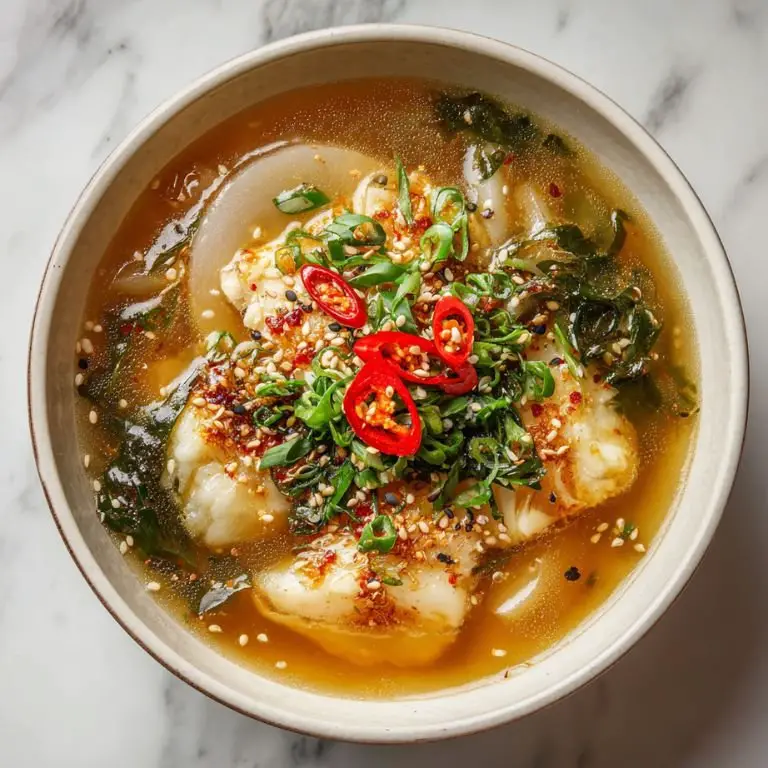
There’s something undeniably comforting about a steaming bowl of Korean fish cake soup, especially when it’s infused with the deep umami of anchovy broth and sweet, tender daikon radish. Known as eomukguk or odengguk in Korea, this humble yet hearty soup is a staple in Korean households and street food stalls alike. It’s warming, light yet flavorful, and deeply nostalgic for anyone who grew up eating Korean food side dishes and banchan recipes around the family table. Whether you’re making it for a cold evening at home or serving it as part of a larger Korean meal, this dish hits all the right notes.
Korean Fish Cake Soup with Radish and Anchovy Broth
Prep Time 15 minutes mins
Cook Time 30 minutes mins
Total Time 45 minutes mins
Course Main Course, Soup
Cuisine Korean
Medium to large pot A heavy-bottomed soup pot or stockpot works best to draw out the flavor of the anchovy broth.
Fine mesh strainer or cheesecloth To strain the broth cleanly.
Cutting board and sharp knife For prepping the radish and scallions.
Soup ladle For serving.
Wooden skewers (optional) Traditional Korean soup often includes fish cakes threaded onto skewers for presentation.
For the Broth
- 10 dried anchovies guts and heads removed for cleaner taste
- 1 piece of dried kelp about 4x4 inches
- 6 cups water
- 1 small onion halved
- 4 garlic cloves smashed
- ½ teaspoon black peppercorns
Optional: 1 dried shiitake mushroom (adds more umami)
For the Soup
- 200 g Korean fish cakes sliced into bite-sized pieces or skewered
- 1 cup Korean radish mu, peeled and thinly sliced
- 2 scallions sliced
- 1 tablespoon soy sauce adjust to taste
- Salt to taste
- Ground white pepper optional
- Dash of sesame oil optional
Garnish
- Finely chopped scallions or garlic chives
- Red chili slices optional, for heat
- Toasted sesame seeds optional
Prepare the Broth
In your pot, combine the dried anchovies, kelp, onion, garlic, and peppercorns with 6 cups of water. Bring to a gentle boil over medium heat. Once boiling, reduce the heat and let it simmer for about 20 minutes. Remove the kelp after the first 10 minutes to prevent bitterness.
Strain the broth using a fine mesh strainer or cheesecloth, discarding the solids. Return the clear broth to the pot.
Add Radish and Seasoning
Add the sliced Korean radish to the strained broth. Simmer for about 10–12 minutes until the radish turns semi-translucent and tender. Add soy sauce and a small pinch of salt, tasting as you go.
Add the Fish Cakes
Add your Korean fish cakes into the broth — whether you’re using skewers or bite-sized slices. Let them simmer for about 3–5 minutes. Fish cakes are already cooked, so you’re just letting them absorb the broth’s flavor and heat through.
Final Touches
Add the sliced scallions and let the soup simmer for an additional 2 minutes. Optionally, drizzle in a little sesame oil for added aroma. If you like a bit of spice, drop in a few thin slices of red chili.
Serve and Garnish
Ladle the hot soup into bowls, ensuring each serving gets a generous portion of broth, radish, and fish cake. Garnish with extra scallions, chili slices, or sesame seeds if desired. Serve immediately while it’s hot.
Pairings
Korean fish cake soup pairs beautifully with other Korean food side dishes. Consider serving it alongside:
- Steamed rice: A must-have to soak up the delicate broth.
- Kimchi: The sour, spicy crunch of fermented cabbage is the perfect contrast to the soup’s lightness.
- Korean seafood pancake (haemul pajeon): Savory and crispy, this pancake adds variety and texture to your meal.
- Stir-fried anchovies (myeolchi bokkeum): Another traditional banchan that echoes the flavors of the soup’s anchovy base.
- Soy-marinated eggs (mayak eggs): Add extra protein and umami to the meal.
For a more modern take, you could even serve this soup as a light starter before dishes inspired by Chinese fish recipes or Japanese fish recipes, especially those that feature steamed or grilled fish.
FAQs
1. What kind of fish cake should I use for Korean fish cake soup?
Use korean fish cakes (eomuk or odeng), which are typically made from white fish paste, flour, and vegetables. You can find them at Asian grocery stores in the frozen or refrigerated section. If you're exploring how to make korean fish cake from scratch, a mix of white fish like pollock and seasonings is blended into a paste and then shaped and fried or steamed.
2. Can I use other types of fish cake?
Absolutely. While korean fish cakes are the traditional choice, this dish can accommodate alternatives like japanese fish cake (kamaboko or chikuwa). It’s a fun way to experiment with different textures and flavors, especially if you enjoy exploring variations like thai fish cakes or even salmon fish cakes in other meals.
3. Can I make this soup vegetarian?
You can! Replace the anchovy broth with a rich kelp and mushroom broth. Add extra soy sauce or a dash of fermented soybean paste (doenjang) for depth. Swap the fish cakes for tofu or korean rice cakes (tteok) to keep the texture chewy and satisfying, similar to other rice cake recipes korean cooks enjoy.
4. Is this recipe good for meal prep or parties?
Yes, especially for casual gatherings or birthdays. In Korea, fish cakes birthday meals are not uncommon, particularly for winter or outdoor parties. Prepare the broth and keep the ingredients separate until you're ready to reheat and serve. The soup also reheats well the next day.
5. What other dishes can I make with Korean fish cakes?
Korean fish cakes are incredibly versatile. Aside from soup, they’re delicious in stir fry fish dishes like eomuk bokkeum, or even added to hot pots. If you have leftovers, try them in Korean food side dishes or even mix them with veggies in a skillet for a quick banchan. They’re also great for trying a fish cakes recipe easy style — simply pan-fry and serve with dipping sauce.