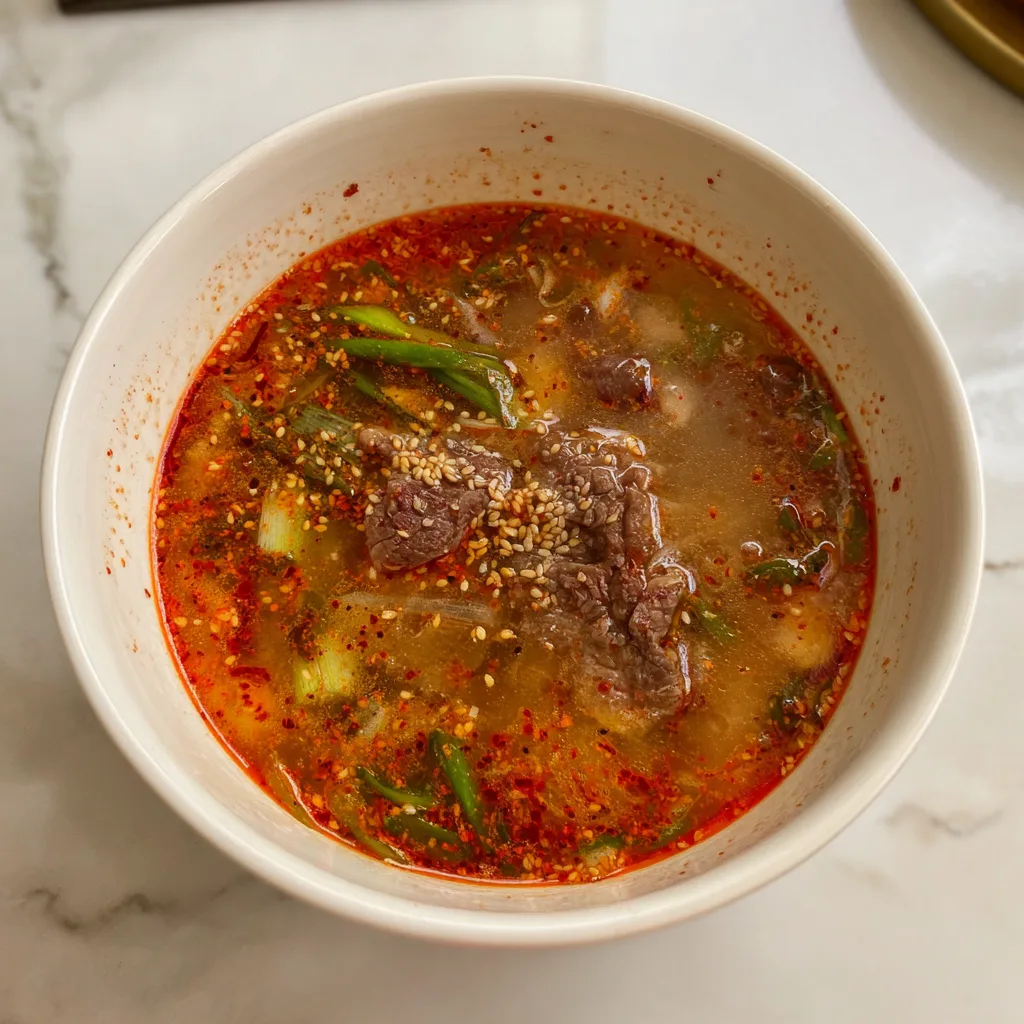
If you love the cozy, milky comfort of a classic Korean bone soup but you also want heat, this one's for you. This spicy Korean beef bone soup starts like a traditional gomtang recipe: beef marrow and knuckle bones get blanched, scrubbed, and simmered until the broth turns rich and opaque. Then we do the part that makes it feel like my bowl (and not your auntie's very proper, very clear soup): a gochugaru-garlic slurry bloomed in toasted sesame oil, stirred in right at the end for a smoky red glow and that warm chili tingle that keeps you going back for "one more sip." It's still gentle enough to eat with rice and kimchi, but bold enough to stand on its own as the main event.
Spicy Korean Beef Bone Soup Infused with Gochugaru and Sesame Oil (Gomtang-Style, With a Kick)
Rich, milky beef bone broth finished with gochugaru, garlic, and sesame oil for a spicy gomtang-style Korean soup.
Prep Time 30 minutes mins
Cook Time 6 hours hrs
Total Time 6 hours hrs 30 minutes mins
Course Soup
Cuisine Korean
Large stockpot or Dutch oven at least 8 quart so the bones can be fully submerged; a 10 to 12 quart pot is even better if you want extra broth. If you only have a smaller pot, make a half batch or simmer the bones in two rounds and combine.
Tongs for safely moving hot bones during blanching and rinsing. A spider strainer also works well.
Fine mesh strainer for filtering out small bone bits and aromatics. If you don't have one, line a colander with a double layer of cheesecloth.
Sheet pan use it as a landing zone for bones while you rinse the pot. Any rimmed tray or large bowl works.
small skillet or small saucepan for blooming the gochugaru and garlic in sesame oil so it tastes nutty and rounded instead of raw and dusty.
Ladle a deep ladle makes serving easier, especially once you add sliced beef and noodles or rice.
Large bowl for rinsing bones under water. A clean sink basin also works, but I prefer a bowl so you can see if any grit remains.
korean ox bone soup ingredients (bones, meat, and base aromatics)
- 4 pound beef marrow bone cross-cut works great; substitute with more knuckle or shank bone if you can't find marrow bones
- 3 pound beef knuckle bone this brings collagen for body; oxtail works but will make the soup richer and more expensive
- 1 pound beef shank bone-in shank adds both flavor and sliceable meat; substitute with beef brisket if you prefer boneless meat
- 1 yellow onion peeled and halved; onion adds sweetness and balances the beefiness
- 6 garlic clove lightly smashed; you'll add more garlic later for the spicy finish
- 2 inch fresh ginger sliced; optional but helpful if your bones are especially beefy or you're sensitive to gamey notes
- 2 scallion white and light green parts only for the simmer; save the dark greens for garnish
- 16 cup water plus more for blanching; filtered water gives the cleanest tasting korean broth
spicy gochugaru and sesame finish
- 2 tablespoon toasted sesame oil use toasted (dark) sesame oil for aroma; if you only have regular sesame oil, add a sprinkle of toasted sesame seed at the end
- 3 tablespoon gochugaru korean red pepper flakes; use coarse for a clean broth or fine for a deeper red color and more heat
- 4 garlic clove finely grated or minced; raw garlic is harsh here, so we bloom it briefly in oil
- 1 tablespoon guk-ganjang korean soup soy sauce for seasoning; substitute with low-sodium soy sauce, then adjust with salt
- 1 teaspoon kosher salt start here and adjust; the right amount depends on how much your broth reduces
- ½ teaspoon black pepper optional but classic with bone soups; add more at the table if you love peppery heat
to serve (highly recommended)
- 3 scallion thinly sliced; use all the green parts you saved
- 1 tablespoon toasted sesame seed optional but nice with the sesame oil finish
- 6 cup cooked short-grain rice serve on the side or add directly to the bowl; leftover rice is totally fine
- 2 cup kimchi napa cabbage kimchi is the classic move; radish kimchi is excellent with this spicy broth
- 1 tablespoon crushed sea salt optional for table seasoning; many Korean beef soup recipe traditions season at the table so everyone can tweak
prep: clean and blanch the bones
Soak (optional but helpful): If you have time, soak the marrow bones and knuckle bones in a large bowl of cold water for 20 minutes. Drain. This pulls out some blood and gives you a cleaner, less "barnyard" finish.
Blanch: Add the bones and shank to a large stockpot and cover with water. Bring to a hard boil over high heat and boil for 10 minutes. The water will look gray and foamy, and that's exactly what you want to get rid of.
Rinse like you mean it: Drain the pot and rinse the bones under cold running water. Use your fingers to rub off any gray scum, especially from marrow bone centers and knuckle crevices. Rinse the pot too, so you're not carrying any residue into your final korean bone broth soup.
cook: build the beef bone broth
Refill for the real simmer: Return the cleaned bones and shank to the rinsed pot. Add 16 cups water, then add the onion halves, smashed garlic, ginger slices, and scallion whites/light greens.
Simmer low and steady: Bring to a boil over high heat, then immediately reduce to a gentle simmer. Partially cover with a lid, leaving a small gap so it doesn't boil over. Simmer for 5 hours. Stir and nudge bones occasionally so everything stays submerged; add a splash of hot water if the bones start peeking above the surface.
Skim if needed: During the first 30 minutes of simmering you may see light foam. Skim it off with a spoon for a cleaner-tasting korean broth, but don't obsess. After blanching, most of the "bad" stuff is already gone.
Pull the meat: At the 3 hour mark, check the shank. If the meat is very tender, remove it to a bowl, cover, and refrigerate. This keeps it sliceable instead of falling apart. Leave the bones simmering to keep building body.
Strain: When the broth is opaque and the bones look "spent" (marrow mostly melted out, joints softened), strain through a fine-mesh strainer into a clean pot or large bowl. Discard aromatics and bones.
Degrease (optional but useful): If you want a cleaner, restaurant-style bowl, cool the strained broth, then refrigerate until the fat solidifies on top. Scrape off some or all fat. If you're serving right away, just skim the surface with a ladle and call it good.
spice it up: gochugaru and sesame oil infusion
Bloom the chili: In a small skillet over medium-low heat, warm the toasted sesame oil. Add the minced garlic and cook for 30 seconds, just until fragrant (don't let it brown). Add the gochugaru and stir for 20 seconds. You're not frying it hard; you're waking it up so the soup tastes rounded and nutty, not raw.
Combine: Pour the gochugaru-sesame mixture into the strained broth and whisk or stir well. The broth should turn pale orange-red. If you want it spicier, add 1 more tablespoon gochugaru directly to the broth and simmer for 5 minutes so it hydrates.
Season: Add the guk-ganjang, kosher salt, and black pepper. Simmer for 10 minutes to marry flavors. Taste and adjust. The broth should be rich and beefy first, spicy second, and fragrant with sesame at the finish.
Slice the beef: Slice the chilled shank meat across the grain into thin pieces. If it's too firm, let it sit at room temperature for 10 minutes. Add slices to the pot and warm through for 2 minutes so they stay tender.
serve
Ladle and garnish: Ladle hot soup into bowls, making sure each bowl gets a generous amount of beef. Top with sliced scallion and a sprinkle of toasted sesame seed.
Rice rules: Serve with a bowl of short-grain rice on the side (classic) or add a scoop straight into the soup (extra cozy).
Set the table: Put kimchi out, plus a little sea salt and black pepper. Bone soups are traditionally seasoned to taste at the table, and this spicy version still plays nicely with that ritual.
I like bone-in beef shank because it gives you both: extra bones for gelatin and a piece of meat that slices beautifully. Brisket (boneless) also works and tastes classic, but it won't add as much body to the broth as shank.
The technique is very gomtang recipe in spirit: blanched beef bones simmered until the broth turns milky and rich, then seasoned simply. Seolleongtang often leans heavily on ox leg bones and can be simmered aggressively for that signature white broth. Here we keep the simmer gentle for a clean beef flavor, then add the gochugaru-sesame infusion for a spicy finish.
You can, but still blanch and rinse the bones first for the best flavor. Then add bones, aromatics, and water to the slow cooker and cook on low for 10 hours. Strain, then do the gochugaru-sesame bloom on the stove and stir it in. You may need to reduce the broth briefly on the stove if it tastes a little diluted.
Milky broth comes from long simmering and agitation that emulsifies collagen and fat into the liquid. Make sure you used collagen-rich bones (knuckle and shank are great), simmered long enough, and kept the bones mostly submerged. If it's still too clear, simmer uncovered for 30 minutes to concentrate, and whisk in the spicy sesame mixture thoroughly to help emulsify.
Cool the soup quickly, then refrigerate in containers. The broth will gel when cold (that's a good sign). Reheat gently to a simmer on the stove, stirring to re-emulsify. If you chilled and removed the fat cap, add a small drizzle of sesame oil when reheating to bring back aroma.