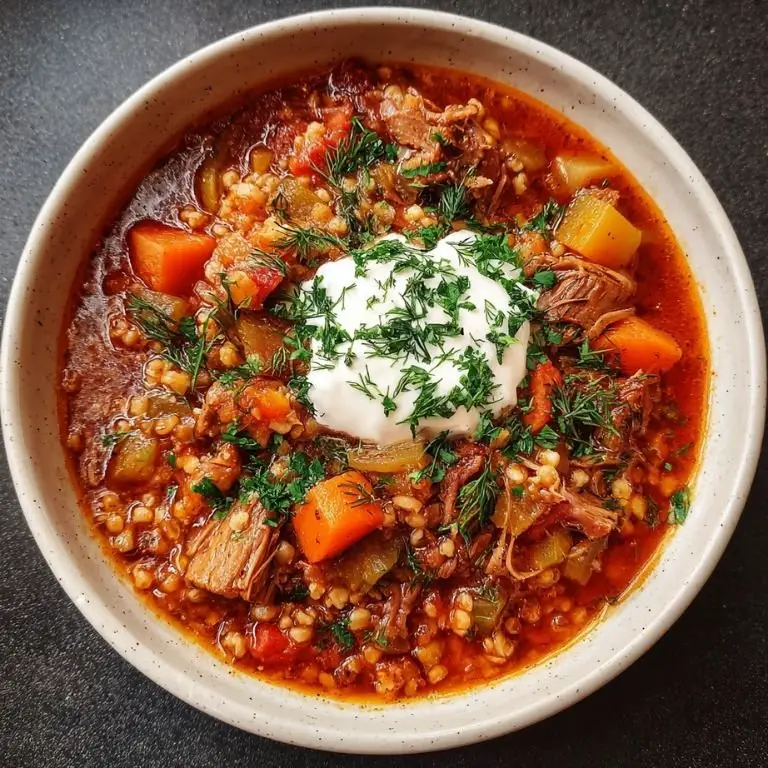
There’s something incredibly comforting about a bowl of thick, savory stew simmered low and slow, especially when the weather turns cold. This Hearty Ukrainian Pork Stew with Buckwheat Groats is more than just a warm meal—it’s a culinary journey into the heart of Eastern Europe. With deep flavors of paprika pork, caramelized onions, tender pork shoulder, and the nutty bite of buckwheat groats, this dish pays homage to generations of Ukrainian recipes passed down through the ages. It’s not just a traditional pork stew recipe—it’s a warm hug in a bowl that brings together the best of Slavic recipes, perfect for anyone who appreciates the rich tapestry of Ukraine food, Russian meals, and Lithuanian food traditions.
Hearty Ukrainian Pork Stew with Buckwheat Groats
Prep Time 25 minutes mins
Cook Time 2 hours hrs
Total Time 2 hours hrs 25 minutes mins
Course Main Course
Cuisine Ukrainian
Dutch oven or heavy-bottomed pot This helps distribute heat evenly and allows the stew to simmer gently for a long period. A cast iron Dutch oven is ideal.
Chef’s Knife For cutting pork and chopping vegetables.
Cutting board Preferably wood or plastic, dedicated to meat prep.
Measuring cups and spoons Precision helps with flavor balance.
Wooden spoon To stir and scrape up the browned bits from the bottom of the pot.
Ladle For serving the stew neatly and generously.
For the Stew
- 2 pounds pork shoulder or pork butt trimmed and cut into 1.5-inch cubes
- Salt and black pepper to taste
- 2 tablespoons vegetable oil or sunflower oil
- 1 large onion finely chopped
- 3 cloves garlic minced
- 2 carrots peeled and chopped
- 2 stalks celery chopped
- 1 tablespoon sweet paprika Hungarian or smoked, if preferred
- 1 teaspoon caraway seeds optional, but traditional
- 1 teaspoon dried marjoram or thyme
- 2 tablespoons tomato paste
- 1/2 cup dry white wine or apple cider vinegar diluted with water
- 3 cups chicken or pork broth preferably homemade or low-sodium
- 1 cup diced tomatoes canned or fresh
- 1 bay leaf
- 1 cup raw buckwheat groats kasha, rinsed
- 2 tablespoons fresh dill or parsley chopped (for garnish)
Optional (but highly recommended)
- 1/2 cup finely shredded green or fermented sauerkraut adds a tangy depth
- Sour cream for serving
Prep the Pork
Pat the pork cubes dry with paper towels and season generously with salt and pepper. This step helps achieve that beautiful golden crust when browning.
Brown the Meat
Heat the oil in your Dutch oven over medium-high heat. In batches, sear the pork cubes until browned on all sides. Don’t overcrowd the pan—good browning means better flavor. Remove the pork and set it aside.
Build the Flavor Base
In the same pot, add the chopped onion, carrots, and celery. Cook over medium heat until softened, about 6–8 minutes. Add the garlic, paprika, caraway seeds, and marjoram. Stir constantly for 1 minute to bloom the spices.
Deglaze the Pot
Add the tomato paste and stir until it darkens slightly—about 2 minutes. Pour in the wine (or diluted vinegar) and scrape up the browned bits stuck to the bottom of the pot.
Simmer the Stew
Return the browned pork to the pot. Add the broth, tomatoes, bay leaf, and sauerkraut (if using). Bring to a boil, then reduce heat to low and cover. Simmer gently for 1.5 hours, or until the pork is fork-tender.
Cook the Buckwheat
Rinse the buckwheat groats under cold water. Add them to the pot after the pork is tender and cook uncovered for 15–20 more minutes, or until the buckwheat is cooked and the stew has thickened slightly.
Final Touch
Taste and adjust seasoning with salt and pepper. Stir in chopped dill or parsley. Remove bay leaf before serving.
Pairings
This stew is incredibly versatile when it comes to accompaniments. Here are some traditional and modern ideas:
- Ukrainian perogies: A classic combination. Try soft potato-and-cheese-filled perogies as a side dish—perfect for soaking up the rich stew juices.
- Dark rye bread or sourdough: Slather with butter and dip into the stew for a hearty meal that evokes the best of Russian recipes traditional in feel.
- Pickled vegetables: Cucumber, beet, or cabbage pickles add a tangy counterpoint to the richness of the pork.
- Sour cream: A dollop of sour cream on top of the stew adds coolness and creaminess that blends beautifully with paprika and dill.
- Polish soup recipes: Serve alongside a small cup of Zurek (sour rye soup) or a light beet broth to create a Slavic recipes sampler evening.
- Eastern European-style lager or kvass: These light but yeasty beverages complement the earthy flavors of the stew.
FAQs
1. What cut of pork works best for this stew?
For the most flavorful and tender results, use pork shoulder or pork butt. These cuts have enough fat and connective tissue to break down beautifully during the long simmer. Lean cuts like pork loin will become dry.
2. Can I substitute the buckwheat groats?
Yes. While buckwheat groats are traditional in many ukrainian recipes, you could substitute with barley, farro, or even diced potatoes. However, buckwheat adds a uniquely nutty flavor and satisfying chew that complements the pork well.
3. Is this stew freezer-friendly?
Absolutely. This ukrainian pork stew freezes beautifully. Just cool completely, portion into airtight containers, and freeze for up to 3 months. Reheat gently over low heat to avoid drying out the meat.
4. Can I make this dish vegetarian?
If you're looking for a meatless twist on hearty stews, you can swap the pork for hearty mushrooms (like king oyster or portobello) and use vegetable broth. It becomes reminiscent of certain sauerkraut soup recipes or ukrainian borscht soup recipe variations.
5. What’s the difference between this and Russian or Polish stews?
While similar in spirit to other pork stew recipes from Eastern Europe, Ukrainian versions often include buckwheat, paprika, and fresh dill. Russian or Lithuanian food traditions may lean more on sour cream, mushrooms, or cabbage, while polish soup recipes might favor tangier flavors from fermented rye or pickled vegetables.