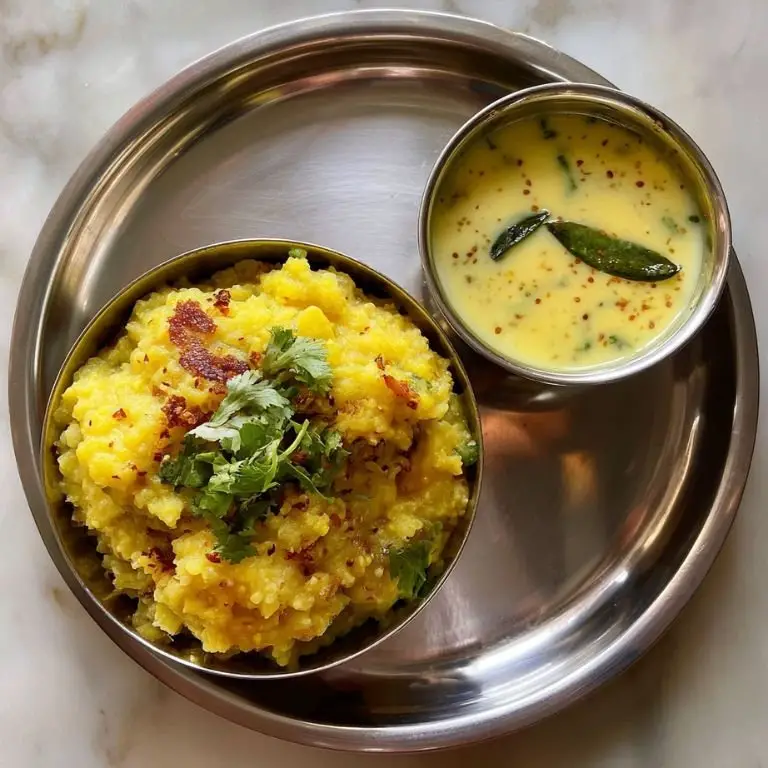
There’s nothing quite like a warm bowl of Gujarati khichdi paired with a tangy, spiced kadhi—especially when you're craving comfort, simplicity, and soul-satisfying flavor. This classic dish isn’t just food; it’s nostalgia on a plate for anyone who grew up with the flavors of western India. Whether you’re feeling under the weather, need a light dinner option, or want a humble yet hearty meal that brings your family together, this combo hits every note. The khichdi is soft, mellow, and buttery thanks to moong dal and rice, while the kadhi cuts through with its yogurt-based tang, seasoned with a tempering of spices that bring it alive. It’s a dish that’s been perfected over generations—and today, we’re diving into a version that honors its roots while being easy enough for any home cook.
Gujarati Khichdi with Kadhi
Prep Time 15 minutes mins
Cook Time 30 minutes mins
Total Time 45 minutes mins
Course Main Course
Cuisine Indian
Heavy-bottomed saucepan or pressure cooker For cooking the khichdi to the right consistency. A pressure cooker will save time, but a saucepan works if you're okay with a longer cook time.
Whisk or hand blender To blend the kadhi mixture until smooth.
Tempering ladle or small frying pan Essential for making the tempering that goes into the kadhi.
Ladle and mixing bowls For transferring and mixing your ingredients.
For the Gujarati Khichdi
- 1 cup short-grain rice like sona masoori or surti kolam
- ½ cup yellow moong dal split and husked
- ¼ teaspoon turmeric powder
- 1 teaspoon salt or to taste
- 4 cups water
- 1 tablespoon ghee
Optional: ¼ teaspoon asafoetida (hing) for flavor and digestion
For the Gujarati Kadhi
- 1 cup plain yogurt not Greek-style
- 2 tablespoons besan gram flour
- 2 cups water
- ½ teaspoon turmeric powder
- 1 tablespoon jaggery or sugar
- 1 teaspoon grated ginger
- Salt to taste
Tempering for Kadhi
- 1 tablespoon ghee or oil
- 1 teaspoon mustard seeds
- 1 teaspoon cumin seeds
- 2 dried red chilies
- 8 –10 curry leaves
- 1 –2 cloves
- Pinch of asafoetida
Step 1: Prepare the Dal-Rice Mixture
Start by washing the rice and moong dal together in several changes of water until the water runs clear. This not only removes any dust or grit but also helps the grains cook more evenly. Once washed, soak them together for about 10–15 minutes while you prep the kadhi ingredients.
Step 2: Cook the Khichdi
In a pressure cooker or deep pan, combine the soaked dal and rice with turmeric, salt, and water. Add a spoonful of ghee for richness and flavor. If you're using a pressure cooker, cook on medium heat for about 3 whistles. For stovetop cooking, cover and simmer for around 30 minutes, stirring occasionally to prevent sticking.
The consistency of Gujarati khichdi is soft and porridge-like—not dry. If it thickens too much upon resting, you can always add a little hot water while reheating.
Step 3: Whisk the Kadhi Base
In a bowl, whisk together the yogurt, besan, turmeric, jaggery, ginger, and salt. Gradually add water while whisking to ensure the mixture is lump-free and smooth. This is crucial, as lumpy kadhi is a deal-breaker in most Gujarati households.
Step 4: Cook the Kadhi
Pour the yogurt mixture into a saucepan and bring it to a gentle boil on low-medium heat. Stir constantly during this step to prevent curdling. Simmer the kadhi for about 10–15 minutes until slightly thickened and cooked through. You’ll notice it develop a creamy texture and a rich yellow hue.
Step 5: Temper the Kadhi
In a small pan, heat ghee or oil. Add mustard seeds and let them splutter. Then add cumin seeds, dried red chilies, cloves, curry leaves, and asafoetida. Pour this sizzling tempering directly into the simmering kadhi. Stir it in and turn off the heat.
Step 6: Serve Hot
Ladle out generous portions of khichdi into bowls or plates and top with a dollop of ghee. Serve the kadhi on the side in a small bowl or pour it right over the khichdi, depending on your preference. Garnish with chopped coriander if you like a fresh note.
Perfect Pairings
While khichdi and kadhi can be a meal on their own, a few thoughtful additions can take things to another level:
- Papad: Roasted or fried papad adds the perfect crunch against the soft khichdi texture.
- Pickles: A tangy mango or lime pickle can cut through the mellow flavor of khichdi beautifully.
- Fried potatoes or bhindi (okra): A simple dry sabzi makes a great side dish if you're serving guests.
- Chaas (buttermilk): Lightly spiced with cumin and mint, chaas is a classic Gujarati drink that balances the meal.
- Ghee-roasted peanuts or dry coconut chutney: These pair well especially if you want to give your khichdi a slight masala twist.
FAQs
1. Can I use any other dal besides moong dal?
Moong dal is preferred for its lightness and quick cooking, making it ideal for a comforting khichdi. However, you can experiment with toor dal or masoor dal. Just keep in mind that the flavor and texture will vary. If you're exploring other dal khichdi recipes restaurant style, toor dal is often used for a richer taste.
2. Is this the same as Daal Khichdi Recipe found in other regions of India?
Not quite. While most khichadi recipes Indian style share a common base of rice and dal, Gujarati khichdi is usually much simpler and gentler in flavor. It doesn’t use garlic or onions, and it's typically paired with kadhi, making it unique.
3. How do I make a Masala Khichdi Recipe Indian style instead of the plain one?
For a masala version, you can sauté cumin seeds, onions, tomatoes, and some green chilies before adding the soaked dal and rice. Add garam masala or pav bhaji masala for a spicier kick. This is closer to a masala khichdi recipe you might find in Indian households when they want something more indulgent.
4. Can I make this with brown rice or millet for a healthier option?
Absolutely. Many people use broken wheat (daliya khichdi) or even millets for a more fiber-rich version. Adjust water and cooking time accordingly, as these grains take longer to soften than white rice.
5. What’s the difference between this and Khichu Recipe or Khir Recipe?
Khichu is actually a dough-like snack made from rice flour and spices, often steamed and topped with oil and masala—it’s completely different in texture and taste. Khir (or kheer) is a sweet dish made with milk and rice or vermicelli. They all share roots in Gujarati recipes but serve entirely different cravings.