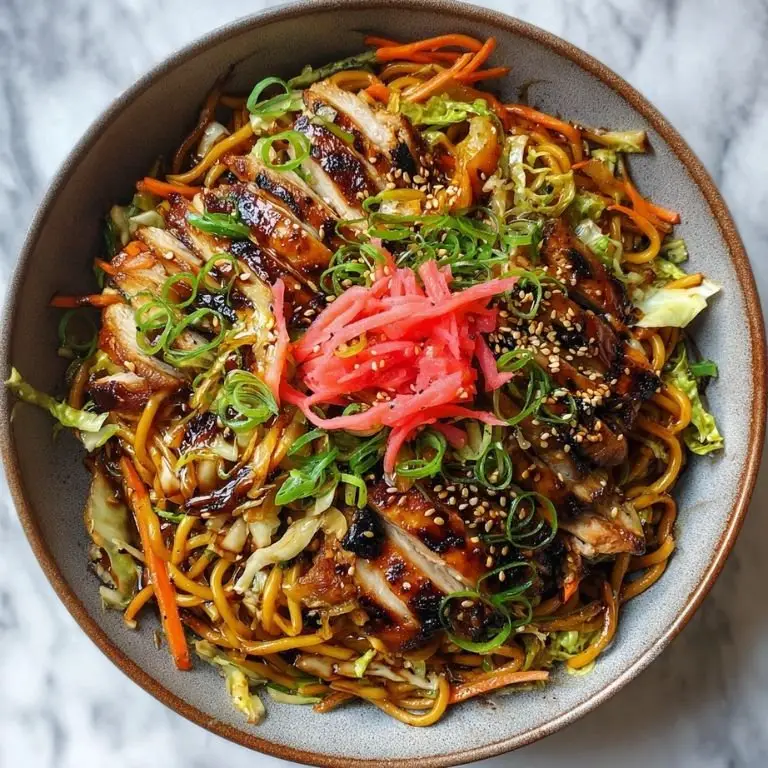
If you're craving something smoky, savory, and packed with both flavor and texture, this Grilled BBQ Pork Yakisoba with Cabbage and Ginger is about to become your new go-to dish. It’s a vibrant fusion that brings together the boldness of Korean BBQ pork with the comforting, chewy appeal of classic Japanese stir fry noodles. Think sizzling grilled pork glazed in a rich, sweet-savory barbecue sauce, tossed into a hot pan of yakisoba noodles with tender cabbage, sharp scallions, and the unmistakable zing of pickled ginger. This is not just dinner—it’s a full-on flavor explosion inspired by the best of Japanese street food and Korean pork recipes.
Grilled BBQ Pork Yakisoba with Cabbage and Ginger
Prep Time 25 minutes mins
Cook Time 20 minutes mins
Total Time 45 minutes mins
Course Main Course
Cuisine Japanese
Grill or grill pan To get that smoky, charred flavor on the pork. If you don't have a grill, a heavy cast-iron skillet or a broiler works just fine.
Wok or large skillet For stir-frying the noodles and vegetables. A non-stick pan can also be used, but a wok distributes heat better.
Mixing bowls For marinating pork and mixing sauces.
Tongs and spatula For flipping meat on the grill and tossing noodles.
Knife and Cutting Board For prepping the vegetables and slicing the pork.
For the Grilled BBQ Pork
- 1 lb pork shoulder or pork belly thinly sliced
- 2 tbsp soy sauce
- 1 tbsp gochujang Korean chili paste
- 1 tbsp hoisin sauce
- 1 tbsp brown sugar
- 1 tbsp rice vinegar
- 1 tsp sesame oil
- 2 cloves garlic minced
- 1 tsp fresh ginger grated
- Salt and pepper to taste
For the Yakisoba
- 12 oz yakisoba noodles pre-cooked or frozen; fresh if available
- 1½ cups green cabbage thinly sliced
- 1 medium carrot julienned
- ½ yellow onion thinly sliced
- 2 scallions chopped (whites and greens separated)
- 1 tbsp neutral oil vegetable or canola
- 1 tsp sesame oil for finishing
Yakisoba Sauce (homemade)
- 2 tbsp Worcestershire sauce
- 1 tbsp oyster sauce
- 1 tbsp ketchup
- 1 tsp soy sauce
- ½ tsp sugar
Garnishes
- Pickled ginger beni shoga, for topping
- Toasted sesame seeds
- Extra chopped scallions
Optional: Shichimi togarashi (Japanese seven-spice powder) for heat
Marinate the Pork
In a bowl, combine soy sauce, gochujang, hoisin sauce, brown sugar, rice vinegar, sesame oil, minced garlic, and grated ginger. Add the sliced pork shoulder or belly, tossing to coat every piece well. Cover and marinate for at least 20 minutes (up to overnight in the fridge for deeper flavor).
Grill the BBQ Pork
Preheat your grill or grill pan over medium-high heat. Lightly oil the grates or pan. Grill the marinated pork in batches for about 2-3 minutes per side or until nicely charred and cooked through. Remove from heat and let rest. Slice into bite-sized strips if needed. The smoky glaze will remind you of both korean bbq pork and chinese food bbq pork, with caramelized edges and a juicy interior.
Prepare the Yakisoba Sauce
In a small bowl, whisk together Worcestershire sauce, oyster sauce, ketchup, soy sauce, and sugar. Set aside.
Prep the Noodles
If using pre-cooked yakisoba noodles, loosen them up by running under warm water and draining thoroughly. If using frozen or fresh, prepare according to package instructions and set aside.
Stir-Fry the Vegetables
Heat your wok or large skillet over medium-high heat. Add neutral oil and sauté the white parts of the scallions, onions, and carrots for 2-3 minutes. Add the cabbage and stir-fry for another 2 minutes, just until the cabbage softens but still retains a bit of crunch.
Add Noodles and Sauce
Toss in the yakisoba noodles, pouring the prepared sauce evenly over them. Stir-fry everything together for 2-3 minutes, allowing the noodles to soak up the flavor and caramelize slightly.
Combine with Grilled Pork
Add the grilled BBQ pork strips into the wok. Toss well to combine with the noodles and vegetables. Drizzle a bit of sesame oil over the top and mix again.
Plate and Garnish
Serve hot, garnished with pickled ginger, toasted sesame seeds, and chopped green scallions. A sprinkle of shichimi togarashi adds a welcome kick.
Pork shoulder is ideal because it’s well-marbled and stays juicy when grilled. Thinly sliced pork belly is also excellent, especially if you enjoy richer bites similar to fried pork belly dishes.
You can, but the flavor will shift. Pork better captures the spirit of both korean bbq pork recipes and traditional yakisoba recipe styles. If substituting, stick with boneless chicken thighs or thinly sliced beef ribeye.
Yakisoba is a Japanese dish with Chinese origins, typically made with stir-fried wheat noodles. This fusion recipe borrows flavors from korean pork recipes to create something entirely new while still honoring its japanese street food roots.
Grilling adds incredible flavor, but you can pan-fry or broil it instead. If you’re short on time, just sear the pork in a hot skillet and glaze it with extra sauce near the end of cooking.
Use authentic yakisoba noodles if you can find them. They’re made from wheat flour and have a springy, chewy texture perfect for stir-frying. If unavailable, you can substitute Chinese lo mein noodles or even ramen in a pinch.