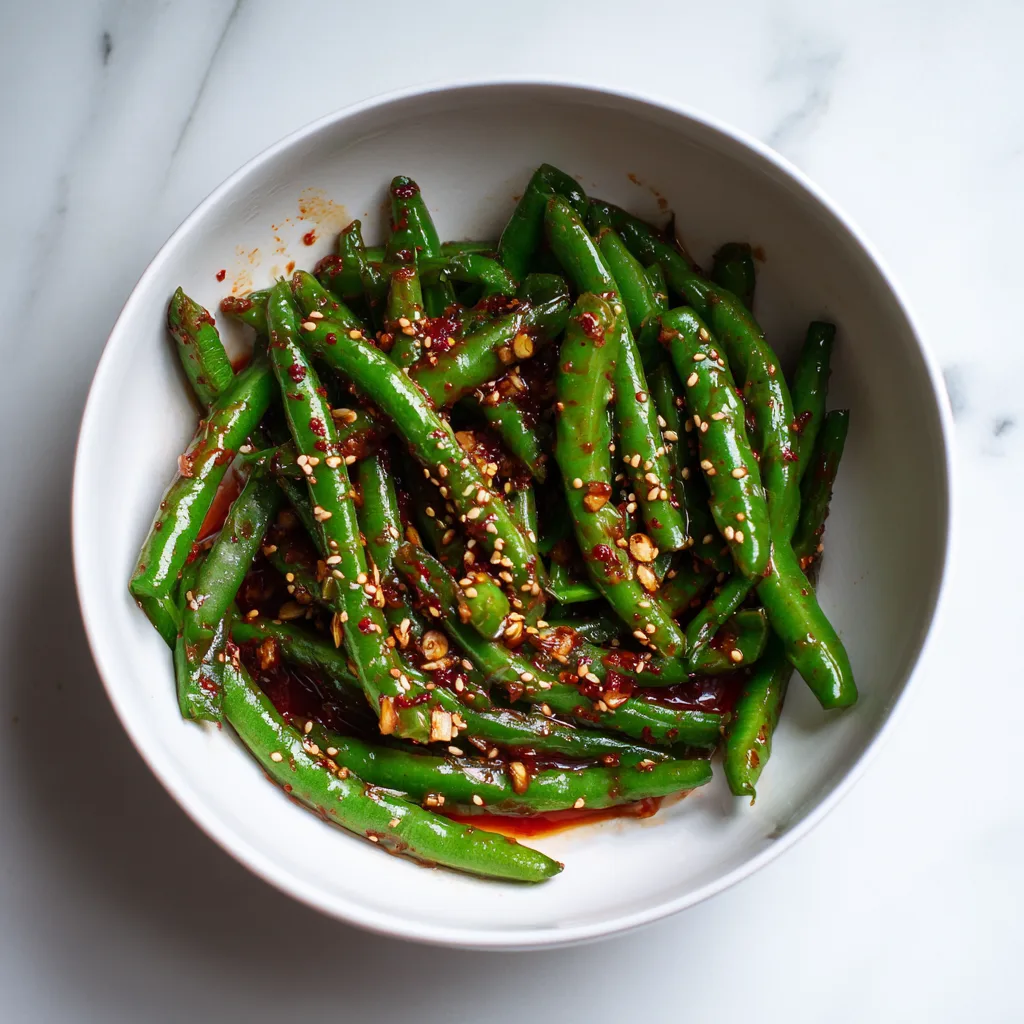
If you want a korean green beans recipe that hits the sweet-spicy-savory trifecta without turning dinner into a whole production, this is the one I make on repeat. The green beans stay snappy, the garlic gets fragrant, and then everything gets lacquered in a gochujang glaze that's equal parts spicy warmth and sticky umami. It tastes like something you'd order as a banchan-style side, but it's weeknight-friendly and made with ingredients you can actually keep in the fridge. Bonus: it's one of those "just one more bite" vegetables that mysteriously disappear straight from the pan.
Korean-Style Green Beans with Gochujang Glaze (Sweet, Spicy, and Glossy)
Crisp-tender green beans tossed in a glossy gochujang-garlic glaze with sesame and scallions.
Prep Time 15 minutes mins
Cook Time 15 minutes mins
Total Time 30 minutes mins
Course Side Dish
Cuisine Korean
Large skillet or wok 12-inch stainless steel, cast iron, or carbon steel is ideal for fast stir-frying; a nonstick skillet works too, but you may need an extra minute to reduce the glaze
Medium pot for blanching the beans; if you prefer, you can skip blanching and do a longer stir-fry with a splash of water, but blanching gives the brightest color and snappiest texture
Colander for draining the beans; a spider strainer also works and makes it easy to scoop beans directly into an ice bath
large bowl with ice water optional but strongly recommended to stop the cooking fast and keep the beans vivid green; if you're in a hurry, rinse under very cold running water
Small bowl for mixing the gochujang glaze so it hits the pan as a smooth sauce instead of clumps
Tongs makes tossing the beans in the glaze easier than a spoon; a flexible fish spatula is also great in a wok
Microplane or fine grater optional for grating garlic and ginger into a super-smooth glaze; mincing with a knife works perfectly
For the green beans
- 1 pound green beans trimmed (use haricots verts for extra tenderness, or regular green beans for more crunch)
- 1 tablespoon kosher salt for blanching water (if using fine salt, reduce slightly)
- 1 tablespoon neutral oil such as avocado, grapeseed, or canola; sesame oil burns too easily for the initial stir-fry
For the gochujang glaze
- 2 tablespoon gochujang korean fermented chile paste (choose mild or hot based on your heat tolerance; if it's very thick, warm it briefly so it mixes smoothly)
- 1 tablespoon soy sauce or tamari for gluten-free; if using low-sodium soy sauce, you may want an extra pinch of salt at the end
- 1 tablespoon rice vinegar brightens the glaze; apple cider vinegar works in a pinch but will taste fruitier
- 1 tablespoon honey or brown sugar for a vegan option; maple syrup also works and adds a mellow sweetness
- 1 tablespoon water helps the glaze loosen and coat; add an extra splash if you want it less sticky
- 2 teaspoon toasted sesame oil added for aroma at the end; if you love sesame, you can add another teaspoon
- 3 clove garlic minced or finely grated (this is a garlicky green beans stir fry, so don't be shy)
- 1 teaspoon fresh ginger finely grated (optional but great for a clean, peppery lift)
To finish (highly recommended)
- 1 tablespoon toasted sesame seed for crunch and nutty flavor; black sesame seeds are extra pretty here
- 2 scallion scallion thinly sliced (both the green and pale parts)
- 1 teaspoon gochugaru optional for extra heat and a true korean chile sparkle
- 1 teaspoon fresh lime juice optional, for a final pop of acidity if your gochujang is more sweet than tangy
Prep
Trim the green beans: line them up and slice off the stem ends (or snap by hand). If the beans are very long or you're serving them as a neat banchan-style side, cut them into 2" pieces so they're easier to grab with chopsticks.
Mix the glaze in a small bowl: whisk together gochujang, soy sauce, rice vinegar, honey, and water until smooth. Stir in the toasted sesame oil (or hold it back and add at the end for maximum aroma). Set the bowl next to the stove so you can add it quickly.
Mince or grate the garlic (and ginger, if using). Keeping the aromatics very fine helps them melt into the glaze instead of turning into little chunks that can burn.
Blanch the beans (fast, but worth it)
Bring a medium pot of water to a full boil and add the kosher salt. Drop in the green beans and blanch until they turn bright green and are crisp-tender, about 2 minutes. You're not trying to fully cook them here; you're setting color and jump-starting tenderness.
Drain immediately, then transfer the beans to a bowl of ice water for 1 minute to stop the cooking. Drain well. If the beans are wet, the glaze can thin out and steam instead of cling, so shake the colander and pat lightly with a clean towel if needed.
Stir-fry and glaze
Heat a large skillet or wok over medium-high heat until it feels hot when you hover your hand over it. Add the neutral oil and swirl to coat.
Add the garlic (and ginger) and stir constantly for about 15 seconds, just until fragrant. If it starts browning immediately, your heat is too high; lower it slightly so the garlic doesn't turn bitter.
Add the drained green beans. Toss and stir-fry for about 2 minutes so the beans pick up garlicky flavor and a few blistered spots. You're aiming for crisp edges, not shriveled beans.
Pour in the gochujang glaze and toss continuously so every bean gets coated. Cook, stirring, until the sauce reduces and looks glossy and sticky on the beans, about 2 minutes. If the pan looks dry before the glaze is glossy, add 1 tablespoon water and keep tossing.
Turn off the heat. Taste a bean and adjust: add a small splash of rice vinegar if you want more tang, a pinch of salt if it tastes flat, or a teaspoon honey if you want it sweeter. If you held back the toasted sesame oil, stir it in now for the best aroma.
Finish and serve
Transfer the beans to a serving plate. Sprinkle with toasted sesame seed and scallion. If you like heat, dust with gochugaru. If you want a sharper pop (especially if your gochujang is on the sweeter side), add a tiny squeeze of lime juice right before serving.
Serve warm, room temperature, or slightly chilled. The glaze thickens as it cools, turning these into a very snackable, asian inspired green beans side that holds up well on a dinner spread.
Regular green beans are perfect if you like a little more crunch and structure. Haricots verts (the thinner French-style beans) cook faster and come out more tender. Either works; just keep blanching brief and stir-fry hot so they stay crisp-tender.
You can skip it, but blanching gives you that bright-green color and a snappy texture without overcooking in the pan. If you skip blanching, stir-fry the raw beans in oil for 4 minutes, then add 2 tablespoon water, cover for 2 minutes to steam, uncover, then add the glaze and reduce.
It's a medium, warm heat for most brands. To reduce heat, use 1 tablespoon gochujang and add 1 extra tablespoon honey plus 1 teaspoon soy sauce. To increase heat, add 1 teaspoon gochugaru or a pinch of cayenne, or choose a hotter gochujang.
Keep the pan hot, avoid overcrowding, and don't cook them too long once the glaze is in. Blanching first helps a lot; after that, you only need a quick toss in the pan (about 2 minutes) and a short glaze reduction (about 2 minutes). Also, drain the beans well so they stir-fry instead of steam.
Chicken thighs (boneless or bone-in) pair best because they stay juicy and stand up to gochujang's intensity. Chicken breast works too, but it's leaner, so marinate it briefly and cook carefully to avoid drying out. For red meat, thin-sliced bulgogi-style beef is classic, and grilled pork belly is incredible with the sweet-spicy glaze.