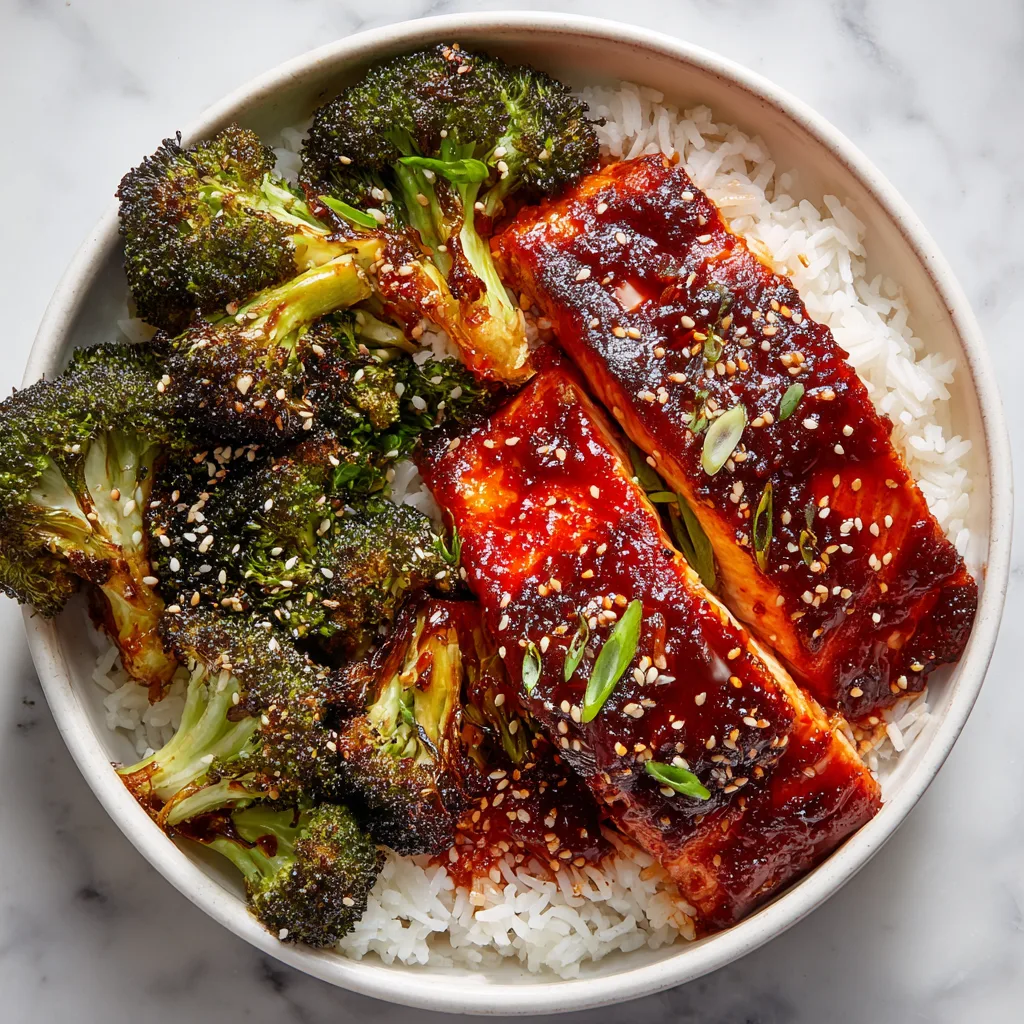
This gochujang glazed salmon is my weeknight "look what I made" dinner: shiny, spicy-sweet, and way easier than it looks. You whisk up a quick pantry glaze, brush it onto salmon, and let the oven do the work while broccoli roasts until the edges go crisp. I'm calling it a gojuchang recipe too, because that's how a lot of people search for it (the spelling gets creative), and honestly the vibe is the same: deep chile heat, a little funk, and that addictive sticky finish that makes you keep picking at the pan.
Sticky-Savory Gochujang Glazed Salmon with Sesame Broccoli
Roasted salmon with a glossy gochujang-honey-soy glaze, served with crisp-edged sesame broccoli and a bright squeeze of lemon.
Prep Time 15 minutes mins
Cook Time 15 minutes mins
Total Time 30 minutes mins
Course Main Dish
Cuisine Korean
rimmed sheet pan a standard half-sheet pan is ideal; a quarter-sheet works if you cook in batches, or use two pans so the broccoli actually roasts instead of steaming
Parchment paper or aluminum foil parchment makes cleanup easiest and helps prevent sticking; foil is fine, just lightly oil it
Small Mixing Bowl for the glaze; a 2-cup bowl is plenty, or use a large measuring cup with a spout for easy pouring
Whisk or Fork a whisk helps the gochujang dissolve quickly; a fork works if you press and stir
Microplane or fine grater for garlic and ginger; alternatively mince with a knife, or use 1 teaspoon jarred ginger-garlic paste
Instant-read thermometer (optional) the easiest way to avoid overcooked salmon; you can also use a fork-flake test if you don't have one
For the gochujang glaze
- 3 tablespoon gochujang (korean fermented chile paste; if you only have a "gojuchang"-labeled paste from an online market, it's usually the same thing)
- 2 tablespoon honey or substitute with maple syrup or brown sugar
- 1 tablespoon soy sauce use tamari for gluten-free
- 2 teaspoon toasted sesame oil a little goes a long way; don't swap with regular sesame oil unless that's all you have
- 1 teaspoon rice vinegar or substitute with lime juice or apple cider vinegar
- 2 teaspoon garlic finely grated or minced (about 2 clove)
- 1 teaspoon fresh ginger finely grated; optional but it makes the glaze taste "awake"
- 2 tablespoon water to thin for brushing; add 1 tablespoon more if your gochujang is very thick
For the salmon
- 4 salmon fillet skin-on or skinless, about 6 ounce each; center-cut fillets cook the most evenly
- 1 teaspoon kosher salt use 3/4 teaspoon if using fine salt
- ½ teaspoon black pepper freshly ground if possible
For the sesame broccoli
- 1 ½ pound broccoli cut into florets; peel and slice the stems too, they roast beautifully
- 2 tablespoon neutral oil avocado, grapeseed, or canola
- ½ teaspoon kosher salt add more to taste after roasting
- 1 tablespoon soy sauce added after roasting so it doesn't burn
- 1 teaspoon toasted sesame oil for finishing
- 1 tablespoon sesame seed white or black; lightly crush for extra aroma
- ¼ teaspoon gochugaru (optional) for a little extra sparkle of heat; handy if you're into gochugaru recipes
For serving (optional but recommended)
- 3 cup cooked rice short-grain, jasmine, or brown rice
- 2 tablespoon scallion thinly sliced
- 1 lemon cut into wedges; the acidity balances the glaze
Prep
Heat the oven to 425°F and line a rimmed sheet pan with parchment paper (or foil, lightly oiled). High heat is what gives you crisp broccoli edges without drying out the salmon.
In a small bowl, whisk together the gochujang, honey, soy sauce, toasted sesame oil, rice vinegar, garlic, ginger, and water until smooth and glossy. If the glaze feels like paste instead of sauce, whisk in 1 tablespoon more water so it brushes easily.
Pat the salmon very dry with paper towels. This matters: moisture on the surface can make the glaze slide off and steam instead of lacquer.
Roast the broccoli
Add broccoli to the sheet pan and toss with neutral oil and kosher salt. Spread it into a single layer with some breathing room between florets. If the pan looks crowded, use a second pan or roast in two batches.
Roast for 8 minutes. You're looking for bright green florets with the first hints of browning on the tips.
Add salmon and glaze
While the broccoli starts roasting, season the salmon with kosher salt and black pepper. Nestle the fillets onto the pan after the broccoli's 8-minute head start (push florets to the side to make space).
Brush the tops and sides of the salmon with about half of the gochujang glaze. Don't drown it; a thin, even coat sticks better than a thick layer.
Return the pan to the oven and roast for 7 minutes.
Finish and serve
Pull the pan out and brush the salmon with the remaining glaze for that fresh, shiny finish. If you want deeper caramelization, switch the oven to broil and broil for 2 minutes, watching closely so the honey doesn't scorch.
Check doneness: the salmon should flake easily with a fork and look opaque around the edges with a slightly translucent center if you like it juicy. For a thermometer, aim for 125°F in the thickest part for medium (carryover heat will finish it).
Immediately drizzle the broccoli with soy sauce and toasted sesame oil, then toss right on the hot pan so it clings. Sprinkle with sesame seed and gochugaru (if using).
Serve the salmon and broccoli over rice, shower with scallion, and finish with a big squeeze of lemon. Any extra glaze left in the bowl makes a killer drizzle for the rice.
Here's how I like to build a full plate around this gochujang glazed salmon, without turning dinner into a huge project:
If you're exploring korean recipes authentic-style, keep the core idea (fermented chile + sweetness + sesame) but adjust the side dishes to what you have: banchan from the fridge, leftover rice, even a handful of herbs will make it feel intentional.
Center-cut salmon fillets that are about 1 inch thick cook the most evenly. Skin-on fillets are great because the skin helps protect the fish from overcooking and can get lightly crisp against the pan. Skinless works too; just be extra sure to line the pan well so the glaze doesn't stick.
It's gochujang (the Korean fermented chile paste), but "gojuchang recipe" is a super common alternate spelling online. If your jar is labeled strangely, check the ingredients: you want a red chile paste made with fermented soybeans and glutinous rice (or rice syrup). Flavor-wise, it should be spicy, slightly sweet, and deeply savory.
Yes. Use boneless, skinless chicken thigh for the juiciest result. Roast at the same temperature, but cook until the thickest piece hits 175°F. Chicken breast can work, but it dries out faster; pull it at 165°F and consider slicing it before glazing the second time so more sauce clings.
With standard gochujang, it's a medium, warming heat (more tingle than fire). To make it milder, use 2 tablespoons gochujang and add 1 extra tablespoon honey. To make it hotter, add 1/2 teaspoon gochugaru to the glaze or finish with extra gochugaru on the broccoli.
Store salmon and broccoli in separate airtight containers for up to 2 days. Reheat gently so the salmon stays tender: cover and warm in a 300°F oven until heated through, or microwave at 50% power in short bursts. Add a fresh squeeze of lemon and a small drizzle of sesame oil to wake everything back up.