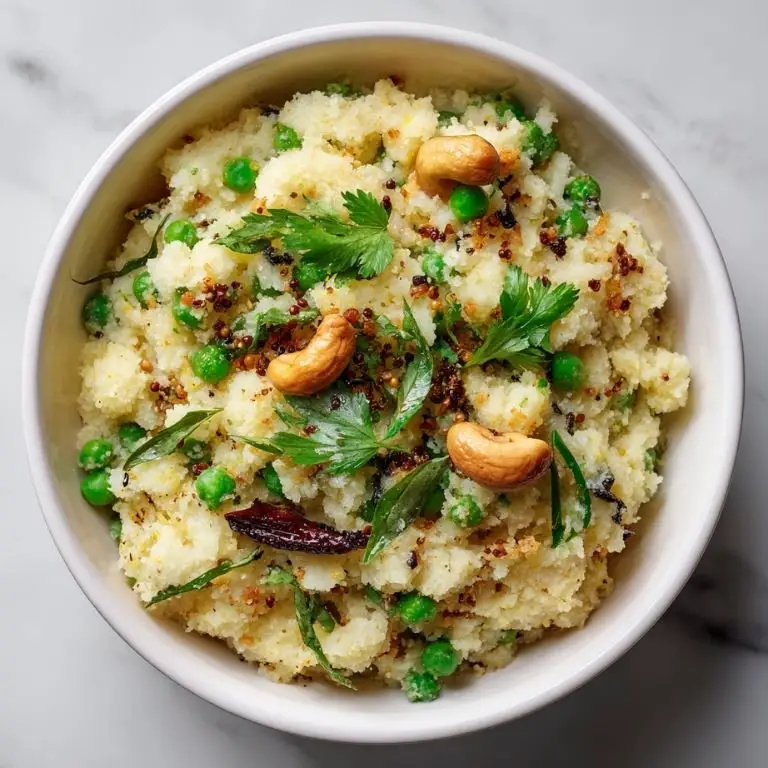
If you’re someone who enjoys quick, nourishing, and flavorful breakfasts, then Frozen Peas Upma might just become your new morning favorite. This South Indian comfort food is a savory, spiced semolina dish that’s quick to prepare and easy to customize. What makes this version extra special is the sweet, delicate pop of green peas in every bite—perfectly balancing the nuttiness of roasted semolina and the warmth of tempering spices. Whether you're reaching for frozen peas in your freezer or have fresh ones on hand, this dish is forgiving and flexible.
Frozen Peas Upma for Breakfast
Prep Time 10 minutes mins
Cook Time 15 minutes mins
Total Time 25 minutes mins
Course Breakfast, Snack
Cuisine Indian
Thick-bottomed pan or kadai This ensures even cooking and prevents burning. A nonstick or stainless steel sauté pan works too.
Wooden spoon or silicone spatula For stirring without damaging your cookware
Small frying pan or tadka pan Useful if you want to temper the spices separately and pour over at the end
Measuring cups and spoons Precision helps with water-to-semolina ratio
- 1 cup semolina rava/sooji – medium-grain preferred for fluffiness
- 1 cup frozen green peas – thawed slightly before use
- 1 small onion finely chopped
- 1 –2 green chilies slit or chopped (adjust heat to taste)
- 1 teaspoon mustard seeds
- 1 teaspoon urad dal optional
- 1 sprig curry leaves
- 1 teaspoon grated ginger
- 2 tablespoons oil or ghee
- 2 ½ cups water
- Salt to taste
- Juice of ½ lemon for brightness
- Fresh coriander leaves chopped for garnish
Optional additions
- A pinch of asafoetida hing for depth
- A handful of roasted cashews for crunch
- Grated coconut for texture and mild sweetness
Step 1: Dry Roast the Semolina
Place your pan over medium heat and dry roast the semolina until it turns light golden and emits a nutty aroma. Keep stirring to avoid burning. Once done, transfer to a bowl and set aside.
Step 2: Prepare the Tempering
In the same pan, heat oil or ghee. Add mustard seeds and let them splutter. Toss in urad dal, if using, and fry until golden. Add chopped onions, green chilies, grated ginger, curry leaves, and hing if you like. Sauté until the onions become soft and translucent.
Step 3: Add the Peas
Stir in the thawed frozen green peas. Sauté for 1–2 minutes until they're warm and slightly tender. This is a great moment to appreciate how to cook frozen peas properly—they just need minimal cooking to preserve their texture and sweetness.
Step 4: Add Water and Simmer
Pour in the water and add salt. Bring it to a boil. Once the water is bubbling, reduce the heat slightly and stir in the roasted semolina gradually, whisking or stirring constantly to prevent lumps from forming.
Step 5: Cook and Fluff
Let it cook for 3–5 minutes on low heat until the water is absorbed and the upma firms up. Turn off the heat and cover the pan for another 2–3 minutes to allow the steam to finish the cooking process.
Step 6: Finish and Serve
Fluff the upma with a fork, add lemon juice, and garnish with chopped coriander leaves and roasted cashews if desired. Serve hot.
Frozen peas upma is comforting on its own, but if you want to elevate it, try pairing it with:
If you're serving this upma as part of a brunch or lunch plate, you could add a side of sautéed snap peas or a snow peas recipe side dish for added crunch and nutrition.
Absolutely! A fresh peas recipe works beautifully here. Just blanch the fresh peas in boiling water for 2–3 minutes before adding them to the pan so they stay tender and sweet.
Medium-grain semolina (rava or sooji) is ideal for upma. Fine semolina cooks faster and can result in a mushier texture, while coarse varieties need more time and liquid.
Yes, you can experiment! Try blending in flavors by adding canned peas (rinse and drain first) or even mashed peas inspired by a mushy peas recipe for a unique twist. For a more robust version, field peas recipe or crowder peas recipe influences can be used by stewing them ahead of time.
Yes, this recipe is naturally vegan if you use oil instead of ghee. It’s already dairy-free and plant-based otherwise.
Upma is versatile! You can add grated carrots, chopped beans, bell peppers, or even a handful of cooked green split peas for extra protein. Just sauté them along with the onions and peas.