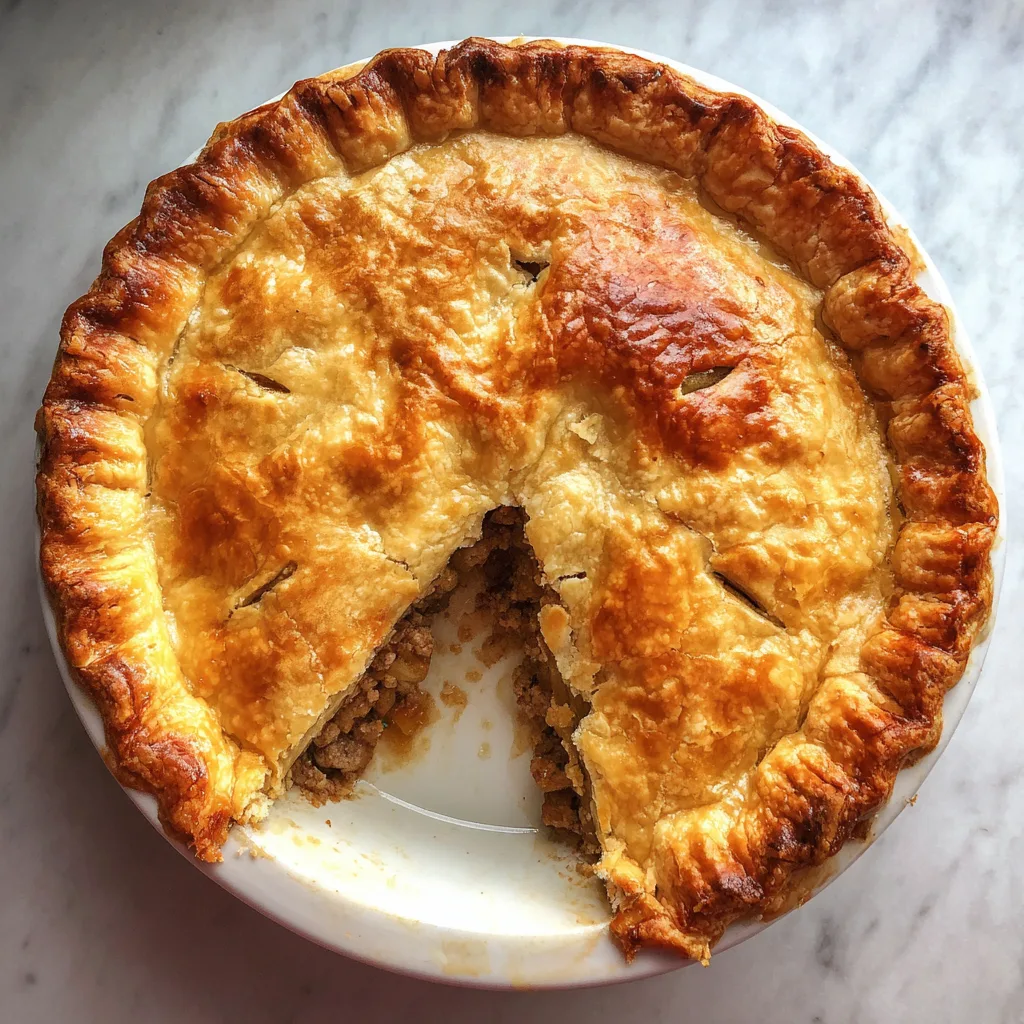
If you want a cozy, sliceable meat pie that feels like it belongs on a snowy table with a mug of something warm nearby, this traditional French-Canadian tourtière is the one I keep coming back to. The filling is rich but not heavy, with warm baking spices (yes, really) that make the pork and beef taste deeper and more savory, never sweet. I use a flaky, all-butter crust because tourtière deserves it, and I build the filling so it sets cleanly: a little potato helps bind, a splash of broth keeps it juicy, and a brief cool-down before baking keeps the crust from turning soggy. It works just as well for a comforting weeknight dinner as it does for a holiday table, arriving golden, fragrant, and ready to slice.
Traditional French-Canadian Tourtiere with a Flaky Crust (The Hungry Goddess Version)
A classic french canadian tourtiere recipe with spiced ground meat filling and a flaky all-butter double crust.
Prep Time 45 minutes mins
Cook Time 1 hour hr 15 minutes mins
Total Time 2 hours hrs
Course Main Dish
Cuisine Canadian
9-inch pie dish glass or metal works; metal browns the bottom crust a little faster, and a deep-dish plate is fine if that is what you have
Food processor or pastry cutter a food processor makes fast, flaky dough; a pastry cutter or two forks works too (just keep everything cold)
Large skillet 12-inch is ideal for browning meat without steaming; a dutch oven also works
Instant-read thermometer (optional) helpful if you want to confirm the center is hot and set; not required if you follow the visual cues
Sheet pan place the pie dish on it to catch drips and to make moving the pie in and out of the oven easier
Rolling Pin any basic rolling pin works; in a pinch, a clean wine bottle can stand in
For the flaky crust (double crust)
- 2.5 cup all-purpose flour spooned and leveled; you can swap 1/2 cup with pastry flour for slightly extra tenderness
- 1 tablespoon granulated sugar optional but nice for browning and balance
- 1 teaspoon kosher salt use fine salt if needed, but reduce to 3/4 teaspoon
- 1 cup unsalted butter cold and cubed; you can replace 1/4 cup with vegetable shortening for extra insurance against shrinkage
- 1 tablespoon apple cider vinegar helps tenderize the crust and makes rolling easier; white vinegar works too
- 1/2 cup ice water add only as much as needed to make the dough hold together when squeezed
For the tourtiere filling
- 1 tablespoon olive oil or use butter for extra richness
- 1 yellow onion finely chopped (the smaller you chop, the neater the slices)
- 3 clove garlic minced
- 1 pound ground pork preferably 80/20; shoulder is ideal for flavor
- 1/2 pound ground beef chuck is a good choice; you can swap with ground veal for a more classic blend
- 1 teaspoon kosher salt plus more to taste
- 1/2 teaspoon black pepper freshly ground if possible
- 1 teaspoon dried thyme or 1 tablespoon fresh thyme leaves
- 1/2 teaspoon dried sage optional but very good with pork
- 1/2 teaspoon ground cinnamon the signature warm note in a traditional french canadian meat pie
- 1/8 teaspoon ground clove strong, so keep it light; you can use allspice instead
- 1/4 teaspoon ground nutmeg optional, but it rounds out the spice profile
- 1 cup chicken broth low-sodium; beef broth also works
- 1 russet potato peeled and grated; this helps bind the filling so slices stay tidy
- 1 tablespoon all-purpose flour helps thicken the juices (you can use cornstarch, but reduce to 2 teaspoon)
- 2 tablespoon fresh parsley finely chopped; optional but brightens the filling
For assembly
- 1 egg beaten with 1 teaspoon water for egg wash
Make the crust
In a large bowl (or the bowl of a food processor), combine the flour, sugar, and salt. Add the cold butter cubes and cut them in until you have a mix of pea-size pieces plus some flatter shards. Those shards are your flaky layers, so do not overwork it.
Stir the vinegar into the ice water. Drizzle in about 3/4 of the liquid and mix just until the dough looks shaggy and holds together when you squeeze a handful. Add the remaining water only if needed; the goal is moist enough to hold, not wet enough to smear.
Divide the dough into two equal disks, wrap each tightly, and refrigerate for 30 minutes. This chill time is not just for convenience: it relaxes gluten (less shrinkage) and re-firms butter (more flake).
Cook the filling (and keep it sliceable)
Heat the olive oil in a large skillet over medium heat. Add the onion and cook until softened and translucent, about 6 minutes. Add the garlic and cook 30 seconds, just until fragrant.
Add the ground pork and ground beef. Break the meat up with a spoon and cook until no longer pink, about 8 minutes. If there is a lot of grease, spoon off excess so the filling tastes rich, not oily.
Season with the salt, pepper, thyme, sage, cinnamon, clove, and nutmeg. Stir for 30 seconds to toast the spices in the fat (this is where the "holiday" flavor really shows up).
Sprinkle in the flour and stir for 1 minute. Pour in the broth and scrape up any browned bits from the bottom of the pan. Stir in the grated potato. Simmer, stirring often, until the liquid thickens and the potato is tender, about 10 minutes.
Turn off the heat and stir in the parsley. Spread the filling onto a plate or shallow pan so it cools faster, then refrigerate for 15 minutes. Cooling is the not-so-secret trick to a crisp bottom crust: hot filling melts butter before it hits the oven.
Assemble and bake
Heat the oven to 400 F. Set a sheet pan on the middle rack to preheat (a hot surface helps the bottom crust start crisp).
Roll one dough disk into a 12-inch circle on a lightly floured surface. Transfer it to a 9-inch pie dish, letting the dough drape without stretching. Trim so you have about 1 inch of overhang.
Add the cooled meat filling and spread it into an even layer, pressing gently to remove big air pockets. This is the difference between a pie that slices cleanly and one that crumbles.
Roll the second dough disk into a 12-inch circle and lay it over the filling. Trim excess, then fold the overhang under itself and crimp. Cut 4 to 6 vents in the top so steam can escape.
Brush the top with egg wash. Place the pie dish on the preheated sheet pan. Bake for 15 minutes at 400 F, then reduce the oven to 350 F and bake for 60 minutes, until the crust is deep golden brown and the filling bubbles through the vents.
Cool for 20 minutes before slicing. Tourtiere needs that rest to set, and you will get cleaner wedges (and fewer filling avalanches).
A tourtiere recipe like this is hearty and warmly spiced, so you want sides that cut richness and sauces that add contrast.
If you are wondering how to make french canadian meat pie feel like a full spread, add a crunchy salad, something pickled, and a simple dessert like maple pudding or sugar pie. The pie does the heavy lifting; the rest just needs to keep you coming back for one more bite.
For the best tourtiere recipe texture, use ground pork (ideally from pork shoulder for flavor and a little fat) plus ground beef (chuck is great). This combo stays juicy and tastes classic. If you use very lean meat, the filling can eat dry, so add an extra splash of broth.
Yes. Many families make tourtiere with all ground pork. Keep the seasoning the same, and consider adding 1 extra tablespoon broth if your pork is lean.
You can, but choose dark meat if possible. Ground turkey thigh (or a mix that includes thigh) stays more tender than ground turkey breast, which can turn dry and slightly crumbly. If using poultry, bump the herbs (thyme and sage) slightly and do not skip the potato binder.
Cool the filling before assembling, bake the pie on a preheated sheet pan, and make sure the filling is thick (not watery) before it goes into the crust. Those three moves do more than any one trick alone.
Yes. You can refrigerate the cooked filling for 2 days, then assemble and bake. You can also freeze the assembled, unbaked pie tightly wrapped for up to 2 months; bake from frozen at 375 F for the same total bake time used here, and add 15 minutes to account for the frozen start. If the top browns early, tent with foil and keep going until the center is bubbling.