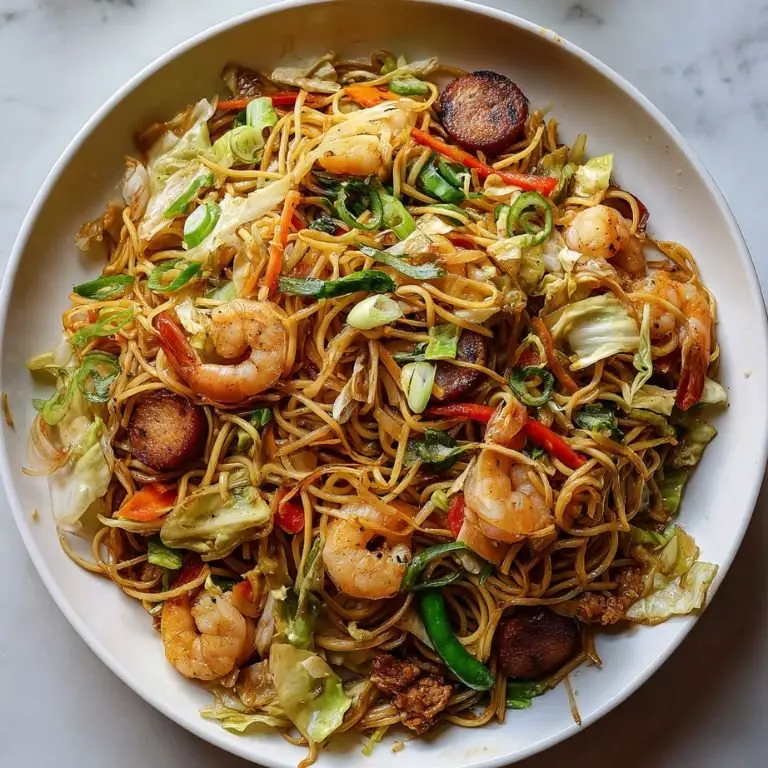
Filipino pancit canton fried noodles are one of those dishes that instantly feel like home. Savory, slightly smoky, loaded with vegetables, and tossed with tender noodles, this is the kind of meal that shows up at family gatherings, birthdays, and weeknight dinners alike. Pancit canton sits at the crossroads of Filipino and Chinese culinary traditions, borrowing stir-fry techniques and wheat noodles while embracing bold local flavors like soy sauce, garlic, and calamansi. It’s hearty without being heavy, flexible enough to adapt to whatever you have in the fridge, and satisfying whether served as a main dish or alongside other favorites. If you enjoy stir fried noodles, egg fried noodles, or pan fried noodles Chinese-style, this dish will feel comfortingly familiar while still offering its own personality. It’s also one of those noodle recipes easy enough for beginners but rewarding for seasoned cooks who like to tweak and personalize.
Filipino Pancit Canton Fried Noodles
Prep Time 25 minutes mins
Cook Time 20 minutes mins
Total Time 45 minutes mins
Course Main Course
Cuisine Filipino
Large wok or wide skillet A wok is ideal because it allows high heat and quick tossing, which helps develop flavor and prevents soggy noodles. A large, heavy-bottomed skillet is a good alternative.
Sharp chef’s knife For slicing proteins and vegetables thinly and evenly.
Cutting board Preferably large, since there’s a lot of prep.
Tongs or two wooden spatulas Helpful for tossing noodles without breaking them.
Medium pot For blanching or par-cooking the noodles if needed.
Measuring spoons and cups Especially useful if you’re new to Asian noodle recipes and want consistent results.
Noodles
- Pancit canton noodles wheat egg noodles – These are similar to Chinese egg noodles and are the backbone of the dish. They hold up well to stir-frying and absorb sauce beautifully. If unavailable, fresh Chinese egg noodles or even dried lo mein noodles can work.
Protein
- Chicken breast or thigh thinly sliced – Chicken breast keeps things lean, while thigh adds extra richness and moisture.
- Shrimp peeled and deveined – Optional but traditional, adding sweetness and a seafood depth.
- Chinese sausage lap cheong, sliced – Adds smoky, slightly sweet notes that make the dish feel special.
- You can use just one protein or combine all three depending on preference.
Vegetables
- Green cabbage shredded – Mild and slightly sweet, it wilts nicely into the noodles.
- Carrots julienned – Add color, crunch, and subtle sweetness.
- Snow peas or green beans – Provide a fresh snap.
- Red bell pepper sliced – Optional, but great for brightness and color.
- Green onions – Used both during cooking and as a garnish.
Aromatics
- Garlic minced generously – Pancit canton is unapologetically garlicky.
- Yellow onion sliced – Adds sweetness and depth.
Sauce Components
- Soy sauce – The main salty savory element.
- Oyster sauce – Adds umami and a slightly sweet richness.
- Chicken broth or stock – Keeps the noodles moist and flavorful.
- Ground black pepper – Essential for that classic pancit canton bite.
- Calamansi or lemon wedges – Served on the side to brighten each bite.
Cooking Fat
- Neutral oil canola or vegetable oil – For stir-frying at high heat.
Prepare the noodles
If using fresh pancit canton noodles, gently loosen them and blanch briefly in boiling water until just tender. Drain well and toss lightly with a bit of oil to prevent sticking. If using dried noodles, cook according to package instructions, but keep them slightly underdone since they’ll finish cooking in the pan. This step is crucial for achieving that ideal stir fried noodles texture.
Marinate the protein
Lightly season the chicken with a splash of soy sauce and black pepper. This quick seasoning builds flavor from the inside out. Shrimp can be left plain or lightly peppered.
Heat the pan
Place your wok or skillet over medium-high heat and add oil. Let it get hot enough that the oil shimmers. Proper heat is key for developing flavor and avoiding mushy noodles.
Cook the sausage and chicken
Add the sliced Chinese sausage first and let it render slightly, releasing its flavorful oils. Then add the chicken and stir-fry until just cooked through. Remove the proteins from the pan and set aside to prevent overcooking.
Sauté the aromatics
In the same pan, add a bit more oil if needed, then toss in the garlic and onions. Stir constantly until fragrant and lightly softened. This aromatic base is what gives pancit canton its signature savory backbone.
Add vegetables
Add carrots, cabbage, and green beans or snow peas. Stir-fry quickly, keeping the vegetables crisp-tender. You want them vibrant, not limp, which keeps the dish fresh and balanced.
Combine noodles and sauce
Add the noodles to the pan, followed by soy sauce, oyster sauce, and a splash of chicken broth. Toss gently but thoroughly so every strand gets coated. This is where the dish starts to resemble classic pan fried noodles with glossy, savory strands.
Return proteins
Add the cooked chicken, shrimp, and sausage back into the pan. Continue tossing until everything is evenly distributed and heated through. If you like slightly crispy noodles, let the noodles sit undisturbed for a minute or two before tossing again.
Season and finish
Taste and adjust seasoning with more soy sauce or black pepper. Add green onions and give one final toss. Remove from heat.
Serve
Transfer to a large platter and serve hot with calamansi or lemon wedges on the side. A squeeze of citrus right before eating wakes up all the flavors.
Pairings
Pancit canton is versatile and pairs beautifully with many dishes, making it a star among easy dinner recipes.
- Fried or steamed lumpia – The crispiness contrasts nicely with the soft noodles.
- Grilled or roasted chicken – Simple, lightly seasoned chicken complements the savory noodles.
- Fried eggs – A runny yolk turns leftovers into one of those unbeatable breakfast ideas.
- Fresh fruit or light salads – Help balance the richness of the noodles.
- Iced tea or calamansi juice – Refreshing drinks that cut through the savory flavors.
Leftover pancit canton can even be pan-fried the next day for crispier edges, transforming it into something reminiscent of fried pasta or crispy noodles, perfect as a quick lunch or healthy snacks-style portion when paired with extra vegetables.
FAQs
1. What type of noodles are best for pancit canton?
Traditional pancit canton uses wheat-based egg noodles similar to Chinese egg fried noodles. These noodles hold up well to stir-frying and absorb sauces without becoming mushy. Rice noodles are more common in other pancit varieties, but for this fried noodles recipe, wheat noodles are ideal.
2. Can I use chicken breast or thigh?
Both work well. Chicken breast is leaner and lighter, while thigh meat stays juicier and more forgiving if slightly overcooked. Choose based on your preference or what you have on hand.
3. Is pancit canton similar to Chinese pan fried noodles?
Yes, there are similarities in technique, especially with stir-frying over high heat and developing savory flavors. However, pancit canton leans on Filipino seasonings and often includes calamansi, giving it a brighter finish than many chinese cooking recipes.
4. Can this dish be made vegetarian?
Absolutely. Skip the meat and use tofu or mushrooms instead. A mix of oyster mushrooms and firm tofu works especially well and still delivers satisfying texture, making it one of those noodle recipes easy to adapt.
5. Can I substitute other noodles like udon?
While not traditional, thick noodles like udon can be used in a pinch, especially if you enjoy stir fry udon noodles. Just keep in mind that the texture will be heavier and chewier than classic pancit canton, closer to an udon noodle recipe than a Filipino-style noodle dish.